USS Oklahoma Sailor Accounted For From World War II (Foley, W.)
WASHINGTON – The Defense POW/MIA Accounting Agency (DPAA) announced today that the remains of a U.S. serviceman, accounted-for from World War II, are those of Seaman 1st Class Walter C. Foley, 18, of Brooklyn, New York. Foley was accounted for on Jan. 10, 2018.
On Dec. 7, 1941, Foley was assigned to the battleship USS Oklahoma, which was moored at Ford Island, Pearl Harbor, when the ship was attacked by Japanese aircraft. The USS Oklahoma sustained multiple torpedo hits, which caused it to quickly capsize. The attack on the ship resulted in the deaths of 429 crewmen, including Foley.
From December 1941 to June 1944, Navy personnel recovered the remains of the deceased crew, which were subsequently interred in the Halawa and Nu’uanu Cemeteries.
In September 1947, tasked with recovering and identifying fallen U.S. personnel in the Pacific Theater, members of the American Graves Registration Service (AGRS) disinterred the remains of U.S. casualties from the two cemeteries and transferred them to the Central Identification Laboratory at Schofield Barracks. The laboratory staff was only able to confirm the identifications of 35 men from the USS Oklahoma at that time. The AGRS subsequently buried the unidentified remains in 46 plots at the National Memorial Cemetery of the Pacific (NMCP), known as the Punchbowl, in Honolulu. In October 1949, a military board classified those who could not be identified as non-recoverable, including Foley.
In April 2015, the Deputy Secretary of Defense issued a policy memorandum directing the disinterment of unknowns associated with the USS Oklahoma. On June 15, 2015, DPAA personnel began exhuming the remains from the NMCP for analysis. ¬ To identify Foley’s remains, scientists from DPAA and the Armed Forces Medical Examiner System used mitochondrial (mtDNA) DNA analysis, which matched his family, as well as circumstantial evidence and anthropological analysis, which matched his records.
DPAA is grateful to the Department of Veterans Affairs for their partnership in this mission.
Of the 16 million Americans who served in World War II, more than 400,000 died during the war. Currently there are 72,776 service members (approximately 26,000 are assessed as possibly-recoverable) still unaccounted for from World War II. Foley’s name is recorded on the Courts of the Missing at the National Memorial Cemetery of the Pacific, along with the others missing from WWII. A rosette will be placed next to his name to indicate he has been accounted for.
For family contact information, contact the Navy Casualty Office at (800) 443-9298.
Foley will be buried April 24, 2019, in Arlington National Cemetery, near Washington, D.C.
For additional information on the Defense Department’s mission to account for Americans who went missing while serving our country, visit the DPAA website at www.dpaa.mil, find us on social media at www.facebook.com/dodpaa or call (703) 699-1420/1169.
https://pow-mia-kia.org/wp-content/uploads/2025/04/logo-300x200.jpg00adminhttps://pow-mia-kia.org/wp-content/uploads/2025/04/logo-300x200.jpgadmin2025-04-02 22:55:192025-04-02 22:55:20Seaman 1st Class Walter C. Foley
Soldier Accounted For From Korean War (Kirtley, D.)
WASHINGTON – The Defense POW/MIA Accounting Agency (DPAA) announced today that the remains of a U.S. serviceman, accounted for from the Korean War, are those of Army Cpl. DeMaret M. Kirtley, 19, of Kaycee, Wyoming. Kirtley was accounted for on May 4, 2018.
In late November 1950, Kirtley was a member of Battery A, 57th Field Artillery Battalion, 31st Regimental Combat Team, 7th Infantry Division. Approximately 2,500 U.S. and 700 South Korean soldiers assembled into the 31st Regimental Combat Team (RCT), which was deployed east of the Chosin Reservoir, North Korea, when it was attacked by overwhelming numbers of Chinese forces. As the Chinese attacks continued, American forces withdrew south. The U.S. Army evacuated approximately 1,500 service members; the remaining soldiers had been either captured, killed or missing in enemy territory. Kirtley was reported missing in action on Dec. 6, 1950, when he could not be accounted for after the withdrawal. He was last seen in the vicinity of Hagaru-ri, Changjin County, Hamgyeong Province, North Korea.
Kirtley’s name did not appear on any prisoner of war lists and no returning Americans reported Kirtley as a prisoner of war. Due to a lack of information regarding his status, the Army declared him deceased as of Dec. 31, 1953.
In 1954, an agreement was reached between the United Nations Command (UNC), the Democratic People’s Republic of Korea (D.P.R.K.) and the Chinese People’s Volunteer Forces (CPVF) regarding the recovery and return of each side’s dead. This agreement, known as Operation Glory, lasted from 1 September to 30 October 1954.
During the Operation Glory exchange, Chinese and Korean officials returned the remains of more than 4,000 individuals to the UNC, of which 2,944 were determined to be American. Those remains were sent to the American Graves Registration Service Central Identification Unit (CIU) in Kokura, Japan, for possible identification. By the end of the CIU-Kokura identification process, 416 sets of American remains from the D.P.R.K. remained unidentified. Those 416, along with another 451 sets of remains recovered in the Republic of Korea by the AGRS, were sent to the National Memorial Cemetery of the Pacific (NMCP) in Honolulu, Hawaii, for burial as “Unknowns.”
One set designated as “X-15900 Operation Glory,” was among a group of remains that North Korea unilaterally turned over after reportedly being recovered from isolated burial sites on the east side of the Chosin Reservoir.
On May 8, 2017, DPAA disinterred X-15900 Operation Glory and sent the remains to the laboratory.
To identify Kirtley’s remains, scientists from DPAA and the Armed Forces Medical Examiner System used mitochondrial DNA (mtDNA) analysis, dental and anthropological analysis, and material and circumstantial evidence.
DPAA is grateful to the Department of Veterans Affairs for their partnership in this mission.
Today, 7,675 Americans remain unaccounted for from the Korean War. Using modern technology, identifications continue to be made from remains that were previously returned by North Korean officials or recovered from North Korea by American recovery teams. Kirtley’s name is recorded on the Courts of the Missing in Honolulu, along with the others who are missing from the Korean War. A rosette will be placed next to his name to indicate he has been accounted for.
For family contact information, contact the Army Casualty Office at (800) 892-2498.
Kirtley will be buried June 20, 2019, in Kaycee, Wyoming.
For additional information on the Defense Department’s mission to account for Americans who went missing while serving our country, visit the DPAA website at www.dpaa.mil, find us on social media at www.facebook.com/dodpaa or call (703) 699-1420/1169.
https://pow-mia-kia.org/wp-content/uploads/2025/04/logo-300x200.jpg00adminhttps://pow-mia-kia.org/wp-content/uploads/2025/04/logo-300x200.jpgadmin2025-04-02 22:54:462025-04-02 22:54:47Cpl. DeMaret M. Kirtley
WASHINGTON – The Department of Defense POW/MIA Accounting Agency (DPAA) announced today that the remains of a serviceman, accounted-for from the Korean War, are those of Marine Corps Sgt. Meredith F. Keirn, 24, of Niagara Falls, New York. Keirn was accounted for on May 22, 2018.
In late November, 1950, Keirn was a light machinegun section leader for Company F, 2nd Battalion, 7th Marine Regiment, 1st Marine Division. He was reported to have been killed Nov. 30, 1950 while defending a hill overlooking the Toktong Pass, a critical main supply route between the villages of Hagaru-ri and Yudam-ni, North Korea. His remains were reportedly buried at the base of “Fox Hill,” in the Toktong Pass, but they could not be recovered following the war.
In August 2015, a South Korean citizen turned over remains believed to be U.S. servicemen from the Korean War. The remains were turned over to the U.S. Forces Korea Mortuary Affairs Office in Yongsan Garrison, Seoul, South Korea, which were subsequently turned over to DPAA.
To identify Keirn’s remains, scientists from DPAA and the Armed Forces Medical Examiner System used Next Generation Sequencing and mitochondrial (mtDNA), Y-chromosome (Y-STR) and autosomal (auSTR) DNA analysis, anthropological analysis, as well as material and circumstantial evidence.
Today, 7,675 Americans remain unaccounted for from the Korean War. Using modern technology, identifications continue to be made from remains that were previously returned by North Korean officials or recovered from North Korea by American recovery teams. Keirn’s name is recorded on the Courts of the Missing the National Memorial Cemetery of the Pacific in Honolulu, along with others who are missing from the Korean War. A rosette will be placed next to his name to indicate he has been accounted for.
For family contact information, contact the Marine Corps Casualty Office at (800) 847-1597.
Keirn will be buried Aug. 8, 2019, in Arlington National Cemetery, near Washington, D.C.
For additional information on the Defense Department’s mission to account for Americans who went missing while serving our country, visit the DPAA website at www.dpaa.mil, find us on social media at www.facebook.com/dodpaa or call (703) 699-1420/1169.
https://pow-mia-kia.org/wp-content/uploads/2025/04/logo-300x200.jpg00adminhttps://pow-mia-kia.org/wp-content/uploads/2025/04/logo-300x200.jpgadmin2025-04-02 22:54:152025-04-02 22:54:16Sgt. Meredith F. Keirn
Soldier Accounted For From World War II (Akers, J.)
WASHINGTON – The Defense POW/MIA Accounting Agency (DPAA) announced today that the remains of a U.S. serviceman, accounted-for from World War II, are those of Army Cpl. Joseph Akers, 23, of Kenova, West Virginia. Akers was accounted for on April 30, 2018.
In November 1944, Akers was a member of Company C, 803rd Tank Destroyer Battalion, participating in intense fighting in the Hürtgen Forest. His company was deployed as direct fire support for American infantrymen attacking the town of Grosshau. Two tank destroyers and six tanks, including the M10 tank destroyer Akers was on, were knocked out in the fighting around Grosshau on Nov. 25, 1944. He was killed during the battle, though his status was initially listed as missing in action. On Dec. 21, 1944, his status was amended to killed in action.
In 1947, an American investigation team found remains inside the remnants of an America tank destroyer near Grosshau. The remains were later designated X-6852 Neuville. Due to the condition of the remains, they were declared unidentifiable and were interred at United States Military Cemetery Draguignan, France, present-day Rhone American Cemetery.
After thorough research and historical analysis, historians from DPAA determined that Akers was a strong candidate for association to the remains. In June 2017, X-6852 Neuville was disinterred and sent to DPAA.
To identify Akers’ remains, scientists from DPAA and the Armed Forces Medical Examiner System used mitochondrial DNA (mtDNA) analysis, and circumstantial evidence.
DPAA is grateful the American Battle Monuments Commission for their partnership in this mission.
Of the 16 million Americans who served in World War II, more than 400,000 died during the war. Currently there are 72,776 service members (approximately 26,000 are assessed as possibly-recoverable) still unaccounted for from World War II. Akers’ name is recorded on the Tablets of the Missing at the Netherlands American Cemetery, an American Battle Monuments Commission site in Margraten, Netherlands, along with others missing from WWII. Although interred as an “unknown” his grave was meticulously cared for over the past 70 years by the American Battle Monuments Commission. A rosette will be placed next to his name to indicate he has been accounted for.
For funeral and family contact information, contact the Army Casualty Office at (800) 892-2498.
For additional information on the Defense Department’s mission to account for Americans who went missing while serving our country, visit the DPAA website at www.dpaa.mil, find us on social media at www.facebook.com/dodpaa or call (703) 699-1420/1169.
https://pow-mia-kia.org/wp-content/uploads/2025/04/logo-300x200.jpg00adminhttps://pow-mia-kia.org/wp-content/uploads/2025/04/logo-300x200.jpgadmin2025-04-02 22:53:442025-04-02 22:53:46Cpl. Joseph Akers
USS Oklahoma Marine Accounted For From World War II (Gaver, H.)
WASHINGTON – The Defense POW/MIA Accounting Agency (DPAA) announced today that the remains of a U.S. serviceman, accounted for from World War II, are those of Marine Corps 2nd Lt. Harry H. Gaver, Jr., 24, of Annapolis, Maryland. Gaver was accounted for Jan. 26, 2017.
On Dec. 7, 1941, Gaver was assigned to the battleship USS Oklahoma, which was moored at Ford Island, Pearl Harbor, when the ship was attacked by Japanese aircraft. The USS Oklahoma sustained multiple torpedo hits, which caused it to quickly capsize. The attack on the ship resulted in the deaths of 429 crewmen, including Gaver.
From December 1941 to June 1944, Navy personnel recovered the remains of the deceased crew, which were subsequently interred in the Halawa and Nu’uanu Cemeteries.
In September 1947, tasked with recovering and identifying fallen U.S. personnel in the Pacific Theater, members of the American Graves Registration Service (AGRS) disinterred the remains of U.S. casualties from the two cemeteries and transferred them to the Central Identification Laboratory at Schofield Barracks. The laboratory staff was only able to confirm the identifications of 35 men from the USS Oklahoma at that time. The AGRS subsequently buried the unidentified remains in 46 plots at the National Memorial Cemetery of the Pacific (NMCP), known as the Punchbowl, in Honolulu. In October 1949, a military board classified those who could not be identified as non-recoverable, including Gaver.
In April 2015, the Deputy Secretary of Defense issued a policy memorandum directing the disinterment of unknowns associated with the USS Oklahoma. On June 15, 2015, DPAA personnel began exhuming the remains from the NMCP for analysis.
To identify Gaver’s remains, scientists from DPAA and the Armed Forces Medical Examiner System used mitochondrial DNA (mtDNA), dental analysis, as well as circumstantial and material evidence.
Of the 16 million Americans who served in World War II, more than 400,000 died during the war. Currently there are 72,778 (approximately 26,000 are assessed as possibly-recoverable) still unaccounted for from World War II. Gaver’s name is recorded on the Walls of the Missing at the Punchbowl, along with the others who are missing from WWII. A rosette will be placed next to his name to indicate he has been accounted for.
For family contact information, contact the Marine Corps Casualty Office at (800) 847-1597.
Gaver will be buried July 24, 2019, in Arlington National Cemetery, near Washington, D.C.
For additional information on the Defense Department’s mission to account for Americans who went missing while serving our country, visit the DPAA website at www.dpaa.mil, find us on social media at www.facebook.com/dodpaa or call (703) 699-1420/1169.
https://pow-mia-kia.org/wp-content/uploads/2025/04/logo-300x200.jpg00adminhttps://pow-mia-kia.org/wp-content/uploads/2025/04/logo-300x200.jpgadmin2025-04-02 22:53:112025-04-02 22:53:122nd Lt. Harry H. Gaver, Jr.
WASHINGTON – The Department of Defense POW/MIA Accounting Agency (DPAA) announced today that the remains of a serviceman, accounted for from the Korean War, are those of Marine Corps Reserve Sgt. Johnson McAfee, 27, of Laveen, Arizona. McAfee was accounted for on Sept. 25, 2017.
In late November, 1950, McAfee was a member of Company F, 2nd Battalion, 7th Marine Regiment, 1st Marine Division, Fleet Marine Force fighting against units of the Chinese People’s Volunteer Forces (CPVF) in North Korea. McAfee was reported to have been killed in action on Nov. 28, 1950, in the vicinity of the Chosin Reservoir at the Marine position known as Fox Hill. Following his death, McAfee was buried alongside others at the base of Fox Hill prior to the evacuation of the outpost.
In September 1953, in accordance with provisions in the armistice agreement, North Korea began the return of U.S. and United Nations Command (UNC) dead for identification. On Sept. 10, 1954, a set of remains, “Unknown X-15012,” was returned, which was reportedly recovered in the vicinity of where McAfee was buried. The remains were determined to be unidentifiable and were transferred to the National Memorial Cemetery of the Pacific in Honolulu and interred as a Korean War Unknown.
After a thorough historical and scientific analysis indicated that the remains could likely be identified, X-15012 were disinterred in August 2013 and sent to DPAA for analysis.
To identify McAfee’s remains, scientists from DPAA used anthropological and chest radiograph comparison analysis, which matched his records, as well as circumstantial evidence.
DPAA is grateful to the Department of Veterans Affairs for their partnership in this mission.
Today, 7,675 Americans remain unaccounted for from the Korean War. Using modern technology, identifications continue to be made from remains that were previously returned by North Korean officials or recovered from North Korea by American recovery teams. McAfee’s name is recorded on the Walls of the Missing at the National Memorial Cemetery of the Pacific in Honolulu, along with the others who are missing from the Korean War. A rosette will be placed next to his name to indicate he has been accounted for.
For funeral and family contact information, contact the Marine Corps Casualty Office at (800) 847-1597.
For additional information on the Defense Department’s mission to account for Americans who went missing while serving our country, visit the DPAA website at www.dpaa.mil, find us on social media at www.facebook.com/dodpaa or call (703) 699-1420/1169.
https://pow-mia-kia.org/wp-content/uploads/2025/04/logo-300x200.jpg00adminhttps://pow-mia-kia.org/wp-content/uploads/2025/04/logo-300x200.jpgadmin2025-04-02 22:52:352025-04-02 22:52:36Sgt. Johnson McAfee
USS Oklahoma Sailor Accounted For From World War II (Adkins, M.)
WASHINGTON – The Defense POW/MIA Accounting Agency (DPAA) announced today that the remains of a U.S. serviceman, accounted for from World War II, are those of Navy Gunner’s Mate 3rd Class Marvin B. Adkins, 20, of Seattle. Adkins was accounted for on April 11, 2018.
On Dec. 7, 1941, Adkins was assigned to the battleship USS Oklahoma, which was moored at Ford Island, Pearl Harbor, when the ship was attacked by Japanese aircraft. The USS Oklahoma sustained multiple torpedo hits, which caused it to quickly capsize. The attack on the ship resulted in the deaths of 429 crewmen, including Adkins.
From December 1941 to June 1944, Navy personnel recovered the remains of the deceased crew, which were subsequently interred in the Halawa and Nu’uanu Cemeteries.
In September 1947, tasked with recovering and identifying fallen U.S. personnel in the Pacific Theater, members of the American Graves Registration Service (AGRS) disinterred the remains of U.S. casualties from the two cemeteries and transferred them to the Central Identification Laboratory at Schofield Barracks. The laboratory staff was only able to confirm the identifications of 35 men from the USS Oklahoma at that time. The AGRS subsequently buried the unidentified remains in 46 plots at the National Memorial Cemetery of the Pacific (NMCP), known as the Punchbowl, in Honolulu. In October 1949, a military board classified those who could not be identified as non-recoverable, including Adkins.
In April 2015, the Deputy Secretary of Defense issued a policy memorandum directing the disinterment of unknowns associated with the USS Oklahoma. On June 15, 2015, DPAA personnel began exhuming the remains from the Punchbowl for identification.
To identify Adkins’ remains, scientists from DPAA and the Armed Forces Medical Examiner System used Y-chromosome DNA (Y-STR) analysis, dental and anthropological analysis, as well as circumstantial evidence.
DPAA is grateful to the Department of Veterans Affairs for their partnership in this mission.
Of the 16 million Americans who served in World War II, more than 400,000 died during the war. Currently there are 72,778 (approximately 26,000 are assessed as possibly-recoverable) still unaccounted for from World War II. Adkins’ name is recorded on the Walls of the Missing at the Punchbowl, along with the others who are missing from WWII. A rosette will be placed next to his name to indicate he has been accounted for.
For family contact information, contact the Navy Casualty office at (800) 443-9298.
Adkins will be buried April 4, 2019, ion Portland, Oregon.
For additional information on the Defense Department’s mission to account for Americans who went missing while serving our country, visit the DPAA website at www.dpaa.mil, find us on social media at www.facebook.com/dodpaa or call (703) 699-1420/1169.
https://pow-mia-kia.org/wp-content/uploads/2025/04/logo-300x200.jpg00adminhttps://pow-mia-kia.org/wp-content/uploads/2025/04/logo-300x200.jpgadmin2025-04-02 22:52:012025-04-02 22:52:03Gunner’s Mate 3rd Class Marvin B. Adkins
USS Oklahoma Sailor Accounted For From World War II (Harris, C.)
WASHINGTON – The Defense POW/MIA Accounting Agency (DPAA) announced today that the remains of a U.S. serviceman, recently accounted for from World War II, are those of Navy Electrician’s Mate 3rd Class Charles H. Harris, 22, of Pine, Louisiana. Harris was accounted for on April 30, 2018.
On Dec. 7, 1941, Harris was assigned to the battleship USS Oklahoma, which was moored at Ford Island, Pearl Harbor, when the ship was attacked by Japanese aircraft. The USS Oklahoma sustained multiple torpedo hits, which caused it to quickly capsize. The attack on the ship resulted in the deaths of 429 crewmen, including Harris.
From December 1941 to June 1944, Navy personnel recovered the remains of the deceased crew, which were subsequently interred in the Halawa and Nu’uanu Cemeteries.
In September 1947, tasked with recovering and identifying fallen U.S. personnel in the Pacific Theater, members of the American Graves Registration Service (AGRS) disinterred the remains of U.S. casualties from the two cemeteries and transferred them to the Central Identification Laboratory at Schofield Barracks. The laboratory staff was only able to confirm the identifications of 35 men from the USS Oklahoma at that time. The AGRS subsequently buried the unidentified remains in 46 plots at the National Memorial Cemetery of the Pacific (NMCP), known as the Punchbowl, in Honolulu. In October 1949, a military board classified those who could not be identified as non-recoverable, including Harris.
In April 2015, the Deputy Secretary of Defense issued a policy memorandum directing the disinterment of unknowns associated with the USS Oklahoma. On June 15, 2015, DPAA personnel began exhuming the remains from the Punchbowl for identification.
To identify Harris’ remains, scientists from DPAA and the Armed Forces Medical Examiner System used mitochondrial (mtDNA) DNA analysis, dental and anthropological analysis, as well as circumstantial evidence.
DPAA is grateful to the Department of Veterans Affairs for their partnership in this mission.
Of the 16 million Americans who served in World War II, more than 400,000 died during the war. Currently there are 72,778 (approximately 26,000 are assessed as possibly-recoverable) still unaccounted for from World War II. Harris’ name is recorded on the Walls of the Missing at the Punchbowl, along with the others who are missing from WWII. A rosette will be placed next to his name to indicate he has been accounted for.
For information on family contact information, contact the Navy Casualty office at (800) 443-9298.
Harris will be buried Feb. 1, 2019, in the National Memorial Cemetery of the Pacific in Honolulu.
For additional information on the Defense Department’s mission to account for Americans who went missing while serving our country, visit the DPAA website at www.dpaa.mil, find us on social media at www.facebook.com/dodpaa or call (703) 699-1420/1169.
https://pow-mia-kia.org/wp-content/uploads/2025/04/logo-300x200.jpg00adminhttps://pow-mia-kia.org/wp-content/uploads/2025/04/logo-300x200.jpgadmin2025-04-02 22:51:262025-04-02 22:51:27Electrician’s Mate 3rd Class Charles H. Harris
Soldier Accounted For From Korean War (Duquette, L.)
WASHINGTON – The Defense POW/MIA Accounting Agency (DPAA) announced that the remains of a U.S. serviceman, accounted-for from the Korean War, are those of Army Pfc. Leo J. Duquette, 19, of Toledo, Ohio. Duquette was accounted for on Aug. 8, 2018.
In July 1950, Duquette was a member of Company L, 3rd Battalion, 21st Infantry Regiment, 24th Infantry Division, engaged in combat operations against North Korean forces near Choch’iwon, South Korea. Duquette could not be accounted-for and was declared missing in action on July 11, 1950.
In December 1953, based on a lack of information regarding his status, Duquette was declared deceased. In January 1956, he was declared non-recoverable.
In October 1950, the remains of 164 Americans were found in the vicinity of the Chonui and Choch’iwon, South Korea, in an area corresponding to where Duquette’s unit engaged in battle. One set of remains, designated X-132, was processed for identification, but a match could not be made. The remains were interred in American Cemetery No. 1, later renamed to United Nations Military Cemetery Taejon.
From October 1950 to September 1954, the American Graves Registration Service attempted to associate Unknown X-132 with a U.S. Soldier. When a possible association could not be made, the remains were declared unidentifiable and X-132 was buried at the National Memorial Cemetery of the Pacific, known as the Punchbowl, in Honolulu as an Unknown.
On Oct. 16, 2017, Unknown X-132 was disinterred from the Punchbowl and sent to the laboratory for analysis.
To identify Duquette’s remains, scientists from DPAA and the Armed Forces Medical Examiner System used mitochondrial (mtDNA) DNA analysis, as well as dental, anthropological and chest radiograph comparison analysis, and circumstantial evidence.
DPAA is grateful to Department of Veterans Affairs for their partnership in this mission.
Today, 7,675 Americans remain unaccounted for from the Korean War. Using modern technology, identifications continue to be made from remains that were previously returned by North Korean officials or recovered from North Korea by American recovery teams. Duquette’s name is recorded on the Courts of the Missing at the National Memorial Cemetery of the Pacific in Honolulu, along with the others who are missing from the Korean War. A rosette will be placed next to his name to indicate he has been accounted for.
For information on funeral services, contact the Army Casualty office at (800) 892-2490.
For additional information on the Defense Department’s mission to account for Americans who went missing while serving our country, visit the DPAA website at www.dpaa.mil, find us on social media at www.facebook.com/dodpaa or call (703) 699-1420/1169.
https://pow-mia-kia.org/wp-content/uploads/2025/04/logo-300x200.jpg00adminhttps://pow-mia-kia.org/wp-content/uploads/2025/04/logo-300x200.jpgadmin2025-04-02 22:50:482025-04-02 22:50:49Pfc. Leo J. Duquette
Soldier Accounted For From World War II (Price, L.)
WASHINGTON – The Defense POW/MIA Accounting Agency (DPAA) announced today that the remains of a U.S. serviceman, accounted for from World War II, are those of Army Pfc. Lewis E. Price, 23, of Rogersville, Tennessee. Price was accounted for on Sept. 24, 2018.
In November, 1944, Price was a member of Company E, 2nd Battalion, 109th Infantry Regiment, 28th Infantry Division, which moved into the Hürtgen Forest in Germany, to relieve U.S. forces who had been fighting for weeks. The fighting in and around the forest was frequently chaotic, and while details surrounding his loss are sparse, he was reported missing in action as of Nov. 6, 1944.
After the war, the American Graves Registration Command extensively searched the Hürtgen Forest, to locate Price’s remains. Unable to make a correlation with any remains found in the area, he was declared non-recoverable.
In 2015, a historian from DPAA analyzed documentation of X-2736 Neuville, an unidentified set of remains recovered from the Hürtgen Forest in 1946. Army officials had been unable to identify the remains following the war and subsequently interred them as an unknown Soldier at Neuville, present-day Ardennes American Cemetery in Belgium.
Based upon the original recovery location and evidence from the personal effects associated with X-2736, the DPAA historian determined that there was a possible association between the remains and Price. In June 2016, the Department of Defense and American Battle Monuments Commission disinterred X-2736 and accessioned the remains to the laboratory for identification
To identify Price’s remains, scientists from DPAA and the Armed Forces Medical Examiner System used mitochondrial DNA (mtDNA) analysis, dental and anthropological analysis, as well as circumstantial and material evidence.
DPAA is grateful the American Battle Monuments Commission for their partnership in this mission.
Of the 16 million Americans who served in World War II, more than 400,000 died during the war. Currently there are 72,778 service members (approximately 26,000 are assessed as possibly-recoverable) still unaccounted for from World War II. Price’s name is recorded on the Tablets of the Missing at the Netherlands American Cemetery, an American Battle Monuments Commission site in Margraten, Netherlands, along with the other who are missing from WWII. Although interred as an Unknown, Price’s grave was meticulously cared for by ABMC for 70 years. A rosette will be placed next to his name to indicate he has been accounted for.
For information on funeral services, contact the Army Casualty office at (800) 892-2490.
For additional information on the Defense Department’s mission to account for missing Americans who went missing while serving our country, visit the DPAA website at www.dpaa.mil, find us on social media at www.facebook.com/dodpaa or call (703) 699-1420/1169.
https://pow-mia-kia.org/wp-content/uploads/2025/04/logo-300x200.jpg00adminhttps://pow-mia-kia.org/wp-content/uploads/2025/04/logo-300x200.jpgadmin2025-04-02 22:50:152025-04-02 22:50:16Pfc. Lewis E. Price
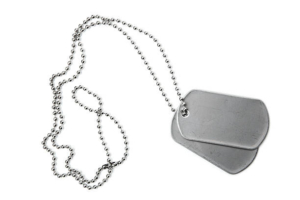
Seaman 1st Class Walter C. Foley
Recently IdentifiedPress Release | Nov. 28, 2018
USS Oklahoma Sailor Accounted For From World War II (Foley, W.)
WASHINGTON – The Defense POW/MIA Accounting Agency (DPAA) announced today that the remains of a U.S. serviceman, accounted-for from World War II, are those of Seaman 1st Class Walter C. Foley, 18, of Brooklyn, New York. Foley was accounted for on Jan. 10, 2018.
On Dec. 7, 1941, Foley was assigned to the battleship USS Oklahoma, which was moored at Ford Island, Pearl Harbor, when the ship was attacked by Japanese aircraft. The USS Oklahoma sustained multiple torpedo hits, which caused it to quickly capsize. The attack on the ship resulted in the deaths of 429 crewmen, including Foley.
From December 1941 to June 1944, Navy personnel recovered the remains of the deceased crew, which were subsequently interred in the Halawa and Nu’uanu Cemeteries.
In September 1947, tasked with recovering and identifying fallen U.S. personnel in the Pacific Theater, members of the American Graves Registration Service (AGRS) disinterred the remains of U.S. casualties from the two cemeteries and transferred them to the Central Identification Laboratory at Schofield Barracks. The laboratory staff was only able to confirm the identifications of 35 men from the USS Oklahoma at that time. The AGRS subsequently buried the unidentified remains in 46 plots at the National Memorial Cemetery of the Pacific (NMCP), known as the Punchbowl, in Honolulu. In October 1949, a military board classified those who could not be identified as non-recoverable, including Foley.
In April 2015, the Deputy Secretary of Defense issued a policy memorandum directing the disinterment of unknowns associated with the USS Oklahoma. On June 15, 2015, DPAA personnel began exhuming the remains from the NMCP for analysis.
¬
To identify Foley’s remains, scientists from DPAA and the Armed Forces Medical Examiner System used mitochondrial (mtDNA) DNA analysis, which matched his family, as well as circumstantial evidence and anthropological analysis, which matched his records.
DPAA is grateful to the Department of Veterans Affairs for their partnership in this mission.
Of the 16 million Americans who served in World War II, more than 400,000 died during the war. Currently there are 72,776 service members (approximately 26,000 are assessed as possibly-recoverable) still unaccounted for from World War II. Foley’s name is recorded on the Courts of the Missing at the National Memorial Cemetery of the Pacific, along with the others missing from WWII. A rosette will be placed next to his name to indicate he has been accounted for.
For family contact information, contact the Navy Casualty Office at (800) 443-9298.
Foley will be buried April 24, 2019, in Arlington National Cemetery, near Washington, D.C.
For additional information on the Defense Department’s mission to account for Americans who went missing while serving our country, visit the DPAA website at www.dpaa.mil, find us on social media at www.facebook.com/dodpaa or call (703) 699-1420/1169.
Cpl. DeMaret M. Kirtley
Recently IdentifiedPress Release | Nov. 27, 2018
Soldier Accounted For From Korean War (Kirtley, D.)
WASHINGTON – The Defense POW/MIA Accounting Agency (DPAA) announced today that the remains of a U.S. serviceman, accounted for from the Korean War, are those of Army Cpl. DeMaret M. Kirtley, 19, of Kaycee, Wyoming. Kirtley was accounted for on May 4, 2018.
In late November 1950, Kirtley was a member of Battery A, 57th Field Artillery Battalion, 31st Regimental Combat Team, 7th Infantry Division. Approximately 2,500 U.S. and 700 South Korean soldiers assembled into the 31st Regimental Combat Team (RCT), which was deployed east of the Chosin Reservoir, North Korea, when it was attacked by overwhelming numbers of Chinese forces. As the Chinese attacks continued, American forces withdrew south. The U.S. Army evacuated approximately 1,500 service members; the remaining soldiers had been either captured, killed or missing in enemy territory. Kirtley was reported missing in action on Dec. 6, 1950, when he could not be accounted for after the withdrawal. He was last seen in the vicinity of Hagaru-ri, Changjin County, Hamgyeong Province, North Korea.
Kirtley’s name did not appear on any prisoner of war lists and no returning Americans reported Kirtley as a prisoner of war. Due to a lack of information regarding his status, the Army declared him deceased as of Dec. 31, 1953.
In 1954, an agreement was reached between the United Nations Command (UNC), the Democratic People’s Republic of Korea (D.P.R.K.) and the Chinese People’s Volunteer Forces (CPVF) regarding the recovery and return of each side’s dead. This agreement, known as Operation Glory, lasted from 1 September to 30 October 1954.
During the Operation Glory exchange, Chinese and Korean officials returned the remains of more than 4,000 individuals to the UNC, of which 2,944 were determined to be American. Those remains were sent to the American Graves Registration Service Central Identification Unit (CIU) in Kokura, Japan, for possible identification. By the end of the CIU-Kokura identification process, 416 sets of American remains from the D.P.R.K. remained unidentified. Those 416, along with another 451 sets of remains recovered in the Republic of Korea by the AGRS, were sent to the National Memorial Cemetery of the Pacific (NMCP) in Honolulu, Hawaii, for burial as “Unknowns.”
One set designated as “X-15900 Operation Glory,” was among a group of remains that North Korea unilaterally turned over after reportedly being recovered from isolated burial sites on the east side of the Chosin Reservoir.
On May 8, 2017, DPAA disinterred X-15900 Operation Glory and sent the remains to the laboratory.
To identify Kirtley’s remains, scientists from DPAA and the Armed Forces Medical Examiner System used mitochondrial DNA (mtDNA) analysis, dental and anthropological analysis, and material and circumstantial evidence.
DPAA is grateful to the Department of Veterans Affairs for their partnership in this mission.
Today, 7,675 Americans remain unaccounted for from the Korean War. Using modern technology, identifications continue to be made from remains that were previously returned by North Korean officials or recovered from North Korea by American recovery teams. Kirtley’s name is recorded on the Courts of the Missing in Honolulu, along with the others who are missing from the Korean War. A rosette will be placed next to his name to indicate he has been accounted for.
For family contact information, contact the Army Casualty Office at (800) 892-2498.
Kirtley will be buried June 20, 2019, in Kaycee, Wyoming.
For additional information on the Defense Department’s mission to account for Americans who went missing while serving our country, visit the DPAA website at www.dpaa.mil, find us on social media at www.facebook.com/dodpaa or call (703) 699-1420/1169.
Sgt. Meredith F. Keirn
Recently IdentifiedPress Release | Nov. 27, 2018
Marine Accounted For From Korean War (Keirn, M.)
WASHINGTON – The Department of Defense POW/MIA Accounting Agency (DPAA) announced today that the remains of a serviceman, accounted-for from the Korean War, are those of Marine Corps Sgt. Meredith F. Keirn, 24, of Niagara Falls, New York. Keirn was accounted for on May 22, 2018.
In late November, 1950, Keirn was a light machinegun section leader for Company F, 2nd Battalion, 7th Marine Regiment, 1st Marine Division. He was reported to have been killed Nov. 30, 1950 while defending a hill overlooking the Toktong Pass, a critical main supply route between the villages of Hagaru-ri and Yudam-ni, North Korea. His remains were reportedly buried at the base of “Fox Hill,” in the Toktong Pass, but they could not be recovered following the war.
In August 2015, a South Korean citizen turned over remains believed to be U.S. servicemen from the Korean War. The remains were turned over to the U.S. Forces Korea Mortuary Affairs Office in Yongsan Garrison, Seoul, South Korea, which were subsequently turned over to DPAA.
To identify Keirn’s remains, scientists from DPAA and the Armed Forces Medical Examiner System used Next Generation Sequencing and mitochondrial (mtDNA), Y-chromosome (Y-STR) and autosomal (auSTR) DNA analysis, anthropological analysis, as well as material and circumstantial evidence.
Today, 7,675 Americans remain unaccounted for from the Korean War. Using modern technology, identifications continue to be made from remains that were previously returned by North Korean officials or recovered from North Korea by American recovery teams. Keirn’s name is recorded on the Courts of the Missing the National Memorial Cemetery of the Pacific in Honolulu, along with others who are missing from the Korean War. A rosette will be placed next to his name to indicate he has been accounted for.
For family contact information, contact the Marine Corps Casualty Office at (800) 847-1597.
Keirn will be buried Aug. 8, 2019, in Arlington National Cemetery, near Washington, D.C.
For additional information on the Defense Department’s mission to account for Americans who went missing while serving our country, visit the DPAA website at www.dpaa.mil, find us on social media at www.facebook.com/dodpaa or call (703) 699-1420/1169.
Cpl. Joseph Akers
Recently IdentifiedPress Release | Nov. 27, 2018
Soldier Accounted For From World War II (Akers, J.)
WASHINGTON – The Defense POW/MIA Accounting Agency (DPAA) announced today that the remains of a U.S. serviceman, accounted-for from World War II, are those of Army Cpl. Joseph Akers, 23, of Kenova, West Virginia. Akers was accounted for on April 30, 2018.
In November 1944, Akers was a member of Company C, 803rd Tank Destroyer Battalion, participating in intense fighting in the Hürtgen Forest. His company was deployed as direct fire support for American infantrymen attacking the town of Grosshau. Two tank destroyers and six tanks, including the M10 tank destroyer Akers was on, were knocked out in the fighting around Grosshau on Nov. 25, 1944. He was killed during the battle, though his status was initially listed as missing in action. On Dec. 21, 1944, his status was amended to killed in action.
In 1947, an American investigation team found remains inside the remnants of an America tank destroyer near Grosshau. The remains were later designated X-6852 Neuville. Due to the condition of the remains, they were declared unidentifiable and were interred at United States Military Cemetery Draguignan, France, present-day Rhone American Cemetery.
After thorough research and historical analysis, historians from DPAA determined that Akers was a strong candidate for association to the remains.
In June 2017, X-6852 Neuville was disinterred and sent to DPAA.
To identify Akers’ remains, scientists from DPAA and the Armed Forces Medical Examiner System used mitochondrial DNA (mtDNA) analysis, and
circumstantial evidence.
DPAA is grateful the American Battle Monuments Commission for their partnership in this mission.
Of the 16 million Americans who served in World War II, more than 400,000 died during the war. Currently there are 72,776 service members
(approximately 26,000 are assessed as possibly-recoverable) still unaccounted for from World War II. Akers’ name is recorded on the Tablets of the Missing at the Netherlands American Cemetery, an American Battle Monuments Commission site in Margraten, Netherlands, along with others
missing from WWII. Although interred as an “unknown” his grave was meticulously cared for over the past 70 years by the American Battle
Monuments Commission. A rosette will be placed next to his name to indicate he has been accounted for.
For funeral and family contact information, contact the Army Casualty Office at (800) 892-2498.
For additional information on the Defense Department’s mission to account for Americans who went missing while serving our country, visit the DPAA website at www.dpaa.mil, find us on social media at www.facebook.com/dodpaa
or call (703) 699-1420/1169.
2nd Lt. Harry H. Gaver, Jr.
Recently IdentifiedPress Release | Nov. 20, 2018
USS Oklahoma Marine Accounted For From World War II (Gaver, H.)
WASHINGTON – The Defense POW/MIA Accounting Agency (DPAA) announced today that the remains of a U.S. serviceman, accounted for from World War II, are those of Marine Corps 2nd Lt. Harry H. Gaver, Jr., 24, of Annapolis, Maryland. Gaver was accounted for Jan. 26, 2017.
On Dec. 7, 1941, Gaver was assigned to the battleship USS Oklahoma, which was moored at Ford Island, Pearl Harbor, when the ship was attacked by Japanese aircraft. The USS Oklahoma sustained multiple torpedo hits, which caused it to quickly capsize. The attack on the ship resulted in the deaths of 429 crewmen, including Gaver.
From December 1941 to June 1944, Navy personnel recovered the remains of the deceased crew, which were subsequently interred in the Halawa and Nu’uanu Cemeteries.
In September 1947, tasked with recovering and identifying fallen U.S. personnel in the Pacific Theater, members of the American Graves Registration Service (AGRS) disinterred the remains of U.S. casualties from the two cemeteries and transferred them to the Central Identification Laboratory at Schofield Barracks. The laboratory staff was only able to confirm the identifications of 35 men from the USS Oklahoma at that time. The AGRS subsequently buried the unidentified remains in 46 plots at the National Memorial Cemetery of the Pacific (NMCP), known as the Punchbowl, in Honolulu. In October 1949, a military board classified those who could not be identified as non-recoverable, including Gaver.
In April 2015, the Deputy Secretary of Defense issued a policy memorandum directing the disinterment of unknowns associated with the USS Oklahoma. On June 15, 2015, DPAA personnel began exhuming the remains from the NMCP for analysis.
To identify Gaver’s remains, scientists from DPAA and the Armed Forces Medical Examiner System used mitochondrial DNA (mtDNA), dental analysis, as well as circumstantial and material evidence.
Of the 16 million Americans who served in World War II, more than 400,000 died during the war. Currently there are 72,778 (approximately 26,000 are assessed as possibly-recoverable) still unaccounted for from World War II. Gaver’s name is recorded on the Walls of the Missing at the Punchbowl, along with the others who are missing from WWII. A rosette will be placed next to his name to indicate he has been accounted for.
For family contact information, contact the Marine Corps Casualty Office at (800) 847-1597.
Gaver will be buried July 24, 2019, in Arlington National Cemetery, near Washington, D.C.
For additional information on the Defense Department’s mission to account for Americans who went missing while serving our country, visit the DPAA website at www.dpaa.mil, find us on social media at www.facebook.com/dodpaa or call (703) 699-1420/1169.
Sgt. Johnson McAfee
Recently IdentifiedPress Release | Nov. 20, 2018
Marine Accounted For From Korean War (McAfee, J.)
WASHINGTON – The Department of Defense POW/MIA Accounting Agency (DPAA) announced today
that the remains of a serviceman, accounted for from the Korean War, are
those of Marine Corps Reserve Sgt. Johnson McAfee, 27, of Laveen, Arizona.
McAfee was accounted for on Sept. 25, 2017.
In late November, 1950, McAfee was a member of Company F, 2nd Battalion, 7th
Marine Regiment, 1st Marine Division, Fleet Marine Force fighting against
units of the Chinese People’s Volunteer Forces (CPVF) in North Korea.
McAfee was reported to have been killed in action on Nov. 28, 1950, in the
vicinity of the Chosin Reservoir at the Marine position known as Fox Hill.
Following his death, McAfee was buried alongside others at the base of Fox
Hill prior to the evacuation of the outpost.
In September 1953, in accordance with provisions in the armistice agreement,
North Korea began the return of U.S. and United Nations Command (UNC) dead
for identification. On Sept. 10, 1954, a set of remains, “Unknown X-15012,”
was returned, which was reportedly recovered in the vicinity of where McAfee
was buried. The remains were determined to be unidentifiable and were
transferred to the National Memorial Cemetery of the Pacific in Honolulu and
interred as a Korean War Unknown.
After a thorough historical and scientific analysis indicated that the
remains could likely be identified, X-15012 were disinterred in August 2013
and sent to DPAA for analysis.
To identify McAfee’s remains, scientists from DPAA used anthropological and
chest radiograph comparison analysis, which matched his records, as well as
circumstantial evidence.
DPAA is grateful to the Department of Veterans Affairs for their partnership
in this mission.
Today, 7,675 Americans remain unaccounted for from the Korean War. Using
modern technology, identifications continue to be made from remains that
were previously returned by North Korean officials or recovered from North
Korea by American recovery teams. McAfee’s name is recorded on the Walls of
the Missing at the National Memorial Cemetery of the Pacific in Honolulu,
along with the others who are missing from the Korean War. A rosette will be
placed next to his name to indicate he has been accounted for.
For funeral and family contact information, contact the Marine Corps Casualty Office at (800) 847-1597.
For additional information on the Defense Department’s mission to account
for Americans who went missing while serving our country, visit the DPAA
website at www.dpaa.mil, find us on social media at www.facebook.com/dodpaa
or call (703) 699-1420/1169.
Gunner’s Mate 3rd Class Marvin B. Adkins
Recently IdentifiedPress Release | Nov. 20, 2018
USS Oklahoma Sailor Accounted For From World War II (Adkins, M.)
WASHINGTON – The Defense POW/MIA Accounting Agency (DPAA) announced today that the
remains of a U.S. serviceman, accounted for from World War II, are those of
Navy Gunner’s Mate 3rd Class Marvin B. Adkins, 20, of Seattle. Adkins was
accounted for on April 11, 2018.
On Dec. 7, 1941, Adkins was assigned to the battleship USS Oklahoma, which
was moored at Ford Island, Pearl Harbor, when the ship was attacked by
Japanese aircraft. The USS Oklahoma sustained multiple torpedo hits, which
caused it to quickly capsize. The attack on the ship resulted in the deaths
of 429 crewmen, including Adkins.
From December 1941 to June 1944, Navy personnel recovered the remains of the
deceased crew, which were subsequently interred in the Halawa and Nu’uanu
Cemeteries.
In September 1947, tasked with recovering and identifying fallen U.S.
personnel in the Pacific Theater, members of the American Graves
Registration Service (AGRS) disinterred the remains of U.S. casualties from
the two cemeteries and transferred them to the Central Identification
Laboratory at Schofield Barracks. The laboratory staff was only able to
confirm the identifications of 35 men from the USS Oklahoma at that time.
The AGRS subsequently buried the unidentified remains in 46 plots at the
National Memorial Cemetery of the Pacific (NMCP), known as the Punchbowl, in
Honolulu. In October 1949, a military board classified those who could not
be identified as non-recoverable, including Adkins.
In April 2015, the Deputy Secretary of Defense issued a policy memorandum
directing the disinterment of unknowns associated with the USS Oklahoma. On
June 15, 2015, DPAA personnel began exhuming the remains from the Punchbowl
for identification.
To identify Adkins’ remains, scientists from DPAA and the Armed Forces
Medical Examiner System used Y-chromosome DNA (Y-STR) analysis, dental and
anthropological analysis, as well as circumstantial evidence.
DPAA is grateful to the Department of Veterans Affairs for their partnership
in this mission.
Of the 16 million Americans who served in World War II, more than 400,000
died during the war. Currently there are 72,778 (approximately 26,000 are
assessed as possibly-recoverable) still unaccounted for from World War II.
Adkins’ name is recorded on the Walls of the Missing at the Punchbowl, along
with the others who are missing from WWII. A rosette will be placed next to
his name to indicate he has been accounted for.
For family contact information, contact the Navy
Casualty office at (800) 443-9298.
Adkins will be buried April 4, 2019, ion Portland, Oregon.
For additional information on the Defense Department’s mission to account
for Americans who went missing while serving our country, visit the DPAA
website at www.dpaa.mil, find us on social media at www.facebook.com/dodpaa
or call (703) 699-1420/1169.
Electrician’s Mate 3rd Class Charles H. Harris
Recently IdentifiedPress Release | Nov. 20, 2018
USS Oklahoma Sailor Accounted For From World War II (Harris, C.)
WASHINGTON – The Defense POW/MIA Accounting Agency (DPAA) announced today that the remains of a U.S. serviceman, recently accounted for from World War II, are those of Navy Electrician’s Mate 3rd Class Charles H. Harris, 22, of Pine, Louisiana. Harris was accounted for on April 30, 2018.
On Dec. 7, 1941, Harris was assigned to the battleship USS Oklahoma, which was moored at Ford Island, Pearl Harbor, when the ship was attacked by Japanese aircraft. The USS Oklahoma sustained multiple torpedo hits, which caused it to quickly capsize. The attack on the ship resulted in the deaths of 429 crewmen, including Harris.
From December 1941 to June 1944, Navy personnel recovered the remains of the deceased crew, which were subsequently interred in the Halawa and Nu’uanu Cemeteries.
In September 1947, tasked with recovering and identifying fallen U.S. personnel in the Pacific Theater, members of the American Graves Registration Service (AGRS) disinterred the remains of U.S. casualties from the two cemeteries and transferred them to the Central Identification Laboratory at Schofield Barracks. The laboratory staff was only able to confirm the identifications of 35 men from the USS Oklahoma at that time. The AGRS subsequently buried the unidentified remains in 46 plots at the National Memorial Cemetery of the Pacific (NMCP), known as the Punchbowl, in Honolulu. In October 1949, a military board classified those who could not be identified as non-recoverable, including Harris.
In April 2015, the Deputy Secretary of Defense issued a policy memorandum directing the disinterment of unknowns associated with the USS Oklahoma. On June 15, 2015, DPAA personnel began exhuming the remains from the Punchbowl for identification.
To identify Harris’ remains, scientists from DPAA and the Armed Forces Medical Examiner System used mitochondrial (mtDNA) DNA analysis, dental and anthropological analysis, as well as circumstantial evidence.
DPAA is grateful to the Department of Veterans Affairs for their partnership in this mission.
Of the 16 million Americans who served in World War II, more than 400,000 died during the war. Currently there are 72,778 (approximately 26,000 are assessed as possibly-recoverable) still unaccounted for from World War II. Harris’ name is recorded on the Walls of the Missing at the Punchbowl, along with the others who are missing from WWII. A rosette will be placed next to his name to indicate he has been accounted for.
For information on family contact information, contact the Navy Casualty office at (800) 443-9298.
Harris will be buried Feb. 1, 2019, in the National Memorial Cemetery of the Pacific in Honolulu.
For additional information on the Defense Department’s mission to account for Americans who went missing while serving our country, visit the DPAA website at www.dpaa.mil, find us on social media at www.facebook.com/dodpaa or call (703) 699-1420/1169.
Pfc. Leo J. Duquette
Recently IdentifiedPress Release | Nov. 19, 2018
Soldier Accounted For From Korean War (Duquette, L.)
WASHINGTON – The Defense POW/MIA Accounting Agency (DPAA) announced that the remains of a U.S. serviceman, accounted-for from the Korean War, are those of Army Pfc. Leo J. Duquette, 19, of Toledo, Ohio. Duquette was accounted for on Aug. 8, 2018.
In July 1950, Duquette was a member of Company L, 3rd Battalion, 21st Infantry Regiment, 24th Infantry Division, engaged in combat operations against North Korean forces near Choch’iwon, South Korea. Duquette could not be accounted-for and was declared missing in action on July 11, 1950.
In December 1953, based on a lack of information regarding his status, Duquette was declared deceased. In January 1956, he was declared non-recoverable.
In October 1950, the remains of 164 Americans were found in the vicinity of the Chonui and Choch’iwon, South Korea, in an area corresponding to where Duquette’s unit engaged in battle. One set of remains, designated X-132, was processed for identification, but a match could not be made. The remains were interred in American Cemetery No. 1, later renamed to United Nations Military Cemetery Taejon.
From October 1950 to September 1954, the American Graves Registration Service attempted to associate Unknown X-132 with a U.S. Soldier. When a possible association could not be made, the remains were declared unidentifiable and X-132 was buried at the National Memorial Cemetery of the Pacific, known as the Punchbowl, in Honolulu as an Unknown.
On Oct. 16, 2017, Unknown X-132 was disinterred from the Punchbowl and sent to the laboratory for analysis.
To identify Duquette’s remains, scientists from DPAA and the Armed Forces Medical Examiner System used mitochondrial (mtDNA) DNA analysis, as well as dental, anthropological and chest radiograph comparison analysis, and circumstantial evidence.
DPAA is grateful to Department of Veterans Affairs for their partnership in this mission.
Today, 7,675 Americans remain unaccounted for from the Korean War. Using modern technology, identifications continue to be made from remains that were previously returned by North Korean officials or recovered from North Korea by American recovery teams. Duquette’s name is recorded on the Courts of the Missing at the National Memorial Cemetery of the Pacific in Honolulu, along with the others who are missing from the Korean War. A rosette will be placed next to his name to indicate he has been accounted for.
For information on funeral services, contact the Army Casualty office at (800) 892-2490.
For additional information on the Defense Department’s mission to account for Americans who went missing while serving our country, visit the DPAA website at www.dpaa.mil, find us on social media at www.facebook.com/dodpaa or call (703) 699-1420/1169.
Pfc. Lewis E. Price
Recently IdentifiedPress Release | Nov. 19, 2018
Soldier Accounted For From World War II (Price, L.)
WASHINGTON – The Defense POW/MIA Accounting Agency (DPAA) announced today that the remains of a U.S. serviceman, accounted for from World War II, are those of Army Pfc. Lewis E. Price, 23, of Rogersville, Tennessee. Price was accounted for on Sept. 24, 2018.
In November, 1944, Price was a member of Company E, 2nd Battalion, 109th Infantry Regiment, 28th Infantry Division, which moved into the Hürtgen Forest in Germany, to relieve U.S. forces who had been fighting for weeks. The fighting in and around the forest was frequently chaotic, and while details surrounding his loss are sparse, he was reported missing in action as of Nov. 6, 1944.
After the war, the American Graves Registration Command extensively searched the Hürtgen Forest, to locate Price’s remains. Unable to make a correlation with any remains found in the area, he was declared non-recoverable.
In 2015, a historian from DPAA analyzed documentation of X-2736 Neuville, an unidentified set of remains recovered from the Hürtgen Forest in 1946. Army officials had been unable to identify the remains following the war and subsequently interred them as an unknown Soldier at Neuville, present-day Ardennes American Cemetery in Belgium.
Based upon the original recovery location and evidence from the personal effects associated with X-2736, the DPAA historian determined that there was a possible association between the remains and Price. In June 2016, the Department of Defense and American Battle Monuments Commission disinterred X-2736 and accessioned the remains to the laboratory for identification
To identify Price’s remains, scientists from DPAA and the Armed Forces Medical Examiner System used mitochondrial DNA (mtDNA) analysis, dental and anthropological analysis, as well as circumstantial and material evidence.
DPAA is grateful the American Battle Monuments Commission for their partnership in this mission.
Of the 16 million Americans who served in World War II, more than 400,000 died during the war. Currently there are 72,778 service members (approximately 26,000 are assessed as possibly-recoverable) still unaccounted for from World War II. Price’s name is recorded on the Tablets of the Missing at the Netherlands American Cemetery, an American Battle Monuments Commission site in Margraten, Netherlands, along with the other who are missing from WWII. Although interred as an Unknown, Price’s grave was meticulously cared for by ABMC for 70 years. A rosette will be placed next to his name to indicate he has been accounted for.
For information on funeral services, contact the Army Casualty office at (800) 892-2490.
For additional information on the Defense Department’s mission to account for missing Americans who went missing while serving our country, visit the DPAA website at www.dpaa.mil, find us on social media at www.facebook.com/dodpaa or call (703) 699-1420/1169.