Funeral Announcement For Soldier Killed During Korean War (McDaniel, C.)
WASHINGTON – The Defense POW/MIA Accounting Agency (DPAA) announced today that the remains of a U.S. serviceman, accounted for from the Korean War, are being returned to his family for burial with full military honors.
Army Master Sgt. Charles H. McDaniel. McDaniel, 32, of Vernon, Indiana, accounted for on Sept. 12, 2018, will be buried October 27 in Greenwood, Indiana. In November 1950, McDaniel was a medic with the 8th Cavalry Regiment Medical Company, supporting the Regiment’s 3rd Battalion. The unit was engaged with enemy forces of the Chinese People’s Volunteer Forces (CPVF,) southwest of the village of Unsan, and west of Hwaong-ri, North Korea. He was reported missing in action on Nov. 2, 1950, when he could not be accounted-for by his unit.
Throughout the remainder of the war, the United Nations Command regularly requested that the CPVF and Korean People’s Army (KPA) provide lists of American and allied servicemen held in their custody. No lists provided included his name as a prisoner of war, and no returning American prisoners provided any information on McDaniel. Based on the lack of information, the U.S. Army declared him deceased as of Dec. 31, 1953.
On June 12, 2018, President Donald Trump met with North Korea Supreme Leader Kim Jong-un in Singapore, in the first meeting between the leaders of the United States and North Korea. The leaders signed a joint statement, including a commitment to return the remains American service members lost in North Korea.
On July 27, 2018, North Korea turned over 55 boxes, purported to contain the remains of American service members killed during the Korean War. The remains arrived at Joint Base Pearl Harbor-Hickam, Hawaii on Aug. 1, 2018, and were subsequently accessioned into the DPAA laboratory for identification.
To identify McDaniel’s remains, scientists from DPAA and the Armed Forces Medical Examiner System used mitochondrial DNA (mtDNA) analysis, dental, anthropological analysis and chest radiograph comparison analysis, as well as circumstantial and material evidence, including a single identification tag that was included in the July 27, turnover.
Today, 7,677 Americans remain unaccounted for from the Korean War. Using modern technology, identifications continue to be made from remains that were previously returned by North Korean officials or recovered from North Korea by American recovery teams. McDaniel’s name is recorded on the Courts of the Missing at the National Memorial Cemetery of the Pacific in Honolulu, along with the others who are missing from the Korean War. A rosette will be placed next to his name to indicate he has been accounted for.
For additional information on the Defense Department’s mission to account for missing Americans who went missing while serving our country, visit the DPAA website at www.dpaa.mil, find us on social media at www.facebook.com/dodpaa or call (703) 699-1420/1169.
https://pow-mia-kia.org/wp-content/uploads/2025/04/logo-300x200.jpg00adminhttps://pow-mia-kia.org/wp-content/uploads/2025/04/logo-300x200.jpgadmin2025-04-02 18:13:212025-04-02 18:13:22Master Sgt. Charles H. McDaniel
Funeral Announcement For Soldier Killed During World War II (Park, J.)
WASHINGTON – The Defense POW/MIA Accounting Agency (DPAA) announced today that the remains of a U.S. serviceman, accounted-for from World War II, are being returned to his family for burial with full military honors.
Army Sgt. James K. Park, 20, of Beaumont, Texas, accounted for on June 20, will be buried October 27 in Barry, Texas. In November 1944, Park was a member of Company I, 26th Infantry Regiment, 1st Infantry Division, engaged in fierce fighting within the Hürtgen Forest in Germany. Park was reported missing in action on Nov. 23, 1944, when he was believed to have been wounded by shrapnel. Due to continuous enemy fire, Soldiers from Park’s company were prevented from searching for him. Additionally, no graves registration teams reported finding his remains. Due to no information regarding his whereabouts, his status was amended to deceased as of Nov. 24, 1945.
After the war, the American Graves Registration Command (AGRC) collected thousands of unknown sets of remains from battlefields in Germany, and labeled each set with an X-number. None of the remains that were found could be associated with Park by AGRC technicians, and his remains were declared non-recoverable.
In December 1946, AGRC personnel recovered an unidentified set of remains from a civilian cemetery at Langerwehe, Germany, on the northern edge of the Hürtgen Forest. German locals said the remains were originally found by a local resident on Aug. 1, 1946 near the estate of Jüngersdorf in the forest. Following the recovery, the remains were processed at the Central Identification Point at Neuville, Belgium, and buried as an unknown, labeled X-4731 Neuville.
Following thorough research and analysis of American Soldiers missing from ground combat within Germany’s Hürtgen Forest, a DPAA historian concluded that there was a possible association between X-4731 and Park. The remains were disinterred on June 28, 2017 and the remains were sent to the DPAA for analysis.
To identify Park’s remains, scientists from DPAA and the Armed Forces Medical Examiner System used mitochondrial (mtDNA) DNA analysis, as well as dental and anthropological analysis.
DPAA is grateful to American Battle Monuments Commission for their partnership with this mission.
Of the 16 million Americans who served in World War II, more than 400,000 died during the war. Currently there are 72,790 service members (approximately 26,000 are assessed as possibly-recoverable) still unaccounted for from World War II. Park’s name is recorded on the Tablets of the Missing at the Netherlands American Cemetery, an American Battle Monuments Commission in Margraten, along with the others missing from WWII. Although interred as an Unknown in Neuville American Cemetery, Park’s grave was meticulously cared for over the past 70 years by the ABMC. A rosette will be placed next to his name to indicate he has been accounted for.
For additional information on the Defense Department’s mission to account for Americans who went missing while serving our country, visit the DPAA website at www.dpaa.mil, find us on social media at www.facebook.com/dodpaa or call (703) 699-1420/1169.
https://pow-mia-kia.org/wp-content/uploads/2025/04/logo-300x200.jpg00adminhttps://pow-mia-kia.org/wp-content/uploads/2025/04/logo-300x200.jpgadmin2025-04-02 18:12:082025-04-02 18:12:10Sgt. James K. Park
Funeral Announcement For Marine Killed During World War II (Gilman, P.)
WASHINGTON – The Defense POW/MIA Accounting Agency (DPAA) announced today that the remains of a U.S. serviceman, accounted-for from World War II, are being returned to his family for burial with full military honors.
Marine Corps Reserve Pfc. Paul D. Gilman, 19, of Belen, New Mexico, accounted for on May 17, 2018, will be buried October 26 in his hometown. In November 1943, Gilman was assigned to Company M, 3rd Battalion, 8th Marine Regiment, 2nd Marine Division, Fleet Marine Force, which landed against stiff Japanese resistance on the small island of Betio in the Tarawa Atoll of the Gilbert Islands, in an attempt to secure the island. Over several days of intense fighting at Tarawa, approximately 1,000 Marines and Sailors were killed and more than 2,000 were wounded, but the Japanese were virtually annihilated. Gilman died on the first day of the battle, Nov. 20, 1943.
The battle of Tarawa was a huge victory for the U.S. military because the Gilbert Islands provided the U.S. Navy Pacific Fleet a platform from which to launch assaults on the Marshall and Caroline Islands to advance their Central Pacific Campaign against Japan.
In the immediate aftermath of the fighting on Tarawa, U.S. service members who died in the battle were buried in a number of battlefield cemeteries on the island. In the case of Gilman, records indicate his remains were recovered and were buried in Division Cemetery #3, which was later renamed Cemetery #27. In 1946 the 604th Quartermaster Graves Registration Company (604th GRC) centralized all of the American remains found on Betio Island to Lone Palm Cemetery for later repatriation; however, almost half of the known casualties from the battle were not found., Gilman’s remains were among those not recovered. On Oct. 14, 1949, a military review board declared Gilman’s remains non-recoverable.
In May and June 2015, a nongovernmental organization, History Flight, Inc., notified DPAA that they discovered a burial site on Betio Island and recovered the remains of what they believed were 35 U.S. Marines who fought during the battle in November 1943. Subsequent recoveries in November 2015 and February 2016 resulted in additional remains. The remains were turned over to DPAA in June 2016.
To identify Gilman’s remains, scientists from DPAA and the Armed Forces Medical Examiner System used mitochondrial (mtDNA) DNA analysis, dental and anthropological analysis, as well as circumstantial and material evidence.
DPAA is grateful to History Flight, Inc., for their partnership in this mission.
Of the 16 million Americans who served in World War II, more than 400,000 died during the war. Currently there are 72,790 service members (approximately 26,000 are assessed as possibly-recoverable) still unaccounted for from World War II. Gilman’s name is recorded on the Tablets of the Missing at the Punchbowl, along with the others killed or lost in WWII. A rosette will be placed next to his name to indicate he has been accounted for.
For additional information on the Defense Department’s mission to account for Americans who went missing while serving our country, visit the DPAA website at www.dpaa.mil, find us on social media at www.facebook.com/dodpaa or call (703) 699-1420/1169.
https://pow-mia-kia.org/wp-content/uploads/2025/04/logo-300x200.jpg00adminhttps://pow-mia-kia.org/wp-content/uploads/2025/04/logo-300x200.jpgadmin2025-04-02 18:08:342025-04-02 18:08:36Pfc. Paul D. Gilman
Funeral Announcement For Soldier Accounted For From World War II (Shankles, L.)
WASHINGTON – The Defense POW/MIA Accounting Agency (DPAA) announced today that the remains of a U.S. serviceman, accounted-for from World War II, are being returned to his family for burial with full military honors.
Army Pfc. Leslie E. Shankles, 33, of Arcadia, Kansas, accounted for on July 12, 2018, will be buried October 24 in Fort Scott, Kansas. In October 1944, Shankles was a member of Company C, 1st Battalion, 60th Infantry Regiment, 9th Infantry Division. He was killed Oct. 14, 1944 by enemy fire in the Raffelsbrand sector of the Hürtgen Forest, near Germeter, Germany.
In 1947, a local German resident discovered remains in the Raffelsbrand section of the Hürtgen Forest. The remains could not be identified, and were buried as Unknown X-5391 in Neuville Cemetery, now Ardennes American Cemetery, in Belgium.
Following thorough research and analysis of American Soldiers missing from Europe, DPAA historians concluded that there was a strong association between Neuville Unknown X-5391 and Shankles. DPAA disinterred X-5391 in June 2017 and accessioned the remains to the DPAA laboratory.
To identify Shankles’ remains, scientists from DPAA and the Armed Forces Medical Examiner System used Y-chromosome (Y-STR) DNA analysis, anthropological analysis, as well as circumstantial and material evidence.
DPAA is grateful to the American Battle Monuments Commission for their partnership in this mission.
Of the 16 million Americans who served in World War II, more than 400,000 died during the war. Currently there are 72,796 service members (approximately 26,000 are assessed as possibly-recoverable) still unaccounted for from World War II. Shankles’ name is recorded on the Tablets of the Missing at the Netherlands American Cemetery, an American Battle Monuments Commission site in Margraten, Netherlands, along with the others missing from WWII. Although interred as an Unknown in Neuville American Cemetery, Shankles’ grave was meticulously cared for over the past 70 years by the ABMC. A rosette will be placed next to his name to indicate he has been accounted for.
For additional information on the Defense Department’s mission to account for Americans who went missing while serving our country, visit the DPAA website at www.dpaa.mil, find us on social media at www.facebook.com/dodpaa or call (703) 699-1420/1169.
https://pow-mia-kia.org/wp-content/uploads/2025/04/logo-300x200.jpg00adminhttps://pow-mia-kia.org/wp-content/uploads/2025/04/logo-300x200.jpgadmin2025-04-02 18:07:212025-04-02 18:07:23Pfc. Leslie E. Shankles
Funeral Announcement For Soldier Killed During World War II (Cummings, J.)
WASHINGTON – The Defense POW/MIA Accounting Agency (DPAA) announced today that the remains of a U.S. serviceman, accounted-for from World War II, were returned to his family for burial with full military honors.
Army Pvt. John B. Cummings, 22, of Hartford, Wisconsin, accounted for on July 12, 2018, was buried October 13 in Hazelhurst, Wisconsin. In December 1944, Cummings was a member of Company A, 276th Infantry Regiment, 70th Infantry Division, along the France and Germany border to reinforce the Alsace area. On Dec. 31, 1944, German troops crossed the Rhine River into France. As darkness fell, two member of Cummings’ company passed him as he sat in a foxhole near the riverbank. Sometime later, U.S. troops heard German machine gun fire and maneuvered their way back to Cummings’ foxhole. The troops were unable to find Cummings, but they did find a helmet with a bullet hole. Despite extensive recovery efforts, Cummings’ remains were unable to be located.
Following the close of hostilities, the American Graves Registration Command (AGRC) searched for and disinterred the remains of U.S. service members who were killed in battle. In 1946, investigators met with the mayor of Iffezheim, Germany, who informed them that the remains of an American Soldier were buried in his community near the bank of the Rhine River. The mayor directed the American investigator to a local German veteran who had been present at the burial. A wooden cross indicated the remains belonged to an American serviceman, who died on Dec. 31, 1944. The remains were disinterred and transferred to the American Military Cemetery and identification processing center at St. Avold France, where they were labeled as Unknown X-6454.
The remains, unable to be identified, were interred in the American cemetery at St. Avold, present day Lorraine American Cemetery, in France.
Following thorough research and analysis of American Soldiers missing from Europe, DPAA historians concluded that there was a strong association between Unknown X-6454 and Cummings. DPAA disinterred X-6454 in October 2016 and accessioned the remains to the DPAA laboratory.
To identify Cummings’ remains, scientists from DPAA and the Armed Forces Medical Examiner System used mitochondrial (mtDNA) and autosomal (auSTR) DNA analysis, anthropological analysis, as well as circumstantial and material evidence.
DPAA is grateful to the French Government and the American Battle Monuments Commission for their partnership in this recovery.
Of the 16 million Americans who served in World War II, more than 400,000 died during the war. Currently there are 72,796 service members (approximately 26,000 are assessed as possibly-recoverable) still unaccounted for from World War II. Cummings’ name is recorded on the Tablets of the Missing at the Epinal American Cemetery, an American Battle Monuments Commission site in Dinoze, France, along with the others missing from WWII. Although interred as an Unknown in Lorraine American Cemetery, Cummings’ grave was meticulously cared for over the past 70 years by the ABMC. A rosette will be placed next to his name to indicate he has been accounted for.
For additional information on the Defense Department’s mission to account for Americans who went missing while serving our country, visit the DPAA website at www.dpaa.mil, find us on social media at www.facebook.com/dodpaa or call (703) 699-1420/1169.
https://pow-mia-kia.org/wp-content/uploads/2025/04/logo-300x200.jpg00adminhttps://pow-mia-kia.org/wp-content/uploads/2025/04/logo-300x200.jpgadmin2025-04-02 18:06:092025-04-02 18:06:10Pvt. John B. Cummings
Funeral Announcement For Soldier Killed During Korean War (Williams, K.)
WASHINGTON – The Defense POW/MIA Accounting Agency (DPAA) announced today that the remains of a U.S. serviceman, accounted-for from the Korean War, are being returned to his family for burial with full military honors.
Army Pfc. Kenneth B. Williams, 38, of Akron, Ohio, accounted for on Aug. 13, 2018, will be buried October 22 in Seville, Ohio. In late November 1950, Williams was a member of Heavy Mortar Company, 32nd Infantry Regiment, 7th Infantry Division. Approximately 2,500 U.S. and 700 South Korean soldiers assembled into the 31st Regimental Combat Team (RCT), which was deployed east of the Chosin Reservoir, North Korea, when it was attacked by overwhelming numbers of Chinese forces. As the Chinese attacks continued, American forces withdrew south. By December 6, the U.S. Army evacuated approximately 1,500 service members; the remaining soldiers had been either captured, killed or missing in enemy territory. Williams was reported missing in action on Dec. 2, 1950, after he was last seen near the Chosin Reservoir.
Williams’ name did not appear on any prisoner of war lists, however returning Americans reported Williams died as a prisoner of war. Based on this information, he was declared deceased as of Jan. 31, 1951.
On Nov. 30, 1993, North Korea turned over 33 boxes, believed to hold the remains of unaccounted-for U.S. servicemen from the Korean War. The reported recovery location of one of the boxes was in Kaljoh-ri, Changjin County, South Hamyong Province, North Korea, near where Williams was last seen.
To identify Williams’ remains, scientists from DPAA and the Armed Forces Medical Examiner System used mitochondrial (mtDNA) DNA analysis, dental and anthropological analysis, as well as circumstantial and material evidence.
DPAA is grateful to the government and people of the Democratic People’s Republic of Korea, and looks forward to the continued fulfillment of the commitment made by President Trump and Chairman Kim on the return and recovery of U.S. service members in North Korea.
Today, 7,677 Americans remain unaccounted for from the Korean War. Using modern technology, identifications continue to be made from remains that were previously returned by North Korean officials or recovered from North Korea by American recovery teams. Williams’ name is recorded on the Courts of the Missing in Honolulu, along with the others who are missing from the Korean War. A rosette will be placed next to his name to indicate he has been accounted for.
For additional information on the Defense Department’s mission to account for Americans who went missing while serving our country, visit the DPAA website at www.dpaa.mil, find us on social media at www.facebook.com/dodpaa or call (703) 699-1420/1169.
https://pow-mia-kia.org/wp-content/uploads/2025/04/logo-300x200.jpg00adminhttps://pow-mia-kia.org/wp-content/uploads/2025/04/logo-300x200.jpgadmin2025-04-02 18:04:522025-04-02 18:04:53Pfc. Kenneth B. Williams
Funeral Announcement For USS Oklahoma Sailor Killed During World War II (Ford, G.)
WASHINGTON – The Defense POW/MIA Accounting Agency (DPAA) announced today that the remains of a U.S. serviceman, recently accounted for from World War II are being returned to his family for burial with full military honors.
Navy Fireman 2nd Class George C. Ford. 25, of Lidderdale, Iowa, accounted for on April 30, 2018, will be buried October 20 in Glidden, Iowa. On Dec. 7, 1941, Ford was assigned to the battleship USS Oklahoma, which was moored at Ford Island, Pearl Harbor, when the ship was attacked by Japanese aircraft. The USS Oklahoma sustained multiple torpedo hits, which caused it to quickly capsize. The attack on the ship resulted in the deaths of 429 crewmen, including Ford.
From December 1941 to June 1944, Navy personnel recovered the remains of the deceased crew, which were subsequently interred in the Halawa and Nu’uanu Cemeteries.
In September 1947, tasked with recovering and identifying fallen U.S. personnel in the Pacific Theater, members of the American Graves Registration Service (AGRS) disinterred the remains of U.S. casualties from the two cemeteries and transferred them to the Central Identification Laboratory at Schofield Barracks. The laboratory staff was only able to confirm the identifications of 35 men from the USS Oklahoma at that time. The AGRS subsequently buried the unidentified remains in 46 plots at the National Memorial Cemetery of the Pacific (NMCP), known as the Punchbowl, in Honolulu. In October 1949, a military board classified those who could not be identified as non-recoverable, including Ford.
In April 2015, the Deputy Secretary of Defense issued a policy memorandum directing the disinterment of unknowns associated with the USS Oklahoma. On June 15, 2015, DPAA personnel began exhuming the remains from the Punchbowl for identification.
To identify Ford’s remains, scientists from DPAA and the Armed Forces Medical Examiner System used mitochondrial (mtDNA) and Y-chromosome (Y-STR) DNA analysis, dental and anthropological analysis, as well as circumstantial evidence.
DPAA is grateful to the Department of Veterans Affairs for their partnership in this mission.
Of the 16 million Americans who served in World War II, more than 400,000 died during the war. Currently there are 72,799 (approximately 26,000 are assessed as possibly-recoverable) still unaccounted for from World War II. Ford’s name is recorded on the Walls of the Missing at the Punchbowl, along with the others who are missing from WWII. A rosette will be placed next to his name to indicate he has been accounted for.
For additional information on the Defense Department’s mission to account for Americans who went missing while serving our country, visit the DPAA website at www.dpaa.mil, find us on social media at www.facebook.com/dodpaa or call (703) 699-1420/1169.
https://pow-mia-kia.org/wp-content/uploads/2025/04/logo-300x200.jpg00adminhttps://pow-mia-kia.org/wp-content/uploads/2025/04/logo-300x200.jpgadmin2025-04-02 18:04:242025-04-02 18:04:25Fireman 2nd Class George C. Ford
Funeral Announcement For Soldier Killed During World War II (Ashley, F.)
WASHINGTON – The Defense POW/MIA Accounting Agency (DPAA) announced today that the remains of a U.S. serviceman, accounted for from World War II, are being returned to his family for burial with full military honors.
Army Pfc. Fred W. Ashley, 22, of Emmett, Idaho, accounted for on Aug. 27, 2018, will be buried October 20 in his hometown. In May 1945, Ashley was a member of Troop C, 2nd Cavalry Reconnaissance Squadron, 2nd Cavalry Group, on a reconnaissance in the town of Paseka, in the former Czechoslovakia. On 4 May, as many as three hundred German soldiers attacked Ashley’s platoon. He was mortally wounded and was last seen being taken away by German troops. Ashley’s unit reported him missing in action as of May 4, 1945. Following the war, when Ashley was not among the American prisoners liberated from German captivity, the War Department amended his status to killed in action. His remains were not recovered following the battle.
In September 1991, Ashley’s sister contacted U.S. Army Mortuary Affairs, regarding the location of her brother’s remains. She reported that shortly after the war, the family received a letter from the U.S. Army stating that local civilians had discovered Ashley’s gravesite. The chief of Mortuary Affairs and Casualty Support Division responded that remains recovered from an isolated grave in Gutwasser, Czechoslovakia were originally believed to be Ashley, however subsequent examination revealed the remains, designated X-239 St. Avold, were not Ashley.
Following thorough research and analysis, DPAA recommended the disinterment of X-239 St. Avold. The remains were exhumed and transferred to DPAA’s laboratory at Offutt Air Force Base, Nebraska.
In April 2018, X-239 St. Avold was identified as Flight Officer Richard Lane W. Lane, who had been identified in 1946 and buried with full military honors in Gage County, Nebraska.
On June 14, 2018, the remains that had been previously misidentified as Lane were disinterred from Filley Cemetery in Nebraska and accessioned into the DPAA laboratory at Offutt.
To identify Ashley’s remains, scientists from DPAA used dental and anthropological analysis, as well as material and circumstantial evidence.
Of the 16 million Americans who served in World War II, more than 400,000 died during the war. Currently there are 72,866 service members (approximately 26,000 are assessed as possibly-recoverable) still unaccounted for from World War II. Ashley’s name is recorded on the Tablets of the Missing at the Epinal American Cemetery, an American Battle Monuments Commission site in Dinoze, France, along with the other MIAs from WWII. A rosette will be placed next to his name to indicate he has been accounted for.
For additional information on the Defense Department’s mission to account for missing Americans who went missing while serving our country, visit the DPAA website at www.dpaa.mil, find us on social media at www.facebook.com/dodpaa or call (703) 699-1420/1169.
https://pow-mia-kia.org/wp-content/uploads/2025/04/logo-300x200.jpg00adminhttps://pow-mia-kia.org/wp-content/uploads/2025/04/logo-300x200.jpgadmin2025-04-02 18:03:062025-04-02 18:03:07Pfc. Fred W. Ashley
Funeral Announcement For Soldier Killed During Korean War (Jubb, J.)
WASHINGTON – The Department of Defense POW/MIA Accounting Agency (DPAA) announced today that the remains of a serviceman, recently accounted-for from the Korean War, are being returned to his family for burial with full military honors.
Army Cpl. James I. Jubb, 21, of Eastport, Maryland, accounted for on Jan. 25, 2018, will be buried October 17 in Arlington National Cemetery, near Washington, D.C. In August 1950, Jubb was a member of Company E, 2nd Battalion, 19th Infantry Regiment, 24th Infantry Division, his unit suffered heavy losses while fighting units of the North Korean People’s Army in the vicinity of the Naktong River, South Korea. Jubb was reported missing in action on Aug. 10, 1950 when he could not be accounted for by his unit. His remains were later declared unrecoverable.
In October 1951, the Army Graves Registration Services recovered four sets of unidentified American remains from a mountain near Ohang, South Korea, which is located east of the Naktong River. One set of remains, designated “Unknown X-2160” could not be identified and were subsequently interred at the National Cemetery of the Pacific (NMCP) in Honolulu.
In 2017, based on research regarding two individuals who remained unaccounted-for from Jubb’s unit, analysts from DPAA determined that Unknown X-2160 could likely be identified. DPAA disinterred Unknown X-2160 in October 2017 and sent the remains to the laboratory for analysis.
To identify Jubb’s remains, scientists used dental and anthropological analysis, as well as chest radiograph comparison, which matched his records.
DPAA is appreciative to the Department of Veterans Affairs for their partnership in this mission.
Today, 7,677 Americans remain unaccounted for from the Korean War. Using modern technology, identifications continue to be made from remains that were previously returned by North Korean officials or recovered from North Korea by American recovery teams. Jubb’s name is recorded on the Courts of the Missing at the NMCP in Honolulu along with the others who are missing from the Korean War. A rosette will be placed next to his name to indicate he has been accounted for.
For additional information on the Defense Department’s mission to account for Americans who went missing while serving our country, visit the DPAA website at www.dpaa.mil, find us on social media at www.facebook.com/dodpaa or call (703) 699-1420/1169.
https://pow-mia-kia.org/wp-content/uploads/2025/04/logo-300x200.jpg00adminhttps://pow-mia-kia.org/wp-content/uploads/2025/04/logo-300x200.jpgadmin2025-04-02 18:02:302025-04-02 18:02:32Cpl. James I. Jubb
Funeral Announcement For Army Pilot Killed During Vietnam War (Nopp, R.)
WASHINGTON – The Defense POW/MIA Accounting Agency (DPAA) announced today that the remains of a U.S. serviceman, accounted for from the Vietnam War, are being returned to his family for burial with full military honors.
Army Lt. Col. Robert G. Nopp, 31, of Salem, Oregon, accounted for on Feb. 1, 2018, will be buried October 18 in Arlington National Cemetery, near Washington, D.C. On July 13, 1966 Nopp was assigned to the 131st Aviation Company, serving as a pilot aboard an OV-1C aircraft, on a night surveillance mission from Phu Bai Airfield over Attapu Province, Laos People’s Democratic Republic (L.P.D.R.). Visibility was poor due to heavy thunderstorms. Radar and radio contact were lost with the aircraft, which was not uncommon due to the mountainous terrain in that part of Laos. When the aircraft did not return as scheduled, search efforts were initiated, but no crash site was found. Also lost in the crash was Army Staff Sgt. Marshall F. Kipina, 21, of Calumet, Michigan, the aircraft’s observer.
During the 1990s and 2000s, joint U.S./L.P.D.R. teams investigated the incident and recommended a potential crash site in Attapu Province, L.P.D.R. for excavation. The site, located in extremely difficult terrain, required multiple missions to excavate. The teams recovered osseous material, personal equipment and material evidence. Analysis of the aircraft indicated the crash was of the same aircraft Nopp was flying, and an ejection seat component indicated at least one person was in the aircraft when it crashed. Kipina was identified corrently with Nopp.
To identify Nopp’s remains, scientists from DPAA and the Armed Forces Medical Examiner System mitochondrial DNA (mtDNA), as well as anthropological analysis and circumstantial evidence.
DPAA is grateful to the government of Laos for their assistance in accounting for Nopp.
Today there are 1,594 American servicemen and civilians that are still unaccounted for from the Vietnam War. Nopp’s name is recorded on the Courts of the Missing at the National Memorial Cemetery of the Pacific in Honolulu, along with others unaccounted-for from the Vietnam War. A rosette will be placed next to his name to indicate he has been accounted for.
For additional information on the Defense Department’s mission to account for Americans who went missing while serving our country, visit the DPAA website at www.dpaa.mil, find us on social media at www.facebook.com/dodpaa or call (703) 699-1420/1169.
https://pow-mia-kia.org/wp-content/uploads/2025/04/logo-300x200.jpg00adminhttps://pow-mia-kia.org/wp-content/uploads/2025/04/logo-300x200.jpgadmin2025-04-02 18:01:122025-04-02 18:01:13Lt. Col. Robert G. Nopp
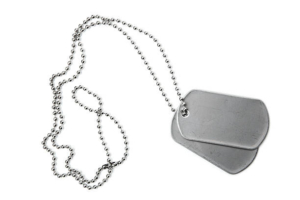
Master Sgt. Charles H. McDaniel
Recently IdentifiedPress Release | Oct. 23, 2018
Funeral Announcement For Soldier Killed During Korean War (McDaniel, C.)
WASHINGTON – The Defense POW/MIA Accounting Agency (DPAA) announced today that the remains of a U.S. serviceman, accounted for from the Korean War, are being returned to his family for burial with full military honors.
Army Master Sgt. Charles H. McDaniel. McDaniel, 32, of Vernon, Indiana, accounted for on Sept. 12, 2018, will be buried October 27 in Greenwood, Indiana. In November 1950, McDaniel was a medic with the 8th Cavalry Regiment Medical Company, supporting the Regiment’s 3rd Battalion. The unit was engaged with enemy forces of the Chinese People’s Volunteer Forces (CPVF,) southwest of the village of Unsan, and west of Hwaong-ri, North Korea. He was reported missing in action on Nov. 2, 1950, when he could not be accounted-for by his unit.
Throughout the remainder of the war, the United Nations Command regularly requested that the CPVF and Korean People’s Army (KPA) provide lists of American and allied servicemen held in their custody. No lists provided included his name as a prisoner of war, and no returning American prisoners provided any information on McDaniel. Based on the lack of information, the U.S. Army declared him deceased as of Dec. 31, 1953.
On June 12, 2018, President Donald Trump met with North Korea Supreme Leader Kim Jong-un in Singapore, in the first meeting between the leaders of the United States and North Korea. The leaders signed a joint statement, including a commitment to return the remains American service members lost in North Korea.
On July 27, 2018, North Korea turned over 55 boxes, purported to contain the remains of American service members killed during the Korean War. The remains arrived at Joint Base Pearl Harbor-Hickam, Hawaii on Aug. 1, 2018, and were subsequently accessioned into the DPAA laboratory for identification.
To identify McDaniel’s remains, scientists from DPAA and the Armed Forces Medical Examiner System used mitochondrial DNA (mtDNA) analysis, dental, anthropological analysis and chest radiograph comparison analysis, as well as circumstantial and material evidence, including a single identification tag that was included in the July 27, turnover.
Today, 7,677 Americans remain unaccounted for from the Korean War. Using modern technology, identifications continue to be made from remains that were previously returned by North Korean officials or recovered from North Korea by American recovery teams. McDaniel’s name is recorded on the Courts of the Missing at the National Memorial Cemetery of the Pacific in Honolulu, along with the others who are missing from the Korean War. A rosette will be placed next to his name to indicate he has been accounted for.
For additional information on the Defense Department’s mission to account for missing Americans who went missing while serving our country, visit the DPAA website at www.dpaa.mil, find us on social media at www.facebook.com/dodpaa or call (703) 699-1420/1169.
Sgt. James K. Park
Recently IdentifiedPress Release | Oct. 23, 2018
Funeral Announcement For Soldier Killed During World War II (Park, J.)
WASHINGTON – The Defense POW/MIA Accounting Agency (DPAA) announced today that the remains of a U.S. serviceman, accounted-for from World War II, are being returned to his family for burial with full military honors.
Army Sgt. James K. Park, 20, of Beaumont, Texas, accounted for on June 20, will be buried October 27 in Barry, Texas. In November 1944, Park was a member of Company I, 26th Infantry Regiment, 1st Infantry Division, engaged in fierce fighting within the Hürtgen Forest in Germany. Park was reported missing in action on Nov. 23, 1944, when he was believed to have been wounded by shrapnel. Due to continuous enemy fire, Soldiers from Park’s company were prevented from searching for him. Additionally, no graves registration teams reported finding his remains. Due to no information regarding his whereabouts, his status was amended to deceased as of Nov. 24, 1945.
After the war, the American Graves Registration Command (AGRC) collected thousands of unknown sets of remains from battlefields in Germany, and labeled each set with an X-number. None of the remains that were found could be associated with Park by AGRC technicians, and his remains were declared non-recoverable.
In December 1946, AGRC personnel recovered an unidentified set of remains from a civilian cemetery at Langerwehe, Germany, on the northern edge of the Hürtgen Forest. German locals said the remains were originally found by a local resident on Aug. 1, 1946 near the estate of Jüngersdorf in the forest. Following the recovery, the remains were processed at the Central Identification Point at Neuville, Belgium, and buried as an unknown, labeled X-4731 Neuville.
Following thorough research and analysis of American Soldiers missing from ground combat within Germany’s Hürtgen Forest, a DPAA historian concluded that there was a possible association between X-4731 and Park. The remains were disinterred on June 28, 2017 and the remains were sent to the DPAA for analysis.
To identify Park’s remains, scientists from DPAA and the Armed Forces Medical Examiner System used mitochondrial (mtDNA) DNA analysis, as well as dental and anthropological analysis.
DPAA is grateful to American Battle Monuments Commission for their partnership with this mission.
Of the 16 million Americans who served in World War II, more than 400,000 died during the war. Currently there are 72,790 service members (approximately 26,000 are assessed as possibly-recoverable) still unaccounted for from World War II. Park’s name is recorded on the Tablets of the Missing at the Netherlands American Cemetery, an American Battle Monuments Commission in Margraten, along with the others missing from WWII. Although interred as an Unknown in Neuville American Cemetery, Park’s grave was meticulously cared for over the past 70 years by the ABMC. A rosette will be placed next to his name to indicate he has been accounted for.
For additional information on the Defense Department’s mission to account for Americans who went missing while serving our country, visit the DPAA website at www.dpaa.mil, find us on social media at www.facebook.com/dodpaa or call (703) 699-1420/1169.
Pfc. Paul D. Gilman
Recently IdentifiedPress Release | Oct. 23, 2018
Funeral Announcement For Marine Killed During World War II (Gilman, P.)
WASHINGTON – The Defense POW/MIA Accounting Agency (DPAA) announced today that the remains of a U.S. serviceman, accounted-for from World War II, are being returned to his family for burial with full military honors.
Marine Corps Reserve Pfc. Paul D. Gilman, 19, of Belen, New Mexico, accounted for on May 17, 2018, will be buried October 26 in his hometown. In November 1943, Gilman was assigned to Company M, 3rd Battalion, 8th Marine Regiment, 2nd Marine Division, Fleet Marine Force, which landed against stiff Japanese resistance on the small island of Betio in the Tarawa Atoll of the Gilbert Islands, in an attempt to secure the island. Over several days of intense fighting at Tarawa, approximately 1,000 Marines and Sailors were killed and more than 2,000 were wounded, but the Japanese were virtually annihilated. Gilman died on the first day of the battle, Nov. 20, 1943.
The battle of Tarawa was a huge victory for the U.S. military because the Gilbert Islands provided the U.S. Navy Pacific Fleet a platform from which to launch assaults on the Marshall and Caroline Islands to advance their Central Pacific Campaign against Japan.
In the immediate aftermath of the fighting on Tarawa, U.S. service members who died in the battle were buried in a number of battlefield cemeteries on the island. In the case of Gilman, records indicate his remains were recovered and were buried in Division Cemetery #3, which was later renamed Cemetery #27. In 1946 the 604th Quartermaster Graves Registration Company (604th GRC) centralized all of the American remains found on Betio Island to Lone Palm Cemetery for later repatriation; however, almost half of the known casualties from the battle were not found., Gilman’s remains were among those not recovered. On Oct. 14, 1949, a military review board declared Gilman’s remains non-recoverable.
In May and June 2015, a nongovernmental organization, History Flight, Inc., notified DPAA that they discovered a burial site on Betio Island and recovered the remains of what they believed were 35 U.S. Marines who fought during the battle in November 1943. Subsequent recoveries in November 2015 and February 2016 resulted in additional remains. The remains were turned over to DPAA in June 2016.
To identify Gilman’s remains, scientists from DPAA and the Armed Forces Medical Examiner System used mitochondrial (mtDNA) DNA analysis, dental and anthropological analysis, as well as circumstantial and material evidence.
DPAA is grateful to History Flight, Inc., for their partnership in this mission.
Of the 16 million Americans who served in World War II, more than 400,000 died during the war. Currently there are 72,790 service members (approximately 26,000 are assessed as possibly-recoverable) still unaccounted for from World War II. Gilman’s name is recorded on the Tablets of the Missing at the Punchbowl, along with the others killed or lost in WWII. A rosette will be placed next to his name to indicate he has been accounted for.
For additional information on the Defense Department’s mission to account for Americans who went missing while serving our country, visit the DPAA website at www.dpaa.mil, find us on social media at www.facebook.com/dodpaa or call (703) 699-1420/1169.
Pfc. Leslie E. Shankles
Recently IdentifiedPress Release | Oct. 17, 2018
Funeral Announcement For Soldier Accounted For From World War II (Shankles, L.)
WASHINGTON – The Defense POW/MIA Accounting Agency (DPAA) announced today that the remains of a U.S. serviceman, accounted-for from World War II, are being returned to his family for burial with full military honors.
Army Pfc. Leslie E. Shankles, 33, of Arcadia, Kansas, accounted for on July 12, 2018, will be buried October 24 in Fort Scott, Kansas. In October 1944, Shankles was a member of Company C, 1st Battalion, 60th Infantry Regiment, 9th Infantry Division. He was killed Oct. 14, 1944 by enemy fire in the Raffelsbrand sector of the Hürtgen Forest, near Germeter, Germany.
In 1947, a local German resident discovered remains in the Raffelsbrand section of the Hürtgen Forest. The remains could not be identified, and were buried as Unknown X-5391 in Neuville Cemetery, now Ardennes American Cemetery, in Belgium.
Following thorough research and analysis of American Soldiers missing from Europe, DPAA historians concluded that there was a strong association between Neuville Unknown X-5391 and Shankles. DPAA disinterred X-5391 in June 2017 and accessioned the remains to the DPAA laboratory.
To identify Shankles’ remains, scientists from DPAA and the Armed Forces Medical Examiner System used Y-chromosome (Y-STR) DNA analysis, anthropological analysis, as well as circumstantial and material evidence.
DPAA is grateful to the American Battle Monuments Commission for their partnership in this mission.
Of the 16 million Americans who served in World War II, more than 400,000 died during the war. Currently there are 72,796 service members (approximately 26,000 are assessed as possibly-recoverable) still unaccounted for from World War II. Shankles’ name is recorded on the Tablets of the Missing at the Netherlands American Cemetery, an American Battle Monuments Commission site in Margraten, Netherlands, along with the others missing from WWII. Although interred as an Unknown in Neuville American Cemetery, Shankles’ grave was meticulously cared for over the past 70 years by the ABMC. A rosette will be placed next to his name to indicate he has been accounted for.
For additional information on the Defense Department’s mission to account for Americans who went missing while serving our country, visit the DPAA website at www.dpaa.mil, find us on social media at www.facebook.com/dodpaa or call (703) 699-1420/1169.
Pvt. John B. Cummings
Recently IdentifiedPress Release | Oct. 15, 2018
Funeral Announcement For Soldier Killed During World War II (Cummings, J.)
WASHINGTON – The Defense POW/MIA Accounting Agency (DPAA) announced today that the remains of a U.S. serviceman, accounted-for from World War II, were returned to his family for burial with full military honors.
Army Pvt. John B. Cummings, 22, of Hartford, Wisconsin, accounted for on July 12, 2018, was buried October 13 in Hazelhurst, Wisconsin. In December 1944, Cummings was a member of Company A, 276th Infantry Regiment, 70th Infantry Division, along the France and Germany border to reinforce the Alsace area. On Dec. 31, 1944, German troops crossed the Rhine River into France. As darkness fell, two member of Cummings’ company passed him as he sat in a foxhole near the riverbank. Sometime later, U.S. troops heard German machine gun fire and maneuvered their way back to Cummings’ foxhole. The troops were unable to find Cummings, but they did find a helmet with a bullet hole. Despite extensive recovery efforts, Cummings’ remains were unable to be located.
Following the close of hostilities, the American Graves Registration Command (AGRC) searched for and disinterred the remains of U.S. service members who were killed in battle. In 1946, investigators met with the mayor of Iffezheim, Germany, who informed them that the remains of an American Soldier were buried in his community near the bank of the Rhine River. The mayor directed the American investigator to a local German veteran who had been present at the burial. A wooden cross indicated the remains belonged to an American serviceman, who died on Dec. 31, 1944. The remains were disinterred and transferred to the American Military Cemetery and identification processing center at St. Avold France, where they were labeled as Unknown X-6454.
The remains, unable to be identified, were interred in the American cemetery at St. Avold, present day Lorraine American Cemetery, in France.
Following thorough research and analysis of American Soldiers missing from Europe, DPAA historians concluded that there was a strong association between Unknown X-6454 and Cummings. DPAA disinterred X-6454 in October 2016 and accessioned the remains to the DPAA laboratory.
To identify Cummings’ remains, scientists from DPAA and the Armed Forces Medical Examiner System used mitochondrial (mtDNA) and autosomal (auSTR) DNA analysis, anthropological analysis, as well as circumstantial and material evidence.
DPAA is grateful to the French Government and the American Battle Monuments Commission for their partnership in this recovery.
Of the 16 million Americans who served in World War II, more than 400,000 died during the war. Currently there are 72,796 service members (approximately 26,000 are assessed as possibly-recoverable) still unaccounted for from World War II. Cummings’ name is recorded on the Tablets of the Missing at the Epinal American Cemetery, an American Battle Monuments Commission site in Dinoze, France, along with the others missing from WWII. Although interred as an Unknown in Lorraine American Cemetery, Cummings’ grave was meticulously cared for over the past 70 years by the ABMC. A rosette will be placed next to his name to indicate he has been accounted for.
For additional information on the Defense Department’s mission to account for Americans who went missing while serving our country, visit the DPAA website at www.dpaa.mil, find us on social media at www.facebook.com/dodpaa or call (703) 699-1420/1169.
Pfc. Kenneth B. Williams
Recently IdentifiedPress Release | Oct. 15, 2018
Funeral Announcement For Soldier Killed During Korean War (Williams, K.)
WASHINGTON – The Defense POW/MIA Accounting Agency (DPAA) announced today that the remains of a U.S. serviceman, accounted-for from the Korean War, are being returned to his family for burial with full military honors.
Army Pfc. Kenneth B. Williams, 38, of Akron, Ohio, accounted for on Aug. 13, 2018, will be buried October 22 in Seville, Ohio. In late November 1950, Williams was a member of Heavy Mortar Company, 32nd Infantry Regiment, 7th Infantry Division. Approximately 2,500 U.S. and 700 South Korean soldiers assembled into the 31st Regimental Combat Team (RCT), which was deployed east of the Chosin Reservoir, North Korea, when it was attacked by overwhelming numbers of Chinese forces. As the Chinese attacks continued, American forces withdrew south. By December 6, the U.S. Army evacuated approximately 1,500 service members; the remaining soldiers had been either captured, killed or missing in enemy territory. Williams was reported missing in action on Dec. 2, 1950, after he was last seen near the Chosin Reservoir.
Williams’ name did not appear on any prisoner of war lists, however returning Americans reported Williams died as a prisoner of war. Based on this information, he was declared deceased as of Jan. 31, 1951.
On Nov. 30, 1993, North Korea turned over 33 boxes, believed to hold the remains of unaccounted-for U.S. servicemen from the Korean War. The reported recovery location of one of the boxes was in Kaljoh-ri, Changjin County, South Hamyong Province, North Korea, near where Williams was last seen.
To identify Williams’ remains, scientists from DPAA and the Armed Forces Medical Examiner System used mitochondrial (mtDNA) DNA analysis, dental and anthropological analysis, as well as circumstantial and material evidence.
DPAA is grateful to the government and people of the Democratic People’s Republic of Korea, and looks forward to the continued fulfillment of the commitment made by President Trump and Chairman Kim on the return and recovery of U.S. service members in North Korea.
Today, 7,677 Americans remain unaccounted for from the Korean War. Using modern technology, identifications continue to be made from remains that were previously returned by North Korean officials or recovered from North Korea by American recovery teams. Williams’ name is recorded on the Courts of the Missing in Honolulu, along with the others who are missing from the Korean War. A rosette will be placed next to his name to indicate he has been accounted for.
For additional information on the Defense Department’s mission to account for Americans who went missing while serving our country, visit the DPAA website at www.dpaa.mil, find us on social media at www.facebook.com/dodpaa or call (703) 699-1420/1169.
Fireman 2nd Class George C. Ford
Recently IdentifiedPress Release | Oct. 12, 2018
Funeral Announcement For USS Oklahoma Sailor Killed During World War II (Ford, G.)
WASHINGTON – The Defense POW/MIA Accounting Agency (DPAA) announced today that the remains of a U.S. serviceman, recently accounted for from World War II are being returned to his family for burial with full military honors.
Navy Fireman 2nd Class George C. Ford. 25, of Lidderdale, Iowa, accounted for on April 30, 2018, will be buried October 20 in Glidden, Iowa. On Dec. 7, 1941, Ford was assigned to the battleship USS Oklahoma, which was moored at Ford Island, Pearl Harbor, when the ship was attacked by Japanese aircraft. The USS Oklahoma sustained multiple torpedo hits, which caused it to quickly capsize. The attack on the ship resulted in the deaths of 429 crewmen, including Ford.
From December 1941 to June 1944, Navy personnel recovered the remains of the deceased crew, which were subsequently interred in the Halawa and Nu’uanu Cemeteries.
In September 1947, tasked with recovering and identifying fallen U.S. personnel in the Pacific Theater, members of the American Graves Registration Service (AGRS) disinterred the remains of U.S. casualties from the two cemeteries and transferred them to the Central Identification Laboratory at Schofield Barracks. The laboratory staff was only able to confirm the identifications of 35 men from the USS Oklahoma at that time. The AGRS subsequently buried the unidentified remains in 46 plots at the National Memorial Cemetery of the Pacific (NMCP), known as the Punchbowl, in Honolulu. In October 1949, a military board classified those who could not be identified as non-recoverable, including Ford.
In April 2015, the Deputy Secretary of Defense issued a policy memorandum directing the disinterment of unknowns associated with the USS Oklahoma. On June 15, 2015, DPAA personnel began exhuming the remains from the Punchbowl for identification.
To identify Ford’s remains, scientists from DPAA and the Armed Forces Medical Examiner System used mitochondrial (mtDNA) and Y-chromosome (Y-STR) DNA analysis, dental and anthropological analysis, as well as circumstantial evidence.
DPAA is grateful to the Department of Veterans Affairs for their partnership in this mission.
Of the 16 million Americans who served in World War II, more than 400,000 died during the war. Currently there are 72,799 (approximately 26,000 are assessed as possibly-recoverable) still unaccounted for from World War II. Ford’s name is recorded on the Walls of the Missing at the Punchbowl, along with the others who are missing from WWII. A rosette will be placed next to his name to indicate he has been accounted for.
For additional information on the Defense Department’s mission to account for Americans who went missing while serving our country, visit the DPAA website at www.dpaa.mil, find us on social media at www.facebook.com/dodpaa or call (703) 699-1420/1169.
Pfc. Fred W. Ashley
Recently IdentifiedPress Release | Oct. 12, 2018
Funeral Announcement For Soldier Killed During World War II (Ashley, F.)
WASHINGTON – The Defense POW/MIA Accounting Agency (DPAA) announced today that the remains of a U.S. serviceman, accounted for from World War II, are being returned to his family for burial with full military honors.
Army Pfc. Fred W. Ashley, 22, of Emmett, Idaho, accounted for on Aug. 27, 2018, will be buried October 20 in his hometown. In May 1945, Ashley was a member of Troop C, 2nd Cavalry Reconnaissance Squadron, 2nd Cavalry Group, on a reconnaissance in the town of Paseka, in the former Czechoslovakia. On 4 May, as many as three hundred German soldiers attacked Ashley’s platoon. He was mortally wounded and was last seen being taken away by German troops. Ashley’s unit reported him missing in action as of May 4, 1945. Following the war, when Ashley was not among the American prisoners liberated from German captivity, the War Department amended his status to killed in action. His remains were not recovered following the battle.
In September 1991, Ashley’s sister contacted U.S. Army Mortuary Affairs, regarding the location of her brother’s remains. She reported that shortly after the war, the family received a letter from the U.S. Army stating that local civilians had discovered Ashley’s gravesite. The chief of Mortuary Affairs and Casualty Support Division responded that remains recovered from an isolated grave in Gutwasser, Czechoslovakia were originally believed to be Ashley, however subsequent examination revealed the remains, designated X-239 St. Avold, were not Ashley.
Following thorough research and analysis, DPAA recommended the disinterment of X-239 St. Avold. The remains were exhumed and transferred to DPAA’s laboratory at Offutt Air Force Base, Nebraska.
In April 2018, X-239 St. Avold was identified as Flight Officer Richard Lane W. Lane, who had been identified in 1946 and buried with full military honors in Gage County, Nebraska.
On June 14, 2018, the remains that had been previously misidentified as Lane were disinterred from Filley Cemetery in Nebraska and accessioned into the DPAA laboratory at Offutt.
To identify Ashley’s remains, scientists from DPAA used dental and anthropological analysis, as well as material and circumstantial evidence.
Of the 16 million Americans who served in World War II, more than 400,000 died during the war. Currently there are 72,866 service members (approximately 26,000 are assessed as possibly-recoverable) still unaccounted for from World War II. Ashley’s name is recorded on the Tablets of the Missing at the Epinal American Cemetery, an American Battle Monuments Commission site in Dinoze, France, along with the other MIAs from WWII. A rosette will be placed next to his name to indicate he has been accounted for.
For additional information on the Defense Department’s mission to account for missing Americans who went missing while serving our country, visit the DPAA website at www.dpaa.mil, find us on social media at www.facebook.com/dodpaa or call (703) 699-1420/1169.
Cpl. James I. Jubb
Recently IdentifiedPress Release | Oct. 12, 2018
Funeral Announcement For Soldier Killed During Korean War (Jubb, J.)
WASHINGTON – The Department of Defense POW/MIA Accounting Agency (DPAA) announced today that the remains of a serviceman, recently accounted-for from the Korean War, are being returned to his family for burial with full military honors.
Army Cpl. James I. Jubb, 21, of Eastport, Maryland, accounted for on Jan. 25, 2018, will be buried October 17 in Arlington National Cemetery, near Washington, D.C. In August 1950, Jubb was a member of Company E, 2nd Battalion, 19th Infantry Regiment, 24th Infantry Division, his unit suffered heavy losses while fighting units of the North Korean People’s Army in the vicinity of the Naktong River, South Korea. Jubb was reported missing in action on Aug. 10, 1950 when he could not be accounted for by his unit. His remains were later declared unrecoverable.
In October 1951, the Army Graves Registration Services recovered four sets of unidentified American remains from a mountain near Ohang, South Korea, which is located east of the Naktong River. One set of remains, designated “Unknown X-2160” could not be identified and were subsequently interred at the National Cemetery of the Pacific (NMCP) in Honolulu.
In 2017, based on research regarding two individuals who remained unaccounted-for from Jubb’s unit, analysts from DPAA determined that Unknown X-2160 could likely be identified. DPAA disinterred Unknown X-2160 in October 2017 and sent the remains to the laboratory for analysis.
To identify Jubb’s remains, scientists used dental and anthropological analysis, as well as chest radiograph comparison, which matched his records.
DPAA is appreciative to the Department of Veterans Affairs for their partnership in this mission.
Today, 7,677 Americans remain unaccounted for from the Korean War. Using modern technology, identifications continue to be made from remains that were previously returned by North Korean officials or recovered from North Korea by American recovery teams. Jubb’s name is recorded on the Courts of the Missing at the NMCP in Honolulu along with the others who are missing from the Korean War. A rosette will be placed next to his name to indicate he has been accounted for.
For additional information on the Defense Department’s mission to account for Americans who went missing while serving our country, visit the DPAA website at www.dpaa.mil, find us on social media at www.facebook.com/dodpaa or call (703) 699-1420/1169.
Lt. Col. Robert G. Nopp
Recently IdentifiedPress Release | Oct. 12, 2018
Funeral Announcement For Army Pilot Killed During Vietnam War (Nopp, R.)
WASHINGTON – The Defense POW/MIA Accounting Agency (DPAA) announced today that the remains of a U.S. serviceman, accounted for from the Vietnam War, are being returned to his family for burial with full military honors.
Army Lt. Col. Robert G. Nopp, 31, of Salem, Oregon, accounted for on Feb. 1, 2018, will be buried October 18 in Arlington National Cemetery, near Washington, D.C. On July 13, 1966 Nopp was assigned to the 131st Aviation Company, serving as a pilot aboard an OV-1C aircraft, on a night surveillance mission from Phu Bai Airfield over Attapu Province, Laos People’s Democratic Republic (L.P.D.R.). Visibility was poor due to heavy thunderstorms. Radar and radio contact were lost with the aircraft, which was not uncommon due to the mountainous terrain in that part of Laos. When the aircraft did not return as scheduled, search efforts were initiated, but no crash site was found. Also lost in the crash was Army Staff Sgt. Marshall F. Kipina, 21, of Calumet, Michigan, the aircraft’s observer.
During the 1990s and 2000s, joint U.S./L.P.D.R. teams investigated the incident and recommended a potential crash site in Attapu Province, L.P.D.R. for excavation. The site, located in extremely difficult terrain, required multiple missions to excavate. The teams recovered osseous material, personal equipment and material evidence. Analysis of the aircraft indicated the crash was of the same aircraft Nopp was flying, and an ejection seat component indicated at least one person was in the aircraft when it crashed. Kipina was identified corrently with Nopp.
To identify Nopp’s remains, scientists from DPAA and the Armed Forces Medical Examiner System mitochondrial DNA (mtDNA), as well as anthropological analysis and circumstantial evidence.
DPAA is grateful to the government of Laos for their assistance in accounting for Nopp.
Today there are 1,594 American servicemen and civilians that are still unaccounted for from the Vietnam War. Nopp’s name is recorded on the Courts of the Missing at the National Memorial Cemetery of the Pacific in Honolulu, along with others unaccounted-for from the Vietnam War. A rosette will be placed next to his name to indicate he has been accounted for.
For additional information on the Defense Department’s mission to account for Americans who went missing while serving our country, visit the DPAA website at www.dpaa.mil, find us on social media at www.facebook.com/dodpaa or call (703) 699-1420/1169.