Funeral Announcement For Soldier Missing From World War II (Eichelberger, L.)
The Defense POW/MIA Accounting Agency (DPAA) announced today that the remains of a U.S. serviceman, recently accounted-for from World War II, are being returned to his family for burial with full military honors.
Army Pfc. Lonnie B.C. Eichelberger, 20, of Waco, Texas, will be buried January 10 in Houston. In February 1942, Eichelberger was a member of Company I, 371st Infantry Regiment, 92nd Infantry Division. In an era of racial segregation, the 92nd ID was the only African-American division to fight in Europe. The division fought at the westernmost portion of the Allied line in northern Italy from November 1944 until April 1945. As part of Operation Fourth Term, Eichelberger’s regiment fought in the hills near the town of Strettoia, Italy. His regiment suffered heavy losses while attacking German defenses. Following the battle, Eichelberger could not be accounted for and was declared missing in action.
In July and August 1945, during search and recovery operations, American personnel recovered a set of remains, later designated as X-193, in the vicinity of Strettoia, Italy. Attempts to identify the remains were unsuccessful and they were buried as “Unknown” at the United States temporary military cemetery at Castelfiorentino.
On Sept. 14, 1948, Unknown X-193 was disinterred and transferred to the Leghorn Port Morgue, where the remains were declared unidentifiable and reinterred in Florence American Cemetery in April 1949.
Based on analysis of information associating X-193 with two individuals still unaccounted for from the 92nd ID, the remains were disinterred from the Florence American Cemetery on June 29, 2016.
To identify Eichelberger’s remains, scientists from DPAA used dental and anthropological analysis, which matched his records, as well as circumstantial evidence.
DPAA is grateful to the American Battle Monuments Commission for their partnership in this mission.
Of the 16 million Americans who served in World War II, more than 400,000 died during the war. Currently there are 72,964 service members (approximately 26,000 are assessed as possibly-recoverable) still unaccounted for from World War II. Eichelberger’s name is recorded on the Tablets of the Missing at the Sicily-Rome American Ceremony, an American Battle Monuments Commission site along with the other MIAs from WWII. A rosette will be placed next to his name to indicate he has been accounted for.
For additional information on the Defense Department’s mission to account for Americans who went missing while serving our country, visit the DPAA website at www.dpaa.mil, find us on social media at www.facebook.com/dodpaa or call (703) 699-1420.
Funeral Announcement For Soldier Killed During Korean War (Colley, E.)
The Department of Defense POW/MIA Accounting Agency (DPAA) announced today that the remains of a serviceman, recently accounted-for from the Korean War, are being returned to his family for burial with full military honors.
Army Sgt. 1st Class Eugene J. Colley, 48, of Edenton, North Carolina, will be buried January 9, 2018 in Arlington National Cemetery, near Washington, D.C. In late November, 1950, Colley was a member of Company C, 1st Battalion, 32nd Infantry Regiment, 7th Infantry Division. Approximately 2,500 U.S. and 700 South Korean soldiers assembled into the 31st Regimental Combat Team (RCT), which was deployed east of the Chosin Reservoir, North Korea, when it was engaged by overwhelming numbers of Chinese forces. By Dec. 2, the U.S. Army evacuated approximately 1,500 wounded service members; the remaining soldiers had been either captured or killed in enemy territory. Following the withdrawal, fighting continued. Because Colley could not be accounted for by his unit at the end of the battle, he was reported missing in action as of Dec. 2, 1950.
Colley’s name did not appear on any prisoner of war lists and no repatriated Americans were able to provide any information concerning Colley as a prisoner of war. Due to the prolonged lack of evidence, the U.S. Army declared him deceased as of Dec. 31, 1953.
During the 36th Joint Recovery Operation in 2004, recovery teams conducted operations on the eastern bank of the Chosin Reservoir, Changjin County, North Korea, based on information provided a Korean witness. The site was in the vicinity of Twikkae Village. During the excavation, the recovery team recovered possible human remains of at least five individuals.
To identify Colley’s remains, scientists from DPAA and the Armed Forces Medical Examiner System used mitochondrial (mtDNA) DNA and Y chromosome (Y-STR) DNA analysis, which matched his family, as well as circumstantial and anthropological evidence, which matched his records.
Today, 7,713 Americans remain unaccounted for from the Korean War. Using advances in technology, identifications continue to be made from remains that were previously turned over by North Korean officials or recovered by American teams. Colley’s name is recorded on the Walls of the Missing at an American Battle Monuments Commission site along with the others who are missing from the Korean War. A rosette will be placed next to his name to indicate he has been accounted for.
For additional information on the Defense Department’s mission to account for Americans who went missing while serving our country, visit the DPAA website at www.dpaa.mil, find us on social media at www.facebook.com/dodpaa or call (703) 699-1420.
https://pow-mia-kia.org/wp-content/uploads/2025/04/logo-300x200.jpg00adminhttps://pow-mia-kia.org/wp-content/uploads/2025/04/logo-300x200.jpgadmin2025-04-02 00:25:192025-04-02 00:25:21Sgt. 1st Class Eugene J. Colley
Funeral Announcement For USS Oklahoma Sailor Killed During World War II (Wilcox, G.)
The Defense POW/MIA Accounting Agency (DPAA) announced today that the remains of a recently accounted-for U.S. serviceman from World War II are being returned to his family for burial with full military honors.
Navy Seaman 2nd Class George J. Wilcox, Jr. 19, of Byram, Mississippi, will be buried December 16 in Evansville, Indiana. On Dec. 7, 1941, Wilcox was assigned to the USS Oklahoma, which was moored at Ford Island, Pearl Harbor, when the ship was attacked by Japanese aircraft. The USS Oklahoma sustained multiple torpedo hits, which caused it to quickly capsize. The attack on the ship resulted in the deaths of 429 crewmen, including Wilcox.
From December 1941 to June 1944, Navy personnel recovered the remains of the deceased crew, which were subsequently interred in the Halawa and Nu’uanu Cemeteries.
In September 1947, tasked with recovering and identifying fallen U.S. personnel in the Pacific Theater, members of the American Graves Registration Service (AGRS) disinterred the remains of U.S. casualties from the two cemeteries and transferred them to the Central Identification Laboratory at Schofield Barracks. The laboratory staff was only able to confirm the identifications of 35 men from the USS Oklahoma at that time. The AGRS subsequently buried the unidentified remains in 46 plots at the National Memorial Cemetery of the Pacific (NMCP), known as the Punchbowl, in Honolulu. In October 1949, a military board classified those who could not be identified as non-recoverable, including Wilcox.
In April 2015, the Deputy Secretary of Defense issued a policy memorandum directing the disinterment of unknowns associated with the USS Oklahoma. On June 15, 2015, DPAA personnel began exhuming the remains from the Punchbowl for analysis.
To identify Wilcox’s remains, scientists from DPAA and the Armed Forces Medical Examiner System used mitochondrial (mtDNA) and Y-chromosome (Y-STR) DNA analysis, which matched his family, as well as circumstantial evidence and dental comparisons and anthropological analysis.
DPAA is appreciative to the Department of Veterans Affairs for their partnership in this mission.
Of the 16 million Americans who served in World War II, more than 400,000 died during the war. Currently there are 72,969 (approximately 26,000 are assessed as possibly-recoverable) still unaccounted for from World War II. Wilcox’s name is recorded at the Courts of the Missing at the Punchbowl, site along with the others who are missing from WWII. A rosette will be placed next to his name to indicate he has been accounted for.
For additional information on the Defense Department’s mission to account for Americans who went missing while serving our country, visit the DPAA website at www.dpaa.mil, find us on social media at www.facebook.com/dodpaa or call (703) 699-1420.
https://pow-mia-kia.org/wp-content/uploads/2025/04/logo-300x200.jpg00adminhttps://pow-mia-kia.org/wp-content/uploads/2025/04/logo-300x200.jpgadmin2025-04-01 22:59:392025-04-01 22:59:41Seaman 2nd Class George J. Wilcox, Jr.
Funeral Announcement For Soldier Missing From The Korean War (Atkins, A.)
The Defense POW/MIA Accounting Agency (DPAA) announced today that the remains of a U.S. serviceman, recently accounted-for from the Korean War, are being returned to his family for burial with full military honors.
Army Pfc. Albert E. Atkins, 20, of Belvidere, New Jersey will be buried December 15 in the National Memorial Cemetery of the Pacific in Honolulu. On May 23, 1951, Atkins was a member of Company E, 2nd Battalion, 187th Airborne Infantry Regiment, 187th Airborne Regimental Combat Team, when his unit was attacking enemy forces near Mae-Bong, South Korea. The regiment’s mission was to secure Hill 911, and as the company prepared to assault the hill, Atkins and two other soldiers from his company were reported missing in action.
On Sept. 17, 1966, two South Koreans provided information regarding three side-by-side graves in the vicinity of Kwandra-ri, South Korea. A U.S. Army Graves Registration team recovered the remains and sent them to the Central Identification Unit in Yokohama, Japan for analysis. Two of the remains were individually identified as members of Atkins’ company, but the third, X-6385, could not be identified and was interred at the National Memorial Cemetery of the Pacific in Honolulu.
After a thorough historical and scientific analysis of information associated with X-6385 it was determined that the remains could likely be identified. After receipt of approval, the remains were disinterred from the NMCP on Nov. 1, 2005 and sent to the laboratory for analysis.
To identify Atkins’ remains, scientists from DPAA and the Armed Forces Medical Examiner System used mitochondrial (mtDNA) DNA analysis, involving Next-Generation Sequencing, which matched his family, as well as dental and anthropological analysis, which matched his records, and circumstantial evidence.
DPAA is grateful to the South Korean citizens who assisted in this recovery.
Today, 7,715 Americans remain unaccounted for from the Korean War. Using modern technology, identifications continue to be made from remains that were previously returned by North Korean officials or recovered from North Korea by American recovery teams. Atkins’ name is recorded on the Courts of the Missing at the Punchbowl, along with the others who are missing from the Korean War. A rosette will be placed next to his name to indicate he has been accounted for.
For additional information on the Defense Department’s mission to account for Americans who went missing while serving our country, visit the DPAA website at www.dpaa.mil, find us on social media at www.facebook.com/dodpaa or call (703) 699-1420.
https://pow-mia-kia.org/wp-content/uploads/2025/04/logo-300x200.jpg00adminhttps://pow-mia-kia.org/wp-content/uploads/2025/04/logo-300x200.jpgadmin2025-04-01 22:59:102025-04-01 22:59:11Pfc. Albert E. Atkins
Funeral Announcement For Soldier Missing From Korean War (Lejeune, K.)
The Defense POW/MIA Accounting Agency (DPAA) announced today that the remains of a U.S. serviceman, recently accounted-for from the Korean War, are being returned to his family for burial with full military honors.
Army Sgt. Kermit J. Lejeune, 23, of Church Point, Louisiana, will be buried December 14 in his hometown. In late November 1950, Lejeune was a member of Company K, 3rd Battalion, 35th Infantry Regiment, 25th Infantry Division, engaged in combat operations against the Chinese People’s Volunteer Forces (CPVF) in the vicinity of Unsan County, North Pyongan County, North Korea. Lejeune was reported missing in action on Nov. 28, 1950. Several returned American POWs reported that Lejeune had in fact been captured and died in a North Korean POW camp in February or March 1951.
Although the U.S. Army Graves Registration Service hoped to recover American remains that remained north of the Korean Demilitarized Zone after the war, administrative details between the United Nations Command and North Korea complicated recovery efforts. An agreement was made and in September and October 1954, in what was known as Operation Glory, remains were returned. However, Lejeune’s remains were not included, and he was declared non-recoverable. The remains that could not be identified were sent to the National Memorial Cemetery of the Pacific, known as the Punchbowl, in Honolulu to and were buried as Unknowns. One set of remains was designated Unknown X-14739.
After a thorough historical and scientific analysis of information associated with X-14739 it was determined that the remains could likely be identified. After receipt of approval, the remains were disinterred from the Punchbowl on Sept. 19, 2013 and sent to the Central Identification Laboratory (now DPAA) for analysis.
DPAA is grateful to the Department of Veterans Affairs for their partnership in this mission.
To identify Lejeune’s remains, scientists from DPAA and the Armed Forces Medical Examiner System used mitochondrial (mtDNA) DNA analysis, which matched his family, as well as dental and anthropological analysis, and circumstantial evidence.
Today, 7,715 Americans remain unaccounted for from the Korean War. Using modern technology, identifications continue to be made from remains that were previously returned by North Korean officials or recovered from North Korea by American recovery teams. Lejeune’s name is recorded on the Courts of the Missing at the Punchbowl, along with the others who are missing from the Korean War. A rosette will be placed next to his name to indicate he has been accounted for.
For additional information on the Defense Department’s mission to account for Americans who went missing while serving our country, visit the DPAA website at www.dpaa.mil, find us on social media at www.facebook.com/dodpaa or call (703) 699-1420.
https://pow-mia-kia.org/wp-content/uploads/2025/04/logo-300x200.jpg00adminhttps://pow-mia-kia.org/wp-content/uploads/2025/04/logo-300x200.jpgadmin2025-04-01 22:58:402025-04-01 22:58:42Sgt. Kermit J. Lejeune
Funeral Announcement For Marine Killed During World War II (Strange, A.)
The Defense POW/MIA Accounting Agency (DPAA) announced today that the remains of a U.S. serviceman, recently accounted-for from World War II, are being returned to his family for burial with full military honors.
Marine Corps Reserve Pfc. Albert Strange, 18, of Mammoth Cave, Kentucky, will be buried December 13, in Cave City, Kentucky. In November 1943, Strange was assigned to Company E, 2nd Battalion, 8th Marines, 2nd Marine Division, which landed against stiff Japanese resistance on the small island of Betio in the Tarawa Atoll of the Gilbert Islands, in an attempt to secure the island. Over several days of intense fighting at Tarawa, approximately 1,000 Marines and Sailors were killed and more than 2,000 were wounded, but the Japanese were virtually annihilated. Strange died on the first day of the battle, Nov. 20, 1943.
Despite the heavy casualties suffered by U.S. forces, military success in the battle of Tarawa was a huge victory for the U.S. military because the Gilbert Islands provided the U.S. Navy Pacific Fleet a platform from which to launch assaults on the Marshall and Caroline Islands to advance their Central Pacific Campaign against Japan.
In the immediate aftermath of the fighting on Tarawa, U.S. service members who died in the battle were buried in a number of battlefield cemeteries on the island. The 604th Quartermaster Graves Registration Company conducted remains recovery operations on Betio between 1946 and 1947, but Strange’s remains were not identified.
In May 2017, DPAA, through a partnership with History Flight, Inc., returned to Betio to conduct excavations of osseous remains through various advanced investigative techniques. The remains were sent to DPAA for analysis.
To identify Strange’s remains, scientists from DPAA used dental, anthropological and chest radiograph comparison analysis, which matched his records, as well as circumstantial and material evidence.
DPAA is appreciative to History Flight, Inc., for their partnership in this mission
Of the 16 million Americans who served in World War II, more than 400,000 died during the war. Currently there are 72,969 service members (approximately 26,000 are assessed as possibly-recoverable) still unaccounted for from World War II. Strange’s name is recorded on the Tablets of the Missing at the National Memorial Cemetery of the Pacific, along with the other MIAs from WWII. A rosette will be placed next to his name to indicate he has been accounted for.
For additional information on the Defense Department’s mission to account for Americans who went missing while serving our country, visit the DPAA website at www.dpaa.mil, find us on social media at www.facebook.com/dodpaa or call (703) 699-1420.
https://pow-mia-kia.org/wp-content/uploads/2025/04/logo-300x200.jpg00adminhttps://pow-mia-kia.org/wp-content/uploads/2025/04/logo-300x200.jpgadmin2025-04-01 22:57:192025-04-01 22:57:21Pfc. Albert Strange
Funeral Announcement For Michigan Sailor Killed During World War II (Rybarczyk, A.)
The Defense POW/MIA Accounting Agency (DPAA) announced today that the remains of a U.S. serviceman, recently accounted-for from World War II, are being returned to his family for burial with full military honors.
Navy Reserve Aviation Radioman 2nd Class Albert P. Rybarczyk, 21, of St. Joseph, Michigan, will be buried December 11 in his hometown. On Sept. 8, 1944, Rybarczyk was a member of the Navy Torpedo Squadron Eighteen (VT-18), USS Intrepid, on a bombing mission against Japanese positions on Babelthuap Island, Palau. As the aircraft reached the target area, the pilot began a dive near Bokerugeru Point and the crew released its 2,000-pound bomb. While attempting to pull out of the dive, the bomb hit an ammunition dump and exploded. The explosion tore the tail from the aircraft, causing it to crash off-shore. Rybarczyk was reported missing in action.
After combat operations in the area ceased, the American Graves Registration Service- Philippine Command travelled to Palau to investigate and attempt to recover missing service members. No record of the crash site was found.
In 2005, BentProp Project, a nonprofit NGO of volunteers who work with DPAA in the Republic of Palau, located a piece of the starboard wing of an aircraft near Bokerugeru Point. Subsequent investigations located the main body of the aircraft offshore.
In 2014, possible human remains were located within the main body of the aircraft, and sent to the Central Identification Laboratory for analysis.
In April 2015, a DPAA Underwater Recovery Team excavated the site and recovered additional remains and material evidence.
To identify Rybarczyk’s remains, scientists from DPAA and the Armed Forces Medical Examiner System used mitochondrial (mtDNA) DNA analysis, which matched his family; anthropological analysis, which matched his records; and historical evidence.
DPAA is grateful to Project Recover, BentProp, Scripps Institute of Oceanography and the University of Delaware for their partnerships in this recovery.
Of the 16 million Americans who served in World War II, more than 400,000 died during the war. Currently there are 72,975 service members (approximately 26,000 are assessed as possibly-recoverable) still unaccounted for from World War II. Rybarczyk’s name is recorded on the Walls of the Missing at the Manila American Cemetery, an American Battle Monuments Commission site, along with the other MIAs from WWII. A rosette will be placed next to his name to indicate he has been accounted for.
For additional information on the Defense Department’s mission to account for Americans who went missing while serving our country, visit the DPAA website at www.dpaa.mil, find us on social media at www.facebook.com/dodpaa or call (703) 699-1420.
https://pow-mia-kia.org/wp-content/uploads/2025/04/logo-300x200.jpg00adminhttps://pow-mia-kia.org/wp-content/uploads/2025/04/logo-300x200.jpgadmin2025-04-01 22:55:432025-04-01 22:55:44Aviation Radioman 2nd Class Albert P. Rybarczyk
Funeral Announcement For USS Oklahoma Sailor Killed During World War II (Crowder, S.)
The Defense POW/MIA Accounting Agency (DPAA) announced today that the remains of a U.S. serviceman, recently accounted for from World War II, are being returned to his family for burial with full military honors.
Navy Fireman 1st Class Samuel W. Crowder, 35, of Louisville, Kentucky will be buried December 9 in his hometown. On Dec. 7, 1941, Crowder was assigned to the USS Oklahoma, which was moored at Ford Island, Pearl Harbor, when the ship was attacked by Japanese aircraft. The USS Oklahoma sustained multiple torpedo hits, which caused it to quickly capsize. The attack on the ship resulted in the deaths of 429 crewmen, including Crowder.
From December 1941 to June 1944, Navy personnel recovered the remains of the deceased crew, which were subsequently interred in the Halawa and Nu’uanu Cemeteries.
In September 1947, tasked with recovering and identifying fallen U.S. personnel in the Pacific Theater, members of the American Graves Registration Service (AGRS) disinterred the remains of U.S. casualties from the two cemeteries and transferred them to the Central Identification Laboratory at Schofield Barracks. The laboratory staff was only able to confirm the identifications of 35 men from the USS Oklahoma at that time. The AGRS subsequently buried the unidentified remains in 46 plots at the National Memorial Cemetery of the Pacific (NMCP), known as the Punchbowl, in Honolulu. In October 1949, a military board classified those who could not be identified as non-recoverable, including Crowder.
In April 2015, the Deputy Secretary of Defense issued a policy memorandum directing the disinterment of unknowns associated with the USS Oklahoma. On June 15, 2015, DPAA personnel began exhuming the remains from the NMCP for analysis.
To identify Crowder’s remains, scientists from DPAA and the Armed Forces Medical Examiner System used mitochondrial (mtDNA) and Y-chromosome STR (Y-STR) DNA analysis, which matched family members, as well as circumstantial evidence and laboratory analysis, to include dental comparisons and anthropological analysis.
DPAA is grateful to the Department of Veterans Affairs for their Partnership in this mission.
Of the 16 million Americans who served in World War II, more than 400,000 died during the war. Currently there are 72,975 (approximately 26,000 are assessed as possibly-recoverable) still unaccounted for from World War II. Crowder’s name is recorded on the Tablets of the Missing at the Punchbowl, along with the others who are missing from WWII. A rosette will be placed next to his name to indicate he has been accounted for.
For additional information on the Defense Department’s mission to account for Americans who went missing while serving our country, visit the DPAA website at www.dpaa.mil, find us on social media at www.facebook.com/dodpaa or call (703) 699-1420.
https://pow-mia-kia.org/wp-content/uploads/2025/04/logo-300x200.jpg00adminhttps://pow-mia-kia.org/wp-content/uploads/2025/04/logo-300x200.jpgadmin2025-04-01 22:54:132025-04-01 22:54:15Fireman 1st Class Samuel W. Crowder
Funeral Announcement For Marine Killed During World War II (Kourkos, S.)
The Defense POW/MIA Accounting Agency (DPAA) announced today that the remains of a U.S. serviceman, recently accounted for from World War II, are being returned to his family for burial with full military honors.
Marine Corps Reserve Pfc. Sam J. Kourkos, 20, of Independence, Kansas, will be buried December 9 in his hometown. In November 1943, Kourkos was assigned to Company M, 3rd Battalion, 8th Marines, 2nd Marine Division, which landed against stiff Japanese resistance on the small island of Betio in the Tarawa Atoll of the Gilbert Islands, in an attempt to secure the island. Over several days of intense fighting at Tarawa, approximately 1,000 Marines and Sailors were killed and more than 2,000 were wounded, but the Japanese were virtually annihilated. Kourkos died sometime on the second day of battle, Nov. 21, 1943.
The battle of Tarawa was a huge victory for the U.S. military because the Gilbert Islands provided the U.S. Navy Pacific Fleet a platform from which to launch assaults on the Marshall and Caroline Islands to advance their Central Pacific Campaign against Japan.
In the immediate aftermath of the fighting on Tarawa, U.S. service members who died in the battle were buried in a number of battlefield cemeteries on the island. In May 1946, the 604th Quartermaster Graves Registration Company of the American Graves Registration Services (AGRS) had recovered 532 sets of remains from burial sites across the Tarawa Atoll and interred them in Lone Palm Cemetery. The remains that could not be identified were designated as “Unknowns.”
In November 1946, the U.S. Army began disinterment to bring the remains to Oahu for identification at the Central Identification Laboratory. In 1949 and 1950, the remains that could not be identified were interred in the National Memorial Cemetery of the Pacific (NMCP – also known as the “Punchbowl”) in Honolulu.
In October 2016, due to recent advances in forensic technology, DPAA began the exhumation of unknown remains associated with Tarawa from NMCP and sent the remains to the DPAA laboratory for analysis.
To identify Kourkos’ remains, scientists from DPAA examined circumstantial evidence and conducted laboratory analyses, including dental, anthropological and chest radiograph comparisons, which matched his records.
DPAA is grateful to the Department of Veterans Affairs for their partnership in this mission.
Of the 16 million Americans who served in World War II, more than 400,000 died during the war. Currently there are 72,975 service members (approximately 26,000 are assessed as possibly-recoverable) still unaccounted for from World War II. Kourkos’ name is recorded on the Tablets of the Missing at the National Memorial Cemetery of the Pacific, along with the other MIAs from WWII. A rosette will be placed next to his name to indicate he has been accounted for.
For additional information on the Defense Department’s mission to account for Americans who went missing while serving our country, visit the DPAA website at www.dpaa.mil, find us on social media at www.facebook.com/dodpaa or call (703) 699-1420.
https://pow-mia-kia.org/wp-content/uploads/2025/04/logo-300x200.jpg00adminhttps://pow-mia-kia.org/wp-content/uploads/2025/04/logo-300x200.jpgadmin2025-04-01 22:52:582025-04-01 22:52:59Pfc. Sam J. Kourkos
Funeral Announcement For Marine Killed During World War II (Newell, A.)
The Defense POW/MIA Accounting Agency (DPAA) announced today that the remains of a U.S. serviceman, recently accounted for from World War II, are being returned to his family for burial with full military honors.
Marine Corps Pvt. Archie W. Newell, 22, of Aberdeen, South Dakota, will be buried December 8, in Arlington National Cemetery, near Washington, D.C. In November 1943, Newell was assigned to Company C, 2nd Tank Battalion, 2nd Marine Division, which landed against stiff Japanese resistance on the small island of Betio in the Tarawa Atoll of the Gilbert Islands, in an attempt to secure the island. Over several days of intense fighting at Tarawa, approximately 1,000 Marines and Sailors were killed and more than 2,000 were wounded, but the Japanese were virtually annihilated. Newell was killed on the first day of the battle, Nov. 20, 1943.
Despite the heavy casualties suffered by U.S. forces, military success in the battle of Tarawa was a huge victory for the U.S. military because the Gilbert Islands provided the U.S. Navy Pacific Fleet a platform from which to launch assaults on the Marshall and Caroline Islands to advance their Central Pacific Campaign against Japan.
In the immediate aftermath of the fighting on Tarawa, U.S. service members who died in the battle were buried in a number of battlefield cemeteries on the island. The 604th Quartermaster Graves Registration Company conducted remains recovery operations on Betio between 1946 and 1947, but Newell’s remains were not identified. All of the remains found on Tarawa were sent to the Schofield Barracks Central Identification Laboratory for identification in 1947. By 1949, the remains that had not been identified were interred in the National Memorial Cemetery of the Pacific, known as the Punchbowl, in Honolulu.
In October 2016, DPAA disinterred Tarawa Unknown X-044 from the Punchbowl and sent to the laboratory for analysis.
To identify Newell’s remains, scientists from DPAA used dental, anthropological and chest radiograph comparison analysis, which matched his records, as well as circumstantial and material evidence.
DPAA is grateful to the Department of Veterans Affairs for their partnership in this recovery.
Of the 16 million Americans who served in World War II, more than 400,000 died during the war. Currently there are 72,975 service members (approximately 26,000 are assessed as possibly-recoverable) still unaccounted for from World War II. Newell’s name is recorded on the Tablets of the Missing at the National Memorial Cemetery of the Pacific, along with the other MIAs from WWII. A rosette will be placed next to his name to indicate he has been accounted for.
For additional information on the Defense Department’s mission to account for Americans who went missing while serving our country, visit the DPAA website at www.dpaa.mil, find us on social media at www.facebook.com/dodpaa or call (703) 699-1420.
https://pow-mia-kia.org/wp-content/uploads/2025/04/logo-300x200.jpg00adminhttps://pow-mia-kia.org/wp-content/uploads/2025/04/logo-300x200.jpgadmin2025-04-01 22:51:412025-04-01 22:51:43Pvt. Archie W. Newell
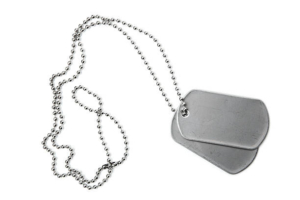
Pfc. Lonnie B.C. Eichelberger
Recently IdentifiedPress Release | Jan. 5, 2018
Funeral Announcement For Soldier Missing From World War II (Eichelberger, L.)
The Defense POW/MIA Accounting Agency (DPAA) announced today that the remains of a U.S. serviceman, recently accounted-for from World War II, are being returned to his family for burial with full military honors.
Army Pfc. Lonnie B.C. Eichelberger, 20, of Waco, Texas, will be buried January 10 in Houston. In February 1942, Eichelberger was a member of Company I, 371st Infantry Regiment, 92nd Infantry Division. In an era of racial segregation, the 92nd ID was the only African-American division to fight in Europe. The division fought at the westernmost portion of the Allied line in northern Italy from November 1944 until April 1945. As part of Operation Fourth Term, Eichelberger’s regiment fought in the hills near the town of Strettoia, Italy. His regiment suffered heavy losses while attacking German defenses. Following the battle, Eichelberger could not be accounted for and was declared missing in action.
In July and August 1945, during search and recovery operations, American personnel recovered a set of remains, later designated as X-193, in the vicinity of Strettoia, Italy. Attempts to identify the remains were unsuccessful and they were buried as “Unknown” at the United States temporary military cemetery at Castelfiorentino.
On Sept. 14, 1948, Unknown X-193 was disinterred and transferred to the Leghorn Port Morgue, where the remains were declared unidentifiable and reinterred in Florence American Cemetery in April 1949.
Based on analysis of information associating X-193 with two individuals still unaccounted for from the 92nd ID, the remains were disinterred from the Florence American Cemetery on June 29, 2016.
To identify Eichelberger’s remains, scientists from DPAA used dental and anthropological analysis, which matched his records, as well as circumstantial evidence.
DPAA is grateful to the American Battle Monuments Commission for their partnership in this mission.
Of the 16 million Americans who served in World War II, more than 400,000 died during the war. Currently there are 72,964 service members (approximately 26,000 are assessed as possibly-recoverable) still unaccounted for from World War II. Eichelberger’s name is recorded on the Tablets of the Missing at the Sicily-Rome American Ceremony, an American Battle Monuments Commission site along with the other MIAs from WWII. A rosette will be placed next to his name to indicate he has been accounted for.
For additional information on the Defense Department’s mission to account for Americans who went missing while serving our country, visit the DPAA website at www.dpaa.mil, find us on social media at www.facebook.com/dodpaa or call (703) 699-1420.
Sgt. 1st Class Eugene J. Colley
Recently IdentifiedPress Release | Jan. 2, 2018
Funeral Announcement For Soldier Killed During Korean War (Colley, E.)
The Department of Defense POW/MIA Accounting Agency (DPAA) announced today that the remains of a serviceman, recently accounted-for from the Korean War, are being returned to his family for burial with full military honors.
Army Sgt. 1st Class Eugene J. Colley, 48, of Edenton, North Carolina, will be buried January 9, 2018 in Arlington National Cemetery, near Washington, D.C. In late November, 1950, Colley was a member of Company C, 1st Battalion, 32nd Infantry Regiment, 7th Infantry Division. Approximately 2,500 U.S. and 700 South Korean soldiers assembled into the 31st Regimental Combat Team (RCT), which was deployed east of the Chosin Reservoir, North Korea, when it was engaged by overwhelming numbers of Chinese forces. By Dec. 2, the U.S. Army evacuated approximately 1,500 wounded service members; the remaining soldiers had been either captured or killed in enemy territory. Following the withdrawal, fighting continued. Because Colley could not be accounted for by his unit at the end of the battle, he was reported missing in action as of Dec. 2, 1950.
Colley’s name did not appear on any prisoner of war lists and no repatriated Americans were able to provide any information concerning Colley as a prisoner of war. Due to the prolonged lack of evidence, the U.S. Army declared him deceased as of Dec. 31, 1953.
During the 36th Joint Recovery Operation in 2004, recovery teams conducted operations on the eastern bank of the Chosin Reservoir, Changjin County, North Korea, based on information provided a Korean witness. The site was in the vicinity of Twikkae Village. During the excavation, the recovery team recovered possible human remains of at least five individuals.
To identify Colley’s remains, scientists from DPAA and the Armed Forces Medical Examiner System used mitochondrial (mtDNA) DNA and Y chromosome (Y-STR) DNA analysis, which matched his family, as well as circumstantial and anthropological evidence, which matched his records.
Today, 7,713 Americans remain unaccounted for from the Korean War. Using advances in technology, identifications continue to be made from remains that were previously turned over by North Korean officials or recovered by American teams. Colley’s name is recorded on the Walls of the Missing at an American Battle Monuments Commission site along with the others who are missing from the Korean War. A rosette will be placed next to his name to indicate he has been accounted for.
For additional information on the Defense Department’s mission to account for Americans who went missing while serving our country, visit the DPAA website at www.dpaa.mil, find us on social media at www.facebook.com/dodpaa or call (703) 699-1420.
Seaman 2nd Class George J. Wilcox, Jr.
Recently IdentifiedPress Release | Dec. 8, 2017
Funeral Announcement For USS Oklahoma Sailor Killed During World War II (Wilcox, G.)
The Defense POW/MIA Accounting Agency (DPAA) announced today that the remains of a recently accounted-for U.S. serviceman from World War II are being returned to his family for burial with full military honors.
Navy Seaman 2nd Class George J. Wilcox, Jr. 19, of Byram, Mississippi, will be buried December 16 in Evansville, Indiana. On Dec. 7, 1941, Wilcox was assigned to the USS Oklahoma, which was moored at Ford Island, Pearl Harbor, when the ship was attacked by Japanese aircraft. The USS Oklahoma sustained multiple torpedo hits, which caused it to quickly capsize. The attack on the ship resulted in the deaths of 429 crewmen, including Wilcox.
From December 1941 to June 1944, Navy personnel recovered the remains of the deceased crew, which were subsequently interred in the Halawa and Nu’uanu Cemeteries.
In September 1947, tasked with recovering and identifying fallen U.S. personnel in the Pacific Theater, members of the American Graves Registration Service (AGRS) disinterred the remains of U.S. casualties from the two cemeteries and transferred them to the Central Identification Laboratory at Schofield Barracks. The laboratory staff was only able to confirm the identifications of 35 men from the USS Oklahoma at that time. The AGRS subsequently buried the unidentified remains in 46 plots at the National Memorial Cemetery of the Pacific (NMCP), known as the Punchbowl, in Honolulu. In October 1949, a military board classified those who could not be identified as non-recoverable, including Wilcox.
In April 2015, the Deputy Secretary of Defense issued a policy memorandum directing the disinterment of unknowns associated with the USS Oklahoma. On June 15, 2015, DPAA personnel began exhuming the remains from the Punchbowl for analysis.
To identify Wilcox’s remains, scientists from DPAA and the Armed Forces Medical Examiner System used mitochondrial (mtDNA) and Y-chromosome (Y-STR) DNA analysis, which matched his family, as well as circumstantial evidence and dental comparisons and anthropological analysis.
DPAA is appreciative to the Department of Veterans Affairs for their partnership in this mission.
Of the 16 million Americans who served in World War II, more than 400,000 died during the war. Currently there are 72,969 (approximately 26,000 are assessed as possibly-recoverable) still unaccounted for from World War II. Wilcox’s name is recorded at the Courts of the Missing at the Punchbowl, site along with the others who are missing from WWII. A rosette will be placed next to his name to indicate he has been accounted for.
For additional information on the Defense Department’s mission to account for Americans who went missing while serving our country, visit the DPAA website at www.dpaa.mil, find us on social media at www.facebook.com/dodpaa or call (703) 699-1420.
Pfc. Albert E. Atkins
Recently IdentifiedPress Release | Dec. 8, 2017
Funeral Announcement For Soldier Missing From The Korean War (Atkins, A.)
The Defense POW/MIA Accounting Agency (DPAA) announced today that the remains of a U.S. serviceman, recently accounted-for from the Korean War, are being returned to his family for burial with full military honors.
Army Pfc. Albert E. Atkins, 20, of Belvidere, New Jersey will be buried December 15 in the National Memorial Cemetery of the Pacific in Honolulu. On May 23, 1951, Atkins was a member of Company E, 2nd Battalion, 187th Airborne Infantry Regiment, 187th Airborne Regimental Combat Team, when his unit was attacking enemy forces near Mae-Bong, South Korea. The regiment’s mission was to secure Hill 911, and as the company prepared to assault the hill, Atkins and two other soldiers from his company were reported missing in action.
On Sept. 17, 1966, two South Koreans provided information regarding three side-by-side graves in the vicinity of Kwandra-ri, South Korea. A U.S. Army Graves Registration team recovered the remains and sent them to the Central Identification Unit in Yokohama, Japan for analysis. Two of the remains were individually identified as members of Atkins’ company, but the third, X-6385, could not be identified and was interred at the National Memorial Cemetery of the Pacific in Honolulu.
After a thorough historical and scientific analysis of information associated with X-6385 it was determined that the remains could likely be identified. After receipt of approval, the remains were disinterred from the NMCP on Nov. 1, 2005 and sent to the laboratory for analysis.
To identify Atkins’ remains, scientists from DPAA and the Armed Forces Medical Examiner System used mitochondrial (mtDNA) DNA analysis, involving Next-Generation Sequencing, which matched his family, as well as dental and anthropological analysis, which matched his records, and circumstantial evidence.
DPAA is grateful to the South Korean citizens who assisted in this recovery.
Today, 7,715 Americans remain unaccounted for from the Korean War. Using modern technology, identifications continue to be made from remains that were previously returned by North Korean officials or recovered from North Korea by American recovery teams. Atkins’ name is recorded on the Courts of the Missing at the Punchbowl, along with the others who are missing from the Korean War. A rosette will be placed next to his name to indicate he has been accounted for.
For additional information on the Defense Department’s mission to account for Americans who went missing while serving our country, visit the DPAA website at www.dpaa.mil, find us on social media at www.facebook.com/dodpaa or call (703) 699-1420.
Sgt. Kermit J. Lejeune
Recently IdentifiedPress Release | Dec. 8, 2017
Funeral Announcement For Soldier Missing From Korean War (Lejeune, K.)
The Defense POW/MIA Accounting Agency (DPAA) announced today that the remains of a U.S. serviceman, recently accounted-for from the Korean War, are being returned to his family for burial with full military honors.
Army Sgt. Kermit J. Lejeune, 23, of Church Point, Louisiana, will be buried December 14 in his hometown. In late November 1950, Lejeune was a member of Company K, 3rd Battalion, 35th Infantry Regiment, 25th Infantry Division, engaged in combat operations against the Chinese People’s Volunteer Forces (CPVF) in the vicinity of Unsan County, North Pyongan County, North Korea. Lejeune was reported missing in action on Nov. 28, 1950. Several returned American POWs reported that Lejeune had in fact been captured and died in a North Korean POW camp in February or March 1951.
Although the U.S. Army Graves Registration Service hoped to recover American remains that remained north of the Korean Demilitarized Zone after the war, administrative details between the United Nations Command and North Korea complicated recovery efforts. An agreement was made and in September and October 1954, in what was known as Operation Glory, remains were returned. However, Lejeune’s remains were not included, and he was declared non-recoverable. The remains that could not be identified were sent to the National Memorial Cemetery of the Pacific, known as the Punchbowl, in Honolulu to and were buried as Unknowns. One set of remains was designated Unknown X-14739.
After a thorough historical and scientific analysis of information associated with X-14739 it was determined that the remains could likely be identified. After receipt of approval, the remains were disinterred from the Punchbowl on Sept. 19, 2013 and sent to the Central Identification Laboratory (now DPAA) for analysis.
DPAA is grateful to the Department of Veterans Affairs for their partnership in this mission.
To identify Lejeune’s remains, scientists from DPAA and the Armed Forces Medical Examiner System used mitochondrial (mtDNA) DNA analysis, which matched his family, as well as dental and anthropological analysis, and circumstantial evidence.
Today, 7,715 Americans remain unaccounted for from the Korean War. Using modern technology, identifications continue to be made from remains that were previously returned by North Korean officials or recovered from North Korea by American recovery teams. Lejeune’s name is recorded on the Courts of the Missing at the Punchbowl, along with the others who are missing from the Korean War. A rosette will be placed next to his name to indicate he has been accounted for.
For additional information on the Defense Department’s mission to account for Americans who went missing while serving our country, visit the DPAA website at www.dpaa.mil, find us on social media at www.facebook.com/dodpaa or call (703) 699-1420.
Pfc. Albert Strange
Recently IdentifiedP
Press Release | Dec. 6, 2017
Funeral Announcement For Marine Killed During World War II (Strange, A.)
The Defense POW/MIA Accounting Agency (DPAA) announced today that the remains of a U.S. serviceman, recently accounted-for from World War II, are being returned to his family for burial with full military honors.
Marine Corps Reserve Pfc. Albert Strange, 18, of Mammoth Cave, Kentucky, will be buried December 13, in Cave City, Kentucky. In November 1943, Strange was assigned to Company E, 2nd Battalion, 8th Marines, 2nd Marine Division, which landed against stiff Japanese resistance on the small island of Betio in the Tarawa Atoll of the Gilbert Islands, in an attempt to secure the island. Over several days of intense fighting at Tarawa, approximately 1,000 Marines and Sailors were killed and more than 2,000 were wounded, but the Japanese were virtually annihilated. Strange died on the first day of the battle, Nov. 20, 1943.
Despite the heavy casualties suffered by U.S. forces, military success in the battle of Tarawa was a huge victory for the U.S. military because the Gilbert Islands provided the U.S. Navy Pacific Fleet a platform from which to launch assaults on the Marshall and Caroline Islands to advance their Central Pacific Campaign against Japan.
In the immediate aftermath of the fighting on Tarawa, U.S. service members who died in the battle were buried in a number of battlefield cemeteries on the island. The 604th Quartermaster Graves Registration Company conducted remains recovery operations on Betio between 1946 and 1947, but Strange’s remains were not identified.
In May 2017, DPAA, through a partnership with History Flight, Inc., returned to Betio to conduct excavations of osseous remains through various advanced investigative techniques. The remains were sent to DPAA for analysis.
To identify Strange’s remains, scientists from DPAA used dental, anthropological and chest radiograph comparison analysis, which matched his records, as well as circumstantial and material evidence.
DPAA is appreciative to History Flight, Inc., for their partnership in this mission
Of the 16 million Americans who served in World War II, more than 400,000 died during the war. Currently there are 72,969 service members (approximately 26,000 are assessed as possibly-recoverable) still unaccounted for from World War II. Strange’s name is recorded on the Tablets of the Missing at the National Memorial Cemetery of the Pacific, along with the other MIAs from WWII. A rosette will be placed next to his name to indicate he has been accounted for.
For additional information on the Defense Department’s mission to account for Americans who went missing while serving our country, visit the DPAA website at www.dpaa.mil, find us on social media at www.facebook.com/dodpaa or call (703) 699-1420.
Aviation Radioman 2nd Class Albert P. Rybarczyk
Recently IdentifiedPress Release | Dec. 4, 2017
Funeral Announcement For Michigan Sailor Killed During World War II (Rybarczyk, A.)
The Defense POW/MIA Accounting Agency (DPAA) announced today that the remains of a U.S. serviceman, recently accounted-for from World War II, are being returned to his family for burial with full military honors.
Navy Reserve Aviation Radioman 2nd Class Albert P. Rybarczyk, 21, of St. Joseph, Michigan, will be buried December 11 in his hometown. On Sept. 8, 1944, Rybarczyk was a member of the Navy Torpedo Squadron Eighteen (VT-18), USS Intrepid, on a bombing mission against Japanese positions on Babelthuap Island, Palau. As the aircraft reached the target area, the pilot began a dive near Bokerugeru Point and the crew released its 2,000-pound bomb. While attempting to pull out of the dive, the bomb hit an ammunition dump and exploded. The explosion tore the tail from the aircraft, causing it to crash off-shore. Rybarczyk was reported missing in action.
After combat operations in the area ceased, the American Graves Registration Service- Philippine Command travelled to Palau to investigate and attempt to recover missing service members. No record of the crash site was found.
In 2005, BentProp Project, a nonprofit NGO of volunteers who work with DPAA in the Republic of Palau, located a piece of the starboard wing of an aircraft near Bokerugeru Point. Subsequent investigations located the main body of the aircraft offshore.
In 2014, possible human remains were located within the main body of the aircraft, and sent to the Central Identification Laboratory for analysis.
In April 2015, a DPAA Underwater Recovery Team excavated the site and recovered additional remains and material evidence.
To identify Rybarczyk’s remains, scientists from DPAA and the Armed Forces Medical Examiner System used mitochondrial (mtDNA) DNA analysis, which matched his family; anthropological analysis, which matched his records; and historical evidence.
DPAA is grateful to Project Recover, BentProp, Scripps Institute of Oceanography and the University of Delaware for their partnerships in this recovery.
Of the 16 million Americans who served in World War II, more than 400,000 died during the war. Currently there are 72,975 service members (approximately 26,000 are assessed as possibly-recoverable) still unaccounted for from World War II. Rybarczyk’s name is recorded on the Walls of the Missing at the Manila American Cemetery, an American Battle Monuments Commission site, along with the other MIAs from WWII. A rosette will be placed next to his name to indicate he has been accounted for.
For additional information on the Defense Department’s mission to account for Americans who went missing while serving our country, visit the DPAA website at www.dpaa.mil, find us on social media at www.facebook.com/dodpaa or call (703) 699-1420.
Fireman 1st Class Samuel W. Crowder
Recently IdentifiedPress Release | Dec. 1, 2017
Funeral Announcement For USS Oklahoma Sailor Killed During World War II (Crowder, S.)
The Defense POW/MIA Accounting Agency (DPAA) announced today that the remains of a U.S. serviceman, recently accounted for from World War II, are being returned to his family for burial with full military honors.
Navy Fireman 1st Class Samuel W. Crowder, 35, of Louisville, Kentucky will be buried December 9 in his hometown. On Dec. 7, 1941, Crowder was assigned to the USS Oklahoma, which was moored at Ford Island, Pearl Harbor, when the ship was attacked by Japanese aircraft. The USS Oklahoma sustained multiple torpedo hits, which caused it to quickly capsize. The attack on the ship resulted in the deaths of 429 crewmen, including Crowder.
From December 1941 to June 1944, Navy personnel recovered the remains of the deceased crew, which were subsequently interred in the Halawa and Nu’uanu Cemeteries.
In September 1947, tasked with recovering and identifying fallen U.S. personnel in the Pacific Theater, members of the American Graves Registration Service (AGRS) disinterred the remains of U.S. casualties from the two cemeteries and transferred them to the Central Identification Laboratory at Schofield Barracks. The laboratory staff was only able to confirm the identifications of 35 men from the USS Oklahoma at that time. The AGRS subsequently buried the unidentified remains in 46 plots at the National Memorial Cemetery of the Pacific (NMCP), known as the Punchbowl, in Honolulu. In October 1949, a military board classified those who could not be identified as non-recoverable, including Crowder.
In April 2015, the Deputy Secretary of Defense issued a policy memorandum directing the disinterment of unknowns associated with the USS Oklahoma. On June 15, 2015, DPAA personnel began exhuming the remains from the NMCP for analysis.
To identify Crowder’s remains, scientists from DPAA and the Armed Forces Medical Examiner System used mitochondrial (mtDNA) and Y-chromosome STR (Y-STR) DNA analysis, which matched family members, as well as circumstantial evidence and laboratory analysis, to include dental comparisons and anthropological analysis.
DPAA is grateful to the Department of Veterans Affairs for their Partnership in this mission.
Of the 16 million Americans who served in World War II, more than 400,000 died during the war. Currently there are 72,975 (approximately 26,000 are assessed as possibly-recoverable) still unaccounted for from World War II. Crowder’s name is recorded on the Tablets of the Missing at the Punchbowl, along with the others who are missing from WWII. A rosette will be placed next to his name to indicate he has been accounted for.
For additional information on the Defense Department’s mission to account for Americans who went missing while serving our country, visit the DPAA website at www.dpaa.mil, find us on social media at www.facebook.com/dodpaa or call (703) 699-1420.
Pfc. Sam J. Kourkos
Recently IdentifiedPress Release | Dec. 1, 2017
Funeral Announcement For Marine Killed During World War II (Kourkos, S.)
The Defense POW/MIA Accounting Agency (DPAA) announced today that the remains of a U.S. serviceman, recently accounted for from World War II, are being returned to his family for burial with full military honors.
Marine Corps Reserve Pfc. Sam J. Kourkos, 20, of Independence, Kansas, will be buried December 9 in his hometown. In November 1943, Kourkos was assigned to Company M, 3rd Battalion, 8th Marines, 2nd Marine Division, which landed against stiff Japanese resistance on the small island of Betio in the Tarawa Atoll of the Gilbert Islands, in an attempt to secure the island. Over several days of intense fighting at Tarawa, approximately 1,000 Marines and Sailors were killed and more than 2,000 were wounded, but the Japanese were virtually annihilated. Kourkos died sometime on the second day of battle, Nov. 21, 1943.
The battle of Tarawa was a huge victory for the U.S. military because the Gilbert Islands provided the U.S. Navy Pacific Fleet a platform from which to launch assaults on the Marshall and Caroline Islands to advance their Central Pacific Campaign against Japan.
In the immediate aftermath of the fighting on Tarawa, U.S. service members who died in the battle were buried in a number of battlefield cemeteries on the island. In May 1946, the 604th Quartermaster Graves Registration Company of the American Graves Registration Services (AGRS) had recovered 532 sets of remains from burial sites across the Tarawa Atoll and interred them in Lone Palm Cemetery. The remains that could not be identified were designated as “Unknowns.”
In November 1946, the U.S. Army began disinterment to bring the remains to Oahu for identification at the Central Identification Laboratory. In 1949 and 1950, the remains that could not be identified were interred in the National Memorial Cemetery of the Pacific (NMCP – also known as the “Punchbowl”) in Honolulu.
In October 2016, due to recent advances in forensic technology, DPAA began the exhumation of unknown remains associated with Tarawa from NMCP and sent the remains to the DPAA laboratory for analysis.
To identify Kourkos’ remains, scientists from DPAA examined circumstantial evidence and conducted laboratory analyses, including dental, anthropological and chest radiograph comparisons, which matched his records.
DPAA is grateful to the Department of Veterans Affairs for their partnership in this mission.
Of the 16 million Americans who served in World War II, more than 400,000 died during the war. Currently there are 72,975 service members (approximately 26,000 are assessed as possibly-recoverable) still unaccounted for from World War II. Kourkos’ name is recorded on the Tablets of the Missing at the National Memorial Cemetery of the Pacific, along with the other MIAs from WWII. A rosette will be placed next to his name to indicate he has been accounted for.
For additional information on the Defense Department’s mission to account for Americans who went missing while serving our country, visit the DPAA website at www.dpaa.mil, find us on social media at www.facebook.com/dodpaa or call (703) 699-1420.
Pvt. Archie W. Newell
Recently IdentifiedPress Release | Dec. 1, 2017
Funeral Announcement For Marine Killed During World War II (Newell, A.)
The Defense POW/MIA Accounting Agency (DPAA) announced today that the remains of a U.S. serviceman, recently accounted for from World War II, are being returned to his family for burial with full military honors.
Marine Corps Pvt. Archie W. Newell, 22, of Aberdeen, South Dakota, will be buried December 8, in Arlington National Cemetery, near Washington, D.C. In November 1943, Newell was assigned to Company C, 2nd Tank Battalion, 2nd Marine Division, which landed against stiff Japanese resistance on the small island of Betio in the Tarawa Atoll of the Gilbert Islands, in an attempt to secure the island. Over several days of intense fighting at Tarawa, approximately 1,000 Marines and Sailors were killed and more than 2,000 were wounded, but the Japanese were virtually annihilated. Newell was killed on the first day of the battle, Nov. 20, 1943.
Despite the heavy casualties suffered by U.S. forces, military success in the battle of Tarawa was a huge victory for the U.S. military because the Gilbert Islands provided the U.S. Navy Pacific Fleet a platform from which to launch assaults on the Marshall and Caroline Islands to advance their Central Pacific Campaign against Japan.
In the immediate aftermath of the fighting on Tarawa, U.S. service members who died in the battle were buried in a number of battlefield cemeteries on the island. The 604th Quartermaster Graves Registration Company conducted remains recovery operations on Betio between 1946 and 1947, but Newell’s remains were not identified. All of the remains found on Tarawa were sent to the Schofield Barracks Central Identification Laboratory for identification in 1947. By 1949, the remains that had not been identified were interred in the National Memorial Cemetery of the Pacific, known as the Punchbowl, in Honolulu.
In October 2016, DPAA disinterred Tarawa Unknown X-044 from the Punchbowl and sent to the laboratory for analysis.
To identify Newell’s remains, scientists from DPAA used dental, anthropological and chest radiograph comparison analysis, which matched his records, as well as circumstantial and material evidence.
DPAA is grateful to the Department of Veterans Affairs for their partnership in this recovery.
Of the 16 million Americans who served in World War II, more than 400,000 died during the war. Currently there are 72,975 service members (approximately 26,000 are assessed as possibly-recoverable) still unaccounted for from World War II. Newell’s name is recorded on the Tablets of the Missing at the National Memorial Cemetery of the Pacific, along with the other MIAs from WWII. A rosette will be placed next to his name to indicate he has been accounted for.
For additional information on the Defense Department’s mission to account for Americans who went missing while serving our country, visit the DPAA website at www.dpaa.mil, find us on social media at www.facebook.com/dodpaa or call (703) 699-1420.