Funeral Announcement For USS Oklahomoa Sailor Killed During World War II (Bean, H.)
The Defense POW/MIA Accounting Agency (DPAA) announced today that the remains of a U.S. serviceman from World War II have been identified and will be returned to his family for burial with full military honors.
Navy Radioman 3rd Class Howard W. Bean, 27, of Everett, Massachusetts, will be buried December 6 in Arlington National Cemetery, near Washington, D.C. On Dec. 7, 1941, Bean was assigned to the USS Oklahoma, which was moored at Ford Island, Pearl Harbor, when the ship was attacked by Japanese aircraft. The USS Oklahoma sustained multiple torpedo hits, which caused it to quickly capsize. The attack on the ship resulted in the deaths of 429 crewmen, including Bean.
From December 1941 to June 1944, Navy personnel recovered the remains of the deceased crew, which were subsequently interred in the Halawa and Nu’uanu Cemeteries.
In September 1947, tasked with recovering and identifying fallen U.S. personnel in the Pacific Theater, members of the American Graves Registration Service (AGRS) disinterred the remains of U.S. casualties from the two cemeteries and transferred them to the Central Identification Laboratory at Schofield Barracks. The laboratory staff was only able to confirm the identifications of 35 men from the USS Oklahoma at that time. The AGRS subsequently buried the unidentified remains in 46 plots at the National Memorial Cemetery of the Pacific (NMCP), known as the Punchbowl, in Honolulu. In October 1949, a military board classified those who could not be identified as non-recoverable, including Bean.
In April 2015, the Deputy Secretary of Defense issued a policy memorandum directing the disinterment of unknowns associated with the USS Oklahoma. On June 15, 2015, DPAA personnel began exhuming the remains from the NMCP for analysis.
To identify Bean’s remains, scientists from DPAA and the Armed Forces Medical Examiner System used mitochondrial (mtDNA) DNA analysis, which matched his family, dental comparisons, which matched Bean’s records, as well as circumstantial evidence.
DPAA is grateful to the Department of Veterans Affairs for their partnership in this mission.
Of the 16 million Americans who served in World War II, more than 400,000 died during the war. Currently there are 72,975 (approximately 26,000 are assessed as possibly-recoverable) still unaccounted for from World War II. Bean’s name is recorded on the Tablets of the Missing at the Punchbowl, along with the others who are missing from WWII. A rosette will be placed next to his name to indicate he has been accounted for.
For additional information on the Defense Department’s mission to account for Americans who went missing while serving our country, visit the DPAA website at www.dpaa.mil, find us on social media at www.facebook.com/dodpaa or call (703) 699-1420.
https://pow-mia-kia.org/wp-content/uploads/2025/04/logo-300x200.jpg00adminhttps://pow-mia-kia.org/wp-content/uploads/2025/04/logo-300x200.jpgadmin2025-04-01 22:50:262025-04-01 22:50:283rd Class Howard W. Bean
Funeral Announcement For Marine Killed During World War II (Tolson, D.)
The Defense POW/MIA Accounting Agency (DPAA) announced today that the remains of a U.S. serviceman, recently accounted-for from World War II, are being returned to his family for burial with full military honors.
Marine Corps Pfc. Donald R. Tolson, 20, of Bakersfield, California, will be buried December 2, in Kansas City, Missouri In November 1943, Tolson was assigned to Company F, 2nd Battalion, 8th Marines, 2nd Marine Division, which landed against stiff Japanese resistance on the small island of Betio in the Tarawa Atoll of the Gilbert Islands, in an attempt to secure the island. Over several days of intense fighting at Tarawa, approximately 1,000 Marines and Sailors were killed and more than 2,000 were wounded, but the Japanese were virtually annihilated. Tolson was killed on the first day of battle, Nov. 20, 1943.
Despite the heavy casualties suffered by U.S. forces, military success in the battle of Tarawa was a huge victory for the U.S. military because the Gilbert Islands provided the U.S. Navy Pacific Fleet a platform from which to launch assaults on the Marshall and Caroline Islands to advance their Central Pacific Campaign against Japan.
In the immediate aftermath of the fighting on Tarawa, U.S. service members who died in the battle were buried in a number of battlefield cemeteries on the island. The 604th Quartermaster Graves Registration Company conducted remains recovery operations on Betio between 1946 and 1947, but Tolson’s remains were not identified.
From February to July 2017, DPAA, through a partnership with History Flight, Inc., returned to Betio to conduct excavations of osseous remains through various advanced investigative techniques. The remains were sent to DPAA for analysis.
To identify Tolson’s remains, scientists from DPAA used dental, anthropological and chest radiograph comparison analysis, which matched his records, as well as circumstantial and material evidence.
DPAA is appreciative to History Flight, Inc., for their partnership in this mission
Of the 16 million Americans who served in World War II, more than 400,000 died during the war. Currently there are 72,975 service members (approximately 26,000 are assessed as possibly-recoverable) still unaccounted for from World War II. Tolson’s name is recorded on the Tablets of the Missing at the National Memorial Cemetery of the Pacific, along with the other MIAs from WWII. A rosette will be placed next to his name to indicate he has been accounted for.
For additional information on the Defense Department’s mission to account for Americans who went missing while serving our country, visit the DPAA website at www.dpaa.mil, find us on social media at www.facebook.com/dodpaa or call (703) 699-1420.
https://pow-mia-kia.org/wp-content/uploads/2025/04/logo-300x200.jpg00adminhttps://pow-mia-kia.org/wp-content/uploads/2025/04/logo-300x200.jpgadmin2025-04-01 22:49:372025-04-02 01:58:12Pfc. Donald R. Tolson
Funeral Announcement For Airman Killed During World War II (Mains)
The Defense POW/MIA Accounting Agency (DPAA) announced today that the remains of a U.S. serviceman, recently accounted-for from World War II, are being returned to his family for burial with full military honors.
Army Air Forces 1st Lt. Robert L. Mains, 27, of Rochester, New York, will be buried December 2 in Wading River, New York. In the spring of 1945, as the war in Europe drew to a close, Allied forces launched a series of aerial attacks to cripple what remained of the German air force. Mains, who was a member of the 714th Bombardment Squadron, 448th Bombardment Group, 2nd Bombardment Division, was a pilot on an attack mission on April 4, 1945, as one of more than 400 bombers to attack airbases at Parchim, Perleberg and Wesendorf, Germany. Mains’ aircraft, which held ten airmen, was attacked by enemy fighter planes in the vicinity of Hamburg.
Following the attack, the aircraft exploded and crashed, leaving only one survivor, who was subsequently captured after he parachuted into the town of Ludwigslust. Personal effects of eight of the nine missing crewmembers were found and identified by the surviving airman.
On August 15, 1997, a Joint POW/MIA Accounting Command (now DPAA) investigative team travelled to Ludwigslust to locate a possible crash site. A local helped the team analyze a 1948 site sketch and align it with present-day landmarks. With this information, the team found aircraft wreckage.
In 2014 and 2015, multiple recovery teams excavated the site, finding osseous material. The remains were sent to DPAA for analysis.
To identify Mains’ remains, scientists from DPAA and the Armed Forces Medical Examiner System used mitochondrial (mtDNA) DNA analysis, which matched his family, as well anthropological analysis, which matched his records, and material evidence.
DPAA is grateful to the German government and the staff of the Ludwigslust Castle for their cooperation in this recovery mission.
Of the 16 million Americans who served in World War II, more than 400,000 died during the war. Currently there are 72,975 service members (approximately 26,000 are assessed as possibly-recoverable) still unaccounted for from World War II. Mains’ name is recorded on the Tablets of the Missing at the Netherlands American Cemetery, an American Battle Monuments Commission site. A rosette will be placed next to his name to indicate he has been accounted for.
For additional information on the Defense Department’s mission to account for Americans who went missing while serving our country, visit the DPAA website at www.dpaa.mil, find us on social media at www.facebook.com/dodpaa or call (703) 699-1420.
https://pow-mia-kia.org/wp-content/uploads/2025/04/logo-300x200.jpg00adminhttps://pow-mia-kia.org/wp-content/uploads/2025/04/logo-300x200.jpgadmin2025-04-01 22:48:222025-04-01 22:48:241st Lt. Robert L. Mains
Funeral Announcement For Soldier Killed During World War II (Bailey, S.)
The Defense POW/MIA Accounting Agency (DPAA) announced today that the remains of a U.S. serviceman, recently accounted-for from World War II, are being returned to his family for burial with full military honors.
Army Pvt. Shirley E. Bailey, 19, of Charleston, West Virginia, will be buried Dec. 1 in Dunbar, West Virginia. His loss took place in the Hürtgen Forest of Germany in 1944. Fighting in the forest, an area comprising of roughly 50-square miles along the Belgian-German border, lasted from September 1944 to February 1945. Bailey, who was a medic with Company G, 8th Infantry Regiment, 4th Infantry Division, participated in his unit’s efforts to seize northern parts of the Hürtgen Forest. Bailey provided medical support to dozens of casualties during the battle. On November 29, 1944, when Bailey’s battalion was moving out, a German counterattack struck his company. Bailey rushed forward to aid a wounded man and was himself killed by enemy fire.
Due to the ongoing fighting, Bailey’s remains were not recovered by members of his unit during the battle. After the war, the American Graves Registration Command (AGRC) collected hundreds of unknown sets of remains from battlefields in Germany, and labeled each set with an X-number. One set of remains, designated X-4734 Neuville, had been recovered from an isolated grave near Schlich, Germany, in December 1946. Medical technicians were unable to identify them in the 1940s and the remains were buried in the Ardennes American Cemetery, Neuville-en-Condroz, Belgium, as an unknown soldier.
In October 2016, DPAA researchers made a historical association between X-4734 Neuville and Bailey, based on the recovery site of the remains and his location of loss. On June 26, 2017, X-4734 was disinterred and sent to the DPAA laboratory at Offut Air Force Base, Nebraska.
To identify Bailey’s remains, scientists from DPAA and the Armed Forces Medical Examiner System used mitochondrial (mtDNA) DNA analysis, which matched his family, as well as dental and anthropological analysis, which matched his records, and material evidence.
DPAA is grateful to the American Battle Monuments Commission for their partnership in this recovery.
Of the 16 million Americans who served in World War II, more than 400,000 died during the war. Currently there are 72,975 service members (approximately 26,000 are assessed as possibly-recoverable) still unaccounted for from World War II. Bailey’s name is recorded on the Tablets of the Missing, an American Battle Monuments Commission site in the Netherlands. A rosette will be placed next to his name to indicate he has been accounted for.
For additional information on the Defense Department’s mission to account for Americans who went missing while serving our country, visit the DPAA website at www.dpaa.mil, find us on social media at www.facebook.com/dodpaa or call (703) 699-1420.
https://pow-mia-kia.org/wp-content/uploads/2025/04/logo-300x200.jpg00adminhttps://pow-mia-kia.org/wp-content/uploads/2025/04/logo-300x200.jpgadmin2025-04-01 22:47:132025-04-01 22:47:15Pvt. Shirley E. Bailey
Funeral Announcement For Airman Killed During Vietnam War (Thomas, D.)
The Defense POW/MIA Accounting Agency (DPAA) announced today that the remains of a U.S. serviceman, missing from the Vietnam War, have been identified and will be returned to his family for burial with full military honors.
U.S. Air Force Reserve Capt. Daniel W. Thomas, 24, of McCook, Nebraska, will be buried November 27 in his hometown. On July 6, 1971, Thomas was the pilot of an OV-10A aircraft with one other crewmember flying over central Laos in support of a Special Forces reconnaissance team. When the aircraft arrived in the area, the weather was bad, however it was determined that this would not affect the mission. Approximately thirty minutes after the last radio transmission from the crew of the OV-10A aircraft, the ground team heard an impact or explosion to their northeast, but could not determine the distance to the explosion. Extensive search efforts failed to locate the crash site.
After multiple attempts to investigate the crash site proved negative, in April 2014 a Vietnamese witness provided a photograph of an ID tag associated with one of the two crewmembers. In August 2014, possible human remains received from the witnesses were approved for repatriation and accessioned into the laboratory.
In September 2014, a Vietnam Office for Seeking Missing Persons (VNOSMP) team surveyed the crash site, recovering possible aircraft wreckage and personal effects.
In March and April 2016, a VNOSMP team conducted a unilateral excavation of the crash site, and recovered possible human remains, an identification tag, life support items and other material evidence. On April 12, 2016, the DPAA laboratory received dental remains, ID tag, and other material evidence obtained from the VNOSMP.
To identify Thomas’s remains, scientists from DPAA and the Armed Forces Medical Examiner System used mitochondrial (mtDNA) DNA analysis, which matched a brother, as well as circumstantial evidence and laboratory analysis, to include dental comparisons.
DPAA appreciates the Vietnam Office for Seeking Missing Persons and the Vietnamese Government for their assistance and partnership in this recovery effort.p
Today there are 1,611 American servicemen and civilians that are still unaccounted for from the Vietnam War.
For additional information on the Defense Department’s mission to account for Americans who went missing while serving our country, visit the DPAA website at www.dpaa.mil, find us on social media at www.facebook.com/dodpaa or call (703) 699-1420.
https://pow-mia-kia.org/wp-content/uploads/2025/04/logo-300x200.jpg00adminhttps://pow-mia-kia.org/wp-content/uploads/2025/04/logo-300x200.jpgadmin2025-04-01 22:46:052025-04-01 22:46:06Capt. Daniel W. Thomas
Funeral Announcement For Airman Killed During World War II (Underwood, D.)
The Defense POW/MIA Accounting Agency (DPAA) announced today that the remains of a U.S. serviceman, recently accounted-for from World War II, are being returned to his family for burial with full military honors.
Army Air Forces 2nd Lt. Donald E. Underwood, 23, of River Rouge, Michigan, will be honored next to his mother’s grave in Flat Rock, Michigan, November 25, followed by a burial at Arlington National Cemetery, in Washington, D.C., November 28. On Jan. 21, 1944, Underwood was a member of the 38th Bombardment Squadron, (Heavy), 30th Bombardment Group, stationed at Hawkins Field, Helen Island, Tarawa Atoll, Gilbert Islands, when his B-24J bomber crashed shortly after take-off.
Following the crash, the squadron’s physician recovered the remains of six individuals and interred them in the Main Marine Cemetery No. 33 on Betio Island.
Following the war, the U.S. Army’s 604th Quartermaster Graves Registration Company conducted remains recovery operations on Betio between 1946 and 1947. Using Marine Corps records, they began the task of consolidating all the remains from isolated burial sites into a single cemetery called Lone Palm Cemetery. The remains of the crew on the B-24J bomber were believed to be among those moved, however Underwood’s remains were not identified and he was declared non-recoverable.
In May 2017, DPAA, through a partnership with History Flight, Inc., returned to Betio to conduct excavations of osseous remains. The remains were sent to DPAA for analysis.
To identify Underwood’s remains, scientists from DPAA used laboratory analysis, including dental, and anthropological analysis, which matched his records, as well as circumstantial evidence.
DPAA is grateful to History Flight, Inc. for their partnership in this recovery mission.
Of the 16 million Americans who served in World War II, more than 400,000 died during the war. Currently there are 72,975 service members (approximately 26,000 are assessed as possibly-recoverable) still unaccounted for from World War II. Underwood’s name is recorded on the Tablets of the Missing at an American Battle Monuments Commission site along with the other MIAs from WWII. A rosette will be placed next to his name to indicate he has been accounted for.
For additional information on the Defense Department’s mission to account for Americans who went missing while serving our country, visit the DPAA website at www.dpaa.mil, find us on social media at www.facebook.com/dodpaa or call (703) 699-1420.
https://pow-mia-kia.org/wp-content/uploads/2025/04/logo-300x200.jpg00adminhttps://pow-mia-kia.org/wp-content/uploads/2025/04/logo-300x200.jpgadmin2025-04-01 22:45:262025-04-01 22:45:282nd Lt. Donald E. Underwood
Funeral Announcement For Marine Killed During World War II (Ball, W.)
The Defense POW/MIA Accounting Agency (DPAA) announced today that the remains of a U.S. serviceman, recently accounted-for from World War II, are being returned to his family for burial with full military honors.
Marine Corps Sgt. William D. Ball, Jr., 21, of Hollywood, California, will be buried on the 74th anniversary of his death, November 21, in Arvin, California. In November 1943, Ball was a member of Company B, 1st Battalion, 2nd Marine Regiment, 2nd Marine Division, Fleet Marine Force, which participated in a stiff Japanese resistance on the small island of Betio in the Tarawa Atoll of the Gilbert Islands, in an attempt to secure the island. Over several days of intense fighting at Tarawa, approximately 1,000 Marines and Sailors were killed and more than 2,000 were wounded, but the Japanese were virtually annihilated. Ball was wounded on the first day of battle, Nov. 20, 1043, and was identified for evacuation to the USS J. Franklin Bell for treatment. Ball never made it to the ship and his status was adjusted from wounded in action to missing in action as of Nov. 21, 1943.
Despite the heavy casualties suffered by U.S. forces, military success in the battle of Tarawa was a huge victory for the U.S. military because the Gilbert Islands provided the U.S. Navy Pacific Fleet a platform from which to launch assaults on the Marshall and Caroline Islands to advance their Central Pacific Campaign against Japan.
In the immediate aftermath of the fighting on Tarawa, U.S. service members who died in the battle were buried in a number of battlefield cemeteries on the island. The 604th Quartermaster Graves Registration Company conducted remains recovery operations on Betio between 1946 and 1947, but Ball’s remains were not identified. All of the remains found on Tarawa were sent to the Schofield Barracks Central Identification Laboratory for identification in 1947. By 1949, the remains that had not been identified were interred in the National Memorial Cemetery of the Pacific, also known as the Punchbowl, in Honolulu. One set of remains was identified as “Unknown X-089.”
In 2016, DPAA disinterred Tarawa Unknown X-089 from the Punchbowl and sent the remains to the laboratory for analysis.
To identify Ball’s remains, scientists from DPAA used dental, anthropological and chest radiograph comparison analysis, which matched his records; as well as circumstantial evidence.
DPAA is grateful to the Department of Veterans Affairs for their partnership in this mission.
Of the 16 million Americans who served in World War II, more than 400,000 died during the war. Currently there are 72,975 service members (approximately 26,000 are assessed as possibly-recoverable) still unaccounted for from World War II. Ball’s name is recorded on the Tablets of the Missing the Punchbowl, along with the others who are missing from WWII. A rosette will be placed next to his name to indicate he has been accounted for.
For additional information on the Defense Department’s mission to account for Americans who went missing while serving our country, visit the DPAA website at www.dpaa.mil, find us on social media at www.facebook.com/dodpaa or call (703) 699-1420.
https://pow-mia-kia.org/wp-content/uploads/2025/04/logo-300x200.jpg00adminhttps://pow-mia-kia.org/wp-content/uploads/2025/04/logo-300x200.jpgadmin2025-04-01 22:43:532025-04-01 22:43:54Sgt. William D. Ball
Funeral Announcement For Airman Missing From World War II (Spence, H.)
The Defense POW/MIA Accounting Agency (DPAA) announced today that the remains of a U.S. serviceman, recently accounted-for from World War II, are being returned to his family for burial with full military honors.
Army Air Forces 1st Lt. Homer A. Spence, 22, of Manteca, California, will be buried November 18 in his hometown. On July 20, 1944, Spence was a member of the 96th Fighter Squadron, 82nd Fighter Group, as a pilot of a P-38J aircraft, escorting bomber aircraft on a mission targeting Memmingen Airdrome in Germany. During the return flight, his aircraft entered a deep dive into the clouds and was not seen or heard from again. At the time of his loss, Austria and northern Italy were still under enemy control, precluding any immediate search to locate his crash site.
In September 2010, personnel from the Defense POW/Missing Personnel Office (DPMO- a predecessor to DPAA) were contacted by a private researcher who found aircraft wreckage of what he believed to be a P-38, at a site on Heidenberg Mountain near Bruneck, Italy. Research and exclusionary analysis indicated that Spence’s aircraft was the only known aircraft of that type lost in the summer of 1944 within 50 kilometers of the crash site.
In April 2012, a joint DPMO and Joint POW/MIA Accounting Command (JPAC- a predecessor to DPAA) team investigated the crash site and identified a wide debris field of aircraft wreckage.
In September 2015 and September and October 2016, recovery teams returned to the crash site and excavated the surrounding areas, recovering osseous remains and personal equipment. The remains were subsequently sent to DPAA for analysis.
In July and August 2017, through a partnership with Archaeological and Historical Conservancy, Incorporated (ACH), additional remains and evidence were recovered.
To identify Spence’s remains, scientists from DPAA and the Armed Forces Medical Examiner System used mitochondrial (mtDNA) DNA analysis which matched his family, as well as anthropological analysis, which matched his records, and material evidence.
DPAA is grateful to the Archaeological and Historical Conservancy, Inc., for their partnership in this recovery.
Of the 16 million Americans who served in World War II, more than 400,000 died during the war. Currently there are 72,977 service members (approximately 26,000 are assessed as possibly-recoverable) still unaccounted for from World War II. Spence’s name is recorded on the Walls of the Missing at an American Battle Monuments Commission site along with the other MIAs from WWII. A rosette will be placed next to his name to indicate he has been accounted for.
For additional information on the Defense Department’s mission to account for Americans who went missing while serving our country, visit the DPAA website at www.dpaa.mil, find us on social media at www.facebook.com/dodpaa or call (703) 699-1420.
https://pow-mia-kia.org/wp-content/uploads/2025/04/logo-300x200.jpg00adminhttps://pow-mia-kia.org/wp-content/uploads/2025/04/logo-300x200.jpgadmin2025-04-01 22:42:362025-04-01 22:42:371st Lt. Homer A. Spence
Funeral Announcement For Marine Killed During World War II (Masoni, F.)
The Defense POW/MIA Accounting Agency (DPAA) announced today that the remains of a U.S. serviceman, recently accounted-for from World War II, are being returned to his family for burial with full military honors.
Marine Corps Reserve Assistant Cook Frank L. Masoni, 21, of Gilroy, California, will be buried November 18 in his hometown. In November 1943, Masoni was assigned to Headquarters Company, 2nd Battalion, 2nd Marine Division, which landed against stiff Japanese resistance on the small island of Betio in the Tarawa Atoll of the Gilbert Islands, in an attempt to secure the island. Over several days of intense fighting at Tarawa, approximately 1,000 Marines and Sailors were killed and more than 2,000 were wounded, but the Japanese were virtually annihilated. Masoni died on the second day of the battle, Nov. 21, 1943.
Despite the heavy casualties suffered by U.S. forces, military success in the battle of Tarawa was a huge victory for the U.S. military because the Gilbert Islands provided the U.S. Navy Pacific Fleet a platform from which to launch assaults on the Marshall and Caroline Islands to advance their Central Pacific Campaign against Japan.
In the immediate aftermath of the fighting on Tarawa, U.S. service members who died in the battle were buried in a number of battlefield cemeteries on the island. The 604th Quartermaster Graves Registration Company conducted remains recovery operations on Betio between 1946 and 1947, but Masoni’s remains were not identified. All of the remains found on Tarawa were sent to the Schofield Barracks Central Identification Laboratory for identification in 1947. By 1949, the remains that had not been identified were interred in the National Memorial Cemetery of the Pacific, known as the Punchbowl, in Honolulu.
In October 2016, DPAA disinterred Tarawa Unknown X-210 from the Punchbowl and sent the remains to the laboratory for analysis.
To identify Masoni’s remains, scientists from DPAA used dental, anthropological and chest radiograph comparison analysis, which matched his records, as well as circumstantial and material evidence.
DPAA is appreciative to the Department of Veteran’s Affairs for their partnership in this mission
Of the 16 million Americans who served in World War II, more than 400,000 died during the war. Currently there are 72,977 service members (approximately 26,000 are assessed as possibly-recoverable) still unaccounted for from World War II. Masoni’s name is recorded on the Tablets of the Missing at the Punchbowl, along with the other MIAs from WWII. A rosette will be placed next to his name to indicate he has been accounted for.
For additional information on the Defense Department’s mission to account for Americans who went missing while serving our country, visit the DPAA website at www.dpaa.mil, find us on social media at www.facebook.com/dodpaa or call (703) 699-1420.
https://pow-mia-kia.org/wp-content/uploads/2025/04/logo-300x200.jpg00adminhttps://pow-mia-kia.org/wp-content/uploads/2025/04/logo-300x200.jpgadmin2025-04-01 22:41:582025-04-01 22:41:59Assistant Cook Frank L. Masoni
Funeral Announcement For USS Oklahoma Marine Killed During World War II (Keaton, V.)
The Defense POW/MIA Accounting Agency (DPAA) announced today that the remains of a U.S. serviceman, recently accounted-for from World War II, are being returned to his family for burial with full military honors.
Marine Corps Pvt. Vernon P. Keaton, 18, of Lubbock, Texas, will be buried November 16 in Lula, Oklahoma. On Dec. 7, 1941, Keaton was assigned to the USS Oklahoma, which was moored at Ford Island, Pearl Harbor, when the ship was attacked by Japanese aircraft. The USS Oklahoma sustained multiple torpedo hits, which caused it to quickly capsize. The attack on the ship resulted in the deaths of 429 crewmen, including Keaton.
From December 1941 to June 1944, Navy personnel recovered the remains of the deceased crew, which were subsequently interred in the Halawa and Nu’uanu Cemeteries.
In September 1947, tasked with recovering and identifying fallen U.S. personnel in the Pacific Theater, members of the American Graves Registration Service (AGRS) disinterred the remains of U.S. casualties from the two cemeteries and transferred them to the Central Identification Laboratory at Schofield Barracks. The laboratory staff was only able to confirm the identifications of 35 men from the USS Oklahoma at that time. The AGRS subsequently buried the unidentified remains in 46 plots at the National Memorial Cemetery of the Pacific, known as the Punchbowl, in Honolulu. In October 1949, a military board classified those who could not be identified as non-recoverable, including Keaton.
In April 2015, the Deputy Secretary of Defense issued a policy memorandum directing the disinterment of unknowns associated with the USS Oklahoma. On June 15, 2015, DPAA personnel began exhuming the remains from the Punchbowl for analysis.
To identify Keaton’s remains, scientists from DPAA and the Armed Forces Medical Examiner System used mitochondrial (mtDNA) DNA analysis, which matched family members, as well as circumstantial evidence and laboratory analysis, to include dental comparisons and anthropological analysis.
DPAA is grateful to the Department of Veterans Affairs for their partnership in this mission.
Of the 16 million Americans who served in World War II, more than 400,000 died during the war. Currently there are 72,977 (approximately 26,000 are assessed as possibly-recoverable) still unaccounted for from World War II. Keaton’s name is recorded on the Tablets of the Missing at the Punchbowl, along with the others who are missing from WWII. A rosette will be placed next to his name to indicate he has been accounted for.
For additional information on the Defense Department’s mission to account for Americans who went missing while serving our country, visit the DPAA website at www.dpaa.mil, find us on social media at www.facebook.com/dodpaa or call (703) 699-1420.
https://pow-mia-kia.org/wp-content/uploads/2025/04/logo-300x200.jpg00adminhttps://pow-mia-kia.org/wp-content/uploads/2025/04/logo-300x200.jpgadmin2025-04-01 22:40:362025-04-01 22:40:37Pvt. Vernon P. Keaton
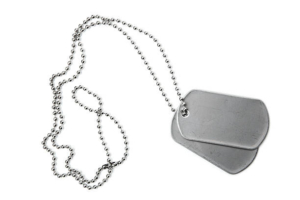
3rd Class Howard W. Bean
Recently IdentifiedPress Release | Nov. 29, 2017
Funeral Announcement For USS Oklahomoa Sailor Killed During World War II (Bean, H.)
The Defense POW/MIA Accounting Agency (DPAA) announced today that the remains of a U.S. serviceman from World War II have been identified and will be returned to his family for burial with full military honors.
Navy Radioman 3rd Class Howard W. Bean, 27, of Everett, Massachusetts, will be buried December 6 in Arlington National Cemetery, near Washington, D.C. On Dec. 7, 1941, Bean was assigned to the USS Oklahoma, which was moored at Ford Island, Pearl Harbor, when the ship was attacked by Japanese aircraft. The USS Oklahoma sustained multiple torpedo hits, which caused it to quickly capsize. The attack on the ship resulted in the deaths of 429 crewmen, including Bean.
From December 1941 to June 1944, Navy personnel recovered the remains of the deceased crew, which were subsequently interred in the Halawa and Nu’uanu Cemeteries.
In September 1947, tasked with recovering and identifying fallen U.S. personnel in the Pacific Theater, members of the American Graves Registration Service (AGRS) disinterred the remains of U.S. casualties from the two cemeteries and transferred them to the Central Identification Laboratory at Schofield Barracks. The laboratory staff was only able to confirm the identifications of 35 men from the USS Oklahoma at that time. The AGRS subsequently buried the unidentified remains in 46 plots at the National Memorial Cemetery of the Pacific (NMCP), known as the Punchbowl, in Honolulu. In October 1949, a military board classified those who could not be identified as non-recoverable, including Bean.
In April 2015, the Deputy Secretary of Defense issued a policy memorandum directing the disinterment of unknowns associated with the USS Oklahoma. On June 15, 2015, DPAA personnel began exhuming the remains from the NMCP for analysis.
To identify Bean’s remains, scientists from DPAA and the Armed Forces Medical Examiner System used mitochondrial (mtDNA) DNA analysis, which matched his family, dental comparisons, which matched Bean’s records, as well as circumstantial evidence.
DPAA is grateful to the Department of Veterans Affairs for their partnership in this mission.
Of the 16 million Americans who served in World War II, more than 400,000 died during the war. Currently there are 72,975 (approximately 26,000 are assessed as possibly-recoverable) still unaccounted for from World War II. Bean’s name is recorded on the Tablets of the Missing at the Punchbowl, along with the others who are missing from WWII. A rosette will be placed next to his name to indicate he has been accounted for.
For additional information on the Defense Department’s mission to account for Americans who went missing while serving our country, visit the DPAA website at www.dpaa.mil, find us on social media at www.facebook.com/dodpaa or call (703) 699-1420.
Pfc. Donald R. Tolson
Recently IdentifiedPress Release | Nov. 29, 2017
Funeral Announcement For Marine Killed During World War II (Tolson, D.)
The Defense POW/MIA Accounting Agency (DPAA) announced today that the remains of a U.S. serviceman, recently accounted-for from World War II, are being returned to his family for burial with full military honors.
Marine Corps Pfc. Donald R. Tolson, 20, of Bakersfield, California, will be buried December 2, in Kansas City, Missouri In November 1943, Tolson was assigned to Company F, 2nd Battalion, 8th Marines, 2nd Marine Division, which landed against stiff Japanese resistance on the small island of Betio in the Tarawa Atoll of the Gilbert Islands, in an attempt to secure the island. Over several days of intense fighting at Tarawa, approximately 1,000 Marines and Sailors were killed and more than 2,000 were wounded, but the Japanese were virtually annihilated. Tolson was killed on the first day of battle, Nov. 20, 1943.
Despite the heavy casualties suffered by U.S. forces, military success in the battle of Tarawa was a huge victory for the U.S. military because the Gilbert Islands provided the U.S. Navy Pacific Fleet a platform from which to launch assaults on the Marshall and Caroline Islands to advance their Central Pacific Campaign against Japan.
In the immediate aftermath of the fighting on Tarawa, U.S. service members who died in the battle were buried in a number of battlefield cemeteries on the island. The 604th Quartermaster Graves Registration Company conducted remains recovery operations on Betio between 1946 and 1947, but Tolson’s remains were not identified.
From February to July 2017, DPAA, through a partnership with History Flight, Inc., returned to Betio to conduct excavations of osseous remains through various advanced investigative techniques. The remains were sent to DPAA for analysis.
To identify Tolson’s remains, scientists from DPAA used dental, anthropological and chest radiograph comparison analysis, which matched his records, as well as circumstantial and material evidence.
DPAA is appreciative to History Flight, Inc., for their partnership in this mission
Of the 16 million Americans who served in World War II, more than 400,000 died during the war. Currently there are 72,975 service members (approximately 26,000 are assessed as possibly-recoverable) still unaccounted for from World War II. Tolson’s name is recorded on the Tablets of the Missing at the National Memorial Cemetery of the Pacific, along with the other MIAs from WWII. A rosette will be placed next to his name to indicate he has been accounted for.
For additional information on the Defense Department’s mission to account for Americans who went missing while serving our country, visit the DPAA website at www.dpaa.mil, find us on social media at www.facebook.com/dodpaa or call (703) 699-1420.
1st Lt. Robert L. Mains
Recently IdentifiedPress Release | Nov. 28, 2017
Funeral Announcement For Airman Killed During World War II (Mains)
The Defense POW/MIA Accounting Agency (DPAA) announced today that the remains of a U.S. serviceman, recently accounted-for from World War II, are being returned to his family for burial with full military honors.
Army Air Forces 1st Lt. Robert L. Mains, 27, of Rochester, New York, will be buried December 2 in Wading River, New York. In the spring of 1945, as the war in Europe drew to a close, Allied forces launched a series of aerial attacks to cripple what remained of the German air force. Mains, who was a member of the 714th Bombardment Squadron, 448th Bombardment Group, 2nd Bombardment Division, was a pilot on an attack mission on April 4, 1945, as one of more than 400 bombers to attack airbases at Parchim, Perleberg and Wesendorf, Germany. Mains’ aircraft, which held ten airmen, was attacked by enemy fighter planes in the vicinity of Hamburg.
Following the attack, the aircraft exploded and crashed, leaving only one survivor, who was subsequently captured after he parachuted into the town of Ludwigslust. Personal effects of eight of the nine missing crewmembers were found and identified by the surviving airman.
On August 15, 1997, a Joint POW/MIA Accounting Command (now DPAA) investigative team travelled to Ludwigslust to locate a possible crash site. A local helped the team analyze a 1948 site sketch and align it with present-day landmarks. With this information, the team found aircraft wreckage.
In 2014 and 2015, multiple recovery teams excavated the site, finding osseous material. The remains were sent to DPAA for analysis.
To identify Mains’ remains, scientists from DPAA and the Armed Forces Medical Examiner System used mitochondrial (mtDNA) DNA analysis, which matched his family, as well anthropological analysis, which matched his records, and material evidence.
DPAA is grateful to the German government and the staff of the Ludwigslust Castle for their cooperation in this recovery mission.
Of the 16 million Americans who served in World War II, more than 400,000 died during the war. Currently there are 72,975 service members (approximately 26,000 are assessed as possibly-recoverable) still unaccounted for from World War II. Mains’ name is recorded on the Tablets of the Missing at the Netherlands American Cemetery, an American Battle Monuments Commission site. A rosette will be placed next to his name to indicate he has been accounted for.
For additional information on the Defense Department’s mission to account for Americans who went missing while serving our country, visit the DPAA website at www.dpaa.mil, find us on social media at www.facebook.com/dodpaa or call (703) 699-1420.
Pvt. Shirley E. Bailey
Recently IdentifiedPress Release | Nov. 22, 2017
Funeral Announcement For Soldier Killed During World War II (Bailey, S.)
The Defense POW/MIA Accounting Agency (DPAA) announced today that the remains of a U.S. serviceman, recently accounted-for from World War II, are being returned to his family for burial with full military honors.
Army Pvt. Shirley E. Bailey, 19, of Charleston, West Virginia, will be buried Dec. 1 in Dunbar, West Virginia. His loss took place in the Hürtgen Forest of Germany in 1944. Fighting in the forest, an area comprising of roughly 50-square miles along the Belgian-German border, lasted from September 1944 to February 1945. Bailey, who was a medic with Company G, 8th Infantry Regiment, 4th Infantry Division, participated in his unit’s efforts to seize northern parts of the Hürtgen Forest. Bailey provided medical support to dozens of casualties during the battle. On November 29, 1944, when Bailey’s battalion was moving out, a German counterattack struck his company. Bailey rushed forward to aid a wounded man and was himself killed by enemy fire.
Due to the ongoing fighting, Bailey’s remains were not recovered by members of his unit during the battle. After the war, the American Graves Registration Command (AGRC) collected hundreds of unknown sets of remains from battlefields in Germany, and labeled each set with an X-number. One set of remains, designated X-4734 Neuville, had been recovered from an isolated grave near Schlich, Germany, in December 1946. Medical technicians were unable to identify them in the 1940s and the remains were buried in the Ardennes American Cemetery, Neuville-en-Condroz, Belgium, as an unknown soldier.
In October 2016, DPAA researchers made a historical association between X-4734 Neuville and Bailey, based on the recovery site of the remains and his location of loss. On June 26, 2017, X-4734 was disinterred and sent to the DPAA laboratory at Offut Air Force Base, Nebraska.
To identify Bailey’s remains, scientists from DPAA and the Armed Forces Medical Examiner System used mitochondrial (mtDNA) DNA analysis, which matched his family, as well as dental and anthropological analysis, which matched his records, and material evidence.
DPAA is grateful to the American Battle Monuments Commission for their partnership in this recovery.
Of the 16 million Americans who served in World War II, more than 400,000 died during the war. Currently there are 72,975 service members (approximately 26,000 are assessed as possibly-recoverable) still unaccounted for from World War II. Bailey’s name is recorded on the Tablets of the Missing, an American Battle Monuments Commission site in the Netherlands. A rosette will be placed next to his name to indicate he has been accounted for.
For additional information on the Defense Department’s mission to account for Americans who went missing while serving our country, visit the DPAA website at www.dpaa.mil, find us on social media at www.facebook.com/dodpaa or call (703) 699-1420.
Capt. Daniel W. Thomas
Recently IdentifiedPress Release | Nov. 20, 2017
Funeral Announcement For Airman Killed During Vietnam War (Thomas, D.)
The Defense POW/MIA Accounting Agency (DPAA) announced today that the remains of a U.S. serviceman, missing from the Vietnam War, have been identified and will be returned to his family for burial with full military honors.
U.S. Air Force Reserve Capt. Daniel W. Thomas, 24, of McCook, Nebraska, will be buried November 27 in his hometown. On July 6, 1971, Thomas was the pilot of an OV-10A aircraft with one other crewmember flying over central Laos in support of a Special Forces reconnaissance team. When the aircraft arrived in the area, the weather was bad, however it was determined that this would not affect the mission. Approximately thirty minutes after the last radio transmission from the crew of the OV-10A aircraft, the ground team heard an impact or explosion to their northeast, but could not determine the distance to the explosion. Extensive search efforts failed to locate the crash site.
After multiple attempts to investigate the crash site proved negative, in April 2014 a Vietnamese witness provided a photograph of an ID tag associated with one of the two crewmembers. In August 2014, possible human remains received from the witnesses were approved for repatriation and accessioned into the laboratory.
In September 2014, a Vietnam Office for Seeking Missing Persons (VNOSMP) team surveyed the crash site, recovering possible aircraft wreckage and personal effects.
In March and April 2016, a VNOSMP team conducted a unilateral excavation of the crash site, and recovered possible human remains, an identification tag, life support items and other material evidence. On April 12, 2016, the DPAA laboratory received dental remains, ID tag, and other material evidence obtained from the VNOSMP.
To identify Thomas’s remains, scientists from DPAA and the Armed Forces Medical Examiner System used mitochondrial (mtDNA) DNA analysis, which matched a brother, as well as circumstantial evidence and laboratory analysis, to include dental comparisons.
DPAA appreciates the Vietnam Office for Seeking Missing Persons and the Vietnamese Government for their assistance and partnership in this recovery effort.p
Today there are 1,611 American servicemen and civilians that are still unaccounted for from the Vietnam War.
For additional information on the Defense Department’s mission to account for Americans who went missing while serving our country, visit the DPAA website at www.dpaa.mil, find us on social media at www.facebook.com/dodpaa or call (703) 699-1420.
2nd Lt. Donald E. Underwood
Recently IdentifiedPress Release | Nov. 17, 2017
Funeral Announcement For Airman Killed During World War II (Underwood, D.)
The Defense POW/MIA Accounting Agency (DPAA) announced today that the remains of a U.S. serviceman, recently accounted-for from World War II, are being returned to his family for burial with full military honors.
Army Air Forces 2nd Lt. Donald E. Underwood, 23, of River Rouge, Michigan, will be honored next to his mother’s grave in Flat Rock, Michigan, November 25, followed by a burial at Arlington National Cemetery, in Washington, D.C., November 28. On Jan. 21, 1944, Underwood was a member of the 38th Bombardment Squadron, (Heavy), 30th Bombardment Group, stationed at Hawkins Field, Helen Island, Tarawa Atoll, Gilbert Islands, when his B-24J bomber crashed shortly after take-off.
Following the crash, the squadron’s physician recovered the remains of six individuals and interred them in the Main Marine Cemetery No. 33 on Betio Island.
Following the war, the U.S. Army’s 604th Quartermaster Graves Registration Company conducted remains recovery operations on Betio between 1946 and 1947. Using Marine Corps records, they began the task of consolidating all the remains from isolated burial sites into a single cemetery called Lone Palm Cemetery. The remains of the crew on the B-24J bomber were believed to be among those moved, however Underwood’s remains were not identified and he was declared non-recoverable.
In May 2017, DPAA, through a partnership with History Flight, Inc., returned to Betio to conduct excavations of osseous remains. The remains were sent to DPAA for analysis.
To identify Underwood’s remains, scientists from DPAA used laboratory analysis, including dental, and anthropological analysis, which matched his records, as well as circumstantial evidence.
DPAA is grateful to History Flight, Inc. for their partnership in this recovery mission.
Of the 16 million Americans who served in World War II, more than 400,000 died during the war. Currently there are 72,975 service members (approximately 26,000 are assessed as possibly-recoverable) still unaccounted for from World War II. Underwood’s name is recorded on the Tablets of the Missing at an American Battle Monuments Commission site along with the other MIAs from WWII. A rosette will be placed next to his name to indicate he has been accounted for.
For additional information on the Defense Department’s mission to account for Americans who went missing while serving our country, visit the DPAA website at www.dpaa.mil, find us on social media at www.facebook.com/dodpaa or call (703) 699-1420.
Sgt. William D. Ball
Recently IdentifiedPress Release | Nov. 14, 2017
Funeral Announcement For Marine Killed During World War II (Ball, W.)
The Defense POW/MIA Accounting Agency (DPAA) announced today that the remains of a U.S. serviceman, recently accounted-for from World War II, are being returned to his family for burial with full military honors.
Marine Corps Sgt. William D. Ball, Jr., 21, of Hollywood, California, will be buried on the 74th anniversary of his death, November 21, in Arvin, California. In November 1943, Ball was a member of Company B, 1st Battalion, 2nd Marine Regiment, 2nd Marine Division, Fleet Marine Force, which participated in a stiff Japanese resistance on the small island of Betio in the Tarawa Atoll of the Gilbert Islands, in an attempt to secure the island. Over several days of intense fighting at Tarawa, approximately 1,000 Marines and Sailors were killed and more than 2,000 were wounded, but the Japanese were virtually annihilated. Ball was wounded on the first day of battle, Nov. 20, 1043, and was identified for evacuation to the USS J. Franklin Bell for treatment. Ball never made it to the ship and his status was adjusted from wounded in action to missing in action as of Nov. 21, 1943.
Despite the heavy casualties suffered by U.S. forces, military success in the battle of Tarawa was a huge victory for the U.S. military because the Gilbert Islands provided the U.S. Navy Pacific Fleet a platform from which to launch assaults on the Marshall and Caroline Islands to advance their Central Pacific Campaign against Japan.
In the immediate aftermath of the fighting on Tarawa, U.S. service members who died in the battle were buried in a number of battlefield cemeteries on the island. The 604th Quartermaster Graves Registration Company conducted remains recovery operations on Betio between 1946 and 1947, but Ball’s remains were not identified. All of the remains found on Tarawa were sent to the Schofield Barracks Central Identification Laboratory for identification in 1947. By 1949, the remains that had not been identified were interred in the National Memorial Cemetery of the Pacific, also known as the Punchbowl, in Honolulu. One set of remains was identified as “Unknown X-089.”
In 2016, DPAA disinterred Tarawa Unknown X-089 from the Punchbowl and sent the remains to the laboratory for analysis.
To identify Ball’s remains, scientists from DPAA used dental, anthropological and chest radiograph comparison analysis, which matched his records; as well as circumstantial evidence.
DPAA is grateful to the Department of Veterans Affairs for their partnership in this mission.
Of the 16 million Americans who served in World War II, more than 400,000 died during the war. Currently there are 72,975 service members (approximately 26,000 are assessed as possibly-recoverable) still unaccounted for from World War II. Ball’s name is recorded on the Tablets of the Missing the Punchbowl, along with the others who are missing from WWII. A rosette will be placed next to his name to indicate he has been accounted for.
For additional information on the Defense Department’s mission to account for Americans who went missing while serving our country, visit the DPAA website at www.dpaa.mil, find us on social media at www.facebook.com/dodpaa or call (703) 699-1420.
1st Lt. Homer A. Spence
Recently IdentifiedPress Release | Nov. 13, 2017
Funeral Announcement For Airman Missing From World War II (Spence, H.)
The Defense POW/MIA Accounting Agency (DPAA) announced today that the remains of a U.S. serviceman, recently accounted-for from World War II, are being returned to his family for burial with full military honors.
Army Air Forces 1st Lt. Homer A. Spence, 22, of Manteca, California, will be buried November 18 in his hometown. On July 20, 1944, Spence was a member of the 96th Fighter Squadron, 82nd Fighter Group, as a pilot of a P-38J aircraft, escorting bomber aircraft on a mission targeting Memmingen Airdrome in Germany. During the return flight, his aircraft entered a deep dive into the clouds and was not seen or heard from again. At the time of his loss, Austria and northern Italy were still under enemy control, precluding any immediate search to locate his crash site.
In September 2010, personnel from the Defense POW/Missing Personnel Office (DPMO- a predecessor to DPAA) were contacted by a private researcher who found aircraft wreckage of what he believed to be a P-38, at a site on Heidenberg Mountain near Bruneck, Italy. Research and exclusionary analysis indicated that Spence’s aircraft was the only known aircraft of that type lost in the summer of 1944 within 50 kilometers of the crash site.
In April 2012, a joint DPMO and Joint POW/MIA Accounting Command (JPAC- a predecessor to DPAA) team investigated the crash site and identified a wide debris field of aircraft wreckage.
In September 2015 and September and October 2016, recovery teams returned to the crash site and excavated the surrounding areas, recovering osseous remains and personal equipment. The remains were subsequently sent to DPAA for analysis.
In July and August 2017, through a partnership with Archaeological and Historical Conservancy, Incorporated (ACH), additional remains and evidence were recovered.
To identify Spence’s remains, scientists from DPAA and the Armed Forces Medical Examiner System used mitochondrial (mtDNA) DNA analysis which matched his family, as well as anthropological analysis, which matched his records, and material evidence.
DPAA is grateful to the Archaeological and Historical Conservancy, Inc., for their partnership in this recovery.
Of the 16 million Americans who served in World War II, more than 400,000 died during the war. Currently there are 72,977 service members (approximately 26,000 are assessed as possibly-recoverable) still unaccounted for from World War II. Spence’s name is recorded on the Walls of the Missing at an American Battle Monuments Commission site along with the other MIAs from WWII. A rosette will be placed next to his name to indicate he has been accounted for.
For additional information on the Defense Department’s mission to account for Americans who went missing while serving our country, visit the DPAA website at www.dpaa.mil, find us on social media at www.facebook.com/dodpaa or call (703) 699-1420.
Assistant Cook Frank L. Masoni
Recently IdentifiedPress Release | Nov. 9, 2017
Funeral Announcement For Marine Killed During World War II (Masoni, F.)
The Defense POW/MIA Accounting Agency (DPAA) announced today that the remains of a U.S. serviceman, recently accounted-for from World War II, are being returned to his family for burial with full military honors.
Marine Corps Reserve Assistant Cook Frank L. Masoni, 21, of Gilroy, California, will be buried November 18 in his hometown. In November 1943, Masoni was assigned to Headquarters Company, 2nd Battalion, 2nd Marine Division, which landed against stiff Japanese resistance on the small island of Betio in the Tarawa Atoll of the Gilbert Islands, in an attempt to secure the island. Over several days of intense fighting at Tarawa, approximately 1,000 Marines and Sailors were killed and more than 2,000 were wounded, but the Japanese were virtually annihilated. Masoni died on the second day of the battle, Nov. 21, 1943.
Despite the heavy casualties suffered by U.S. forces, military success in the battle of Tarawa was a huge victory for the U.S. military because the Gilbert Islands provided the U.S. Navy Pacific Fleet a platform from which to launch assaults on the Marshall and Caroline Islands to advance their Central Pacific Campaign against Japan.
In the immediate aftermath of the fighting on Tarawa, U.S. service members who died in the battle were buried in a number of battlefield cemeteries on the island. The 604th Quartermaster Graves Registration Company conducted remains recovery operations on Betio between 1946 and 1947, but Masoni’s remains were not identified. All of the remains found on Tarawa were sent to the Schofield Barracks Central Identification Laboratory for identification in 1947. By 1949, the remains that had not been identified were interred in the National Memorial Cemetery of the Pacific, known as the Punchbowl, in Honolulu.
In October 2016, DPAA disinterred Tarawa Unknown X-210 from the Punchbowl and sent the remains to the laboratory for analysis.
To identify Masoni’s remains, scientists from DPAA used dental, anthropological and chest radiograph comparison analysis, which matched his records, as well as circumstantial and material evidence.
DPAA is appreciative to the Department of Veteran’s Affairs for their partnership in this mission
Of the 16 million Americans who served in World War II, more than 400,000 died during the war. Currently there are 72,977 service members (approximately 26,000 are assessed as possibly-recoverable) still unaccounted for from World War II. Masoni’s name is recorded on the Tablets of the Missing at the Punchbowl, along with the other MIAs from WWII. A rosette will be placed next to his name to indicate he has been accounted for.
For additional information on the Defense Department’s mission to account for Americans who went missing while serving our country, visit the DPAA website at www.dpaa.mil, find us on social media at www.facebook.com/dodpaa or call (703) 699-1420.
Pvt. Vernon P. Keaton
Recently IdentifiedPress Release | Nov. 9, 2017
Funeral Announcement For USS Oklahoma Marine Killed During World War II (Keaton, V.)
The Defense POW/MIA Accounting Agency (DPAA) announced today that the remains of a U.S. serviceman, recently accounted-for from World War II, are being returned to his family for burial with full military honors.
Marine Corps Pvt. Vernon P. Keaton, 18, of Lubbock, Texas, will be buried November 16 in Lula, Oklahoma. On Dec. 7, 1941, Keaton was assigned to the USS Oklahoma, which was moored at Ford Island, Pearl Harbor, when the ship was attacked by Japanese aircraft. The USS Oklahoma sustained multiple torpedo hits, which caused it to quickly capsize. The attack on the ship resulted in the deaths of 429 crewmen, including Keaton.
From December 1941 to June 1944, Navy personnel recovered the remains of the deceased crew, which were subsequently interred in the Halawa and Nu’uanu Cemeteries.
In September 1947, tasked with recovering and identifying fallen U.S. personnel in the Pacific Theater, members of the American Graves Registration Service (AGRS) disinterred the remains of U.S. casualties from the two cemeteries and transferred them to the Central Identification Laboratory at Schofield Barracks. The laboratory staff was only able to confirm the identifications of 35 men from the USS Oklahoma at that time. The AGRS subsequently buried the unidentified remains in 46 plots at the National Memorial Cemetery of the Pacific, known as the Punchbowl, in Honolulu. In October 1949, a military board classified those who could not be identified as non-recoverable, including Keaton.
In April 2015, the Deputy Secretary of Defense issued a policy memorandum directing the disinterment of unknowns associated with the USS Oklahoma. On June 15, 2015, DPAA personnel began exhuming the remains from the Punchbowl for analysis.
To identify Keaton’s remains, scientists from DPAA and the Armed Forces Medical Examiner System used mitochondrial (mtDNA) DNA analysis, which matched family members, as well as circumstantial evidence and laboratory analysis, to include dental comparisons and anthropological analysis.
DPAA is grateful to the Department of Veterans Affairs for their partnership in this mission.
Of the 16 million Americans who served in World War II, more than 400,000 died during the war. Currently there are 72,977 (approximately 26,000 are assessed as possibly-recoverable) still unaccounted for from World War II. Keaton’s name is recorded on the Tablets of the Missing at the Punchbowl, along with the others who are missing from WWII. A rosette will be placed next to his name to indicate he has been accounted for.
For additional information on the Defense Department’s mission to account for Americans who went missing while serving our country, visit the DPAA website at www.dpaa.mil, find us on social media at www.facebook.com/dodpaa or call (703) 699-1420.