Soldier Missing From Korean War Identified (Larkin)
The Department of Defense POW/Missing Personnel Office announced today that the remains of a U.S. serviceman, missing in action from the Korean War, have been identified and will be returned to his family for burial with full military honors.
Army Cpl. James N. Larkin, 34, of Kirkwood, Mo., will be buried April 24, in St. Louis, Mo. On Feb. 11, 1951, Larkin and his unit known as “Support Force 21,” from the 2nd Infantry Division, were attacked by Chinese forces near Changbong-ni, South Korea. The unit withdrew to a more defensible position and suffered many losses. Following the battle, Larkin was listed as missing in action.
After the 1953 armistice, surviving prisoners of war who returned during “Operation Big Switch” said Larkin had died in April 1951, from battle wounds and malnutrition while captive in the Chinese operated POW camp known as “Bean Camp” located in North Korea. His remains were not returned during Operation Glory in 1954.
Between 1991 and 1994, North Korea gave the United States 208 boxes of remains believed to contain the remains of 200-400 U.S. servicemen. North Korean documents, turned over with some of the boxes, indicated that some of the human remains were recovered from Suan County, where Larkin was held as a POW.
Scientists from the Joint POW/MIA Accounting Command and the Armed Forces DNA Identification Laboratory used circumstantial evidence, as well as dental comparisons, radiographs, and mitochondrial DNA – which matched that of Larkin’s nephews—in the identification of the remains.
For additional information on the Defense Department’s mission to account for missing Americans, visit the DPMO web site at http://www.dtic.mil/dpmo or call (703) 699-1420.
https://pow-mia-kia.org/wp-content/uploads/2025/04/logo-300x200.jpg00adminhttps://pow-mia-kia.org/wp-content/uploads/2025/04/logo-300x200.jpgadmin2025-03-30 21:56:122025-03-30 21:56:13Cpl. James N. Larkin
Airman Missing in Action From WWII Identified (Moritz)
The Department of Defense POW/Missing Personnel Office (DPMO) announced today that the remains of a U.S. serviceman, missing in action from World War II, have been identified and will be returned to his family for burial with full military honors.
Army Air Forces 2nd Lt. Charles R. Moritz, 21, of Effingham, Ill., will be buried on May 5, 2012, in his hometown. On June 7, 1944, Moritz, of the 555th Fighter Squadron, was the pilot of a P-51C Mustang aircraft that collided with another U.S. aircraft while on a training flight over Lincolnshire, England. Moritz was unable to parachute from his aircraft. A witness reported seeing the aircraft crash north of Faldingworth and south of Goxhill Royal Air Force station, however officials were not able to recover Moritz’s remains.
In 2011, local authorities notified U.S. officials of a location containing aircraft wreckage. Human remains and military identification tags bearing Moritz’s name, retrieved from the site, were handed over to a JPAC excavation team. A second excavation of the location recovered additional remains and material evidence including a bracelet with the inscription “Butch Mortiz” and a wallet that contained several cards bearing Moritz’s name.
In addition to the material evidence, scientists from JPAC used anthropological analysis in the identification of Moritz’s remains.
Of the 16 million Americans who served in World War II, more than 400,000 died. At the end of the war, the U.S. government was unable to recover and identify approximately 79,000 Americans. Today, more than 73,000 are unaccounted-for from the conflict.
For additional information on the Defense Department’s mission to account for missing Americans, visit the DPMO web site at http://www.dtic.mil/dpmo or call (703) 699-1420.
https://pow-mia-kia.org/wp-content/uploads/2025/04/logo-300x200.jpg00adminhttps://pow-mia-kia.org/wp-content/uploads/2025/04/logo-300x200.jpgadmin2025-03-30 21:55:382025-03-30 21:55:402nd Lt. Charles R. Moritz
Soldier Missing in Action From Korean War Identified (Jennings)
The Department of Defense POW/Missing Personnel Office announced today that the remains of a U.S. serviceman, missing in action from the Korean War, have been identified and will be returned to his family for burial with full military honors.
Army Pfc. Frank P. Jennings, 20, of Parsons, Tenn., will be buried April 13, in Holladay, Tenn. In late April 1951, Jennings and E Company, 2nd Battalion, 7th Infantry Regiment were battling Chinese Communist Forces near Jeon-Gog, South Korea. After three days of fighting, many Americans were killed, captured, or went missing. On April 25, Jennings was reported as missing in action, and his status was later changed to killed in action. His remains were not recovered in the years immediately following the end of the conflict, and there was no evidence that he had been taken to a prisoner of war camp.
In October 1986, members of the South Korean Army uncovered human remains while working near Jeon-Gog, which is north of current-day Camp Casey. The soldiers notified U.S. officials and on Oct. 23, 1986, personnel from the U.S. Army exhumed the remains. Additional material evidence, including a unit crest from the 7th Infantry Regiment, was also recovered from the site. The remains were not able to be identified at that time.
In 2002, due to advances in identification technology, the remains were submitted for DNA testing and dental comparisons. To identify Jennings’ remains, scientists from the Joint POW/MIA Accounting Command and the Armed Forces DNA Identification Laboratory used circumstantial evidence and forensic identification tools such as radiography, dental records and mitochondrial DNA – which matched Jennings’ sister.
Today, more than 7,900 Americans remain unaccounted-for from the Korean War. Identifications continue to be made from the remains that were returned to the United States, using forensic and DNA technology.
For additional information on the Defense Department’s mission to account for missing Americans, visit the DPMO web site at http://www.dtic.mil/dpmo or call (703) 699-1420.
https://pow-mia-kia.org/wp-content/uploads/2025/04/logo-300x200.jpg00adminhttps://pow-mia-kia.org/wp-content/uploads/2025/04/logo-300x200.jpgadmin2025-03-30 21:54:572025-03-30 21:54:59Pfc. Frank P. Jennings
Soldier Missing in Action From Korean War Identified (Harris)
The Department of Defense POW/Missing Personnel Office announced today that the remains of a U.S. serviceman, missing in action from the Korean War, have been identified and will be returned to his family for burial with full military honors.
Army Sgt. 1st Class Richard L. Harris, 23, of Spokane, Wash., will be buried April 10, in Kent, Wash. In late Nov. 26, 1950, Harris, and elements of the 2nd Infantry Division were in a defensive line north of Kujang, North Korea, when they were attacked by Chinese forces, in what became known as the Battle of the Chongchon. Harris was reported missing in action on Nov. 30, 1950. In 1953, after Operation Big Switch, in which captured soldiers were returned, American soldiers reported that Harris had been captured and died on Jan. 22, 1951, from malnutrition while in a prisoner of war camp in North Korea. His remains were not among those returned by Communist forces after the war.
In 2005, a joint U.S./D.P.R.K. recovery team excavated a burial site in Unsan County, North Korea. The site correlated with the position of the 2nd Infantry Division in late November, 1950. The team recovered human remains, and submitted a total of 69 samples to the Joint POW/MIA Accounting Command (JPAC) and the Armed Forces DNA Identification Laboratory (AFDIL) for analysis.
Among forensic identification tools and circumstantial evidence, scientists from the JPAC and AFDIL used dental records and mitochondrial DNA – which matched that of Harris’s cousins – in the identification of his remains.
Today, more than 7,900 Americans remain unaccounted-for from the Korean War. Identifications continue to be made from the remains that were returned to the United States, using forensic and DNA technology.
For additional information on the Defense Department’s mission to account for missing Americans, visit the DPMO web site at http://www.dtic.mil/dpmo or call (703) 699-1169.
https://pow-mia-kia.org/wp-content/uploads/2025/04/logo-300x200.jpg00adminhttps://pow-mia-kia.org/wp-content/uploads/2025/04/logo-300x200.jpgadmin2025-03-30 21:54:172025-03-30 21:54:19Sgt. 1st Class Richard L. Harris
Soldier Missing in Action From Korean War Identified (Glennon)
The Department of Defense POW/Missing Personnel Office announced today that the remains of a U.S. serviceman, missing in action from the Korean War, have been identified and will be returned to his family for burial with full military honors.
Army Cpl. Patrick R. Glennon, 18, of Rochester, N.Y., will be buried April 11, at Arlington National Cemetery near Washington D.C. On Nov. 1, 1950, Glennon, and the G Company, 8th Cavalry Regiment, 1st Cavalry Division, were holding a defensive position along the Nammyon River near Unsan, North Korea, when they were attacked by Chinese forces. Glennon was listed as missing in action following the heavy fighting.
In April 2007, the Democratic People’s Republic of Korea (DPRK) handed over six boxes of remains of American service members to New Mexico Governor Bill Richardson and former U.S. Secretary of Veterans Affairs Anthony Principi, who were visiting North Korea. The remains had been recovered from areas near Unsan, where Glennon had been lost.
Metal identification tags bearing Glennon’s name, and other material evidence were included with the remains. To identify the remains, scientists from the Joint POW/MIA Accounting Command and the Armed Forces DNA Identification Laboratory used circumstantial evidence and forensic identification tools such as dental records and mitochondrial DNA – which matched Glennon’s cousins.
Today, more than 7,900 Americans remain unaccounted-for from the Korean War. Identifications continue to be made from the remains that were returned to the United States, using forensic and DNA technology.
For additional information on the Defense Department’s mission to account for missing Americans, visit the DPMO web site at http://www.dtic.mil/dpmo or call (703) 699-1169.
https://pow-mia-kia.org/wp-content/uploads/2025/04/logo-300x200.jpg00adminhttps://pow-mia-kia.org/wp-content/uploads/2025/04/logo-300x200.jpgadmin2025-03-30 21:53:482025-03-30 21:53:50Cpl. Patrick R. Glennon
U.S. Soldier Missing From Korean War Identified (Johnson)
The Department of Defense POW/Missing Personnel Office (DPMO) announced today that the remains of a U.S. serviceman, missing in action from the Korean War, have been identified and will be returned to his family for burial with full military honors.
Army Cpl. Henry F. Johnson, 20, of Conway, Ark., will be buried April 7, in Wichita, Kan. In November 1950, Johnson, of L Company, 3rd Battalion, 9th Infantry Regiment, was deployed in a defensive line that ran east-west across the center of North Korea. On Nov. 25, after Chinese forces had attacked, Johnson was listed as missing in action. In 1953, returning Americans who had been held as prisoners of war reported that Johnson had been captured by the Chinese and died in the spring of 1951 as a result of malnutrition while in a prisoner of war camp known as “Camp 5” in North Phyongan Province, North Korea.
Between 1991 and 1994, North Korea gave the United States 208 boxes of remains believed to contain the remains of 200-400 U.S. servicemen. North Korean documents, turned over with some of the boxes, indicated that some of the human remains were recovered from North Phyongan Province, where Johnson was reported to have been held. Beginning in the mid- 1990s and continuing through the present, hundreds of samples from these remains have been submitted to the Armed Forces DNA Identification Laboratory (AFDIL) for DNA testing to be identified.
To identify Johnson’s remains, scientists from the Joint POW/MIA Accounting Command and the AFDIL used circumstantial evidence, forensic identification tools such as dental records and mitochondrial DNA – which matched Johnson’s cousins.
Today, more than 7,900 Americans remain unaccounted-for from the Korean War. Identifications continue to be made from the remains that were returned to the United States, using forensic and DNA technology.
For additional information on the Defense Department’s mission to account for missing Americans, visit the DPMO web site at http://www.dtic.mil/dpmo or call (703) 699-1169.
https://pow-mia-kia.org/wp-content/uploads/2025/04/logo-300x200.jpg00adminhttps://pow-mia-kia.org/wp-content/uploads/2025/04/logo-300x200.jpgadmin2025-03-30 21:53:182025-03-30 21:53:20Cpl. Henry F. Johnson
Airman Missing From Vietnam War Identified (Avery)
The Department of Defense POW/Missing Personnel Office (DPMO) announced today that the remains of a U.S. serviceman, missing in action from the Vietnam War, have been identified and returned his family for burial with full military honors.
Air Force Tech. Sgt. Allen J. Avery, 29, of Arlington, Mass.; will be buried April 6 at Arlington National Cemetery near Washington, D.C. Exactly 40 years prior, on April 6, 1972, six airmen were flying a combat search and rescue mission in their HH-53C Super Jolly Green Giant helicopter over Quang Tri Province in South Vietnam, when they were hit by enemy ground fire and crashed.
In 1988, the Socialist Republic of Vietnam (S.R.V) turned over remains they attributed to an American serviceman, however, the name provided did not match anyone lost or missing from the Vietnam War. The remains were held by JPAC pending improved technology which might have facilitated a later identification.
From 1989 to 1992, Joint U.S./S.R.V field investigations, led by the Joint POW/MIA Accounting Command (JPAC), found evidence leading to an aircraft crash site as well as two reported burial sites. Team members recovered human remains and personal effects as well as aircraft debris. As a result, the crew was accounted-for in 1997 and buried as a group at Arlington National Cemetery near Washington, D.C. Three of them were also individually identified at that time.
In the mid-2000s, JPAC’s laboratory gained increased scientific capability to associate the 1988 remains to the correct loss. The Armed Forces DNA Identification Laboratory (AFDIL) tested these remains against all servicemen who were MIA from the Vietnam War with negative results. Later AFDIL expanded its search to make comparisons with previously-identified individuals. In 2010, as a result of mitochondrial DNA testing, the remains were associated with four of the six airmen from the 1972 crash, including Avery.
For additional information on the Defense Department’s mission to account for missing Americans, visit the DPMO web site at http://www.dtic.mil/dpmo or call (703) 699-1169.
https://pow-mia-kia.org/wp-content/uploads/2025/04/logo-300x200.jpg00adminhttps://pow-mia-kia.org/wp-content/uploads/2025/04/logo-300x200.jpgadmin2025-03-30 21:52:382025-03-30 21:52:39Tech. Sgt. Allen J. Avery
U.S. Soldier Missing From Korean War Identified (Brashear)
The Department of Defense POW/Missing Personnel Office (DPMO) announced today that the remains of a U.S. serviceman, missing in action from the Korean War, have been identified and will be returned to his family for burial with full military honors.
Army Sgt. William E. Brashear, 24, of Owensboro, Ky., will be buried March 31, in his hometown. In November 1950, Brashear of Company B, 70th Tank Battalion, along with almost 600 other 8th Cavalry Regiment soldiers, was killed during a battle south of Unsan, North Korea. Their bodies were not able to be recovered at the time and were likely buried on the battlefield by Chinese or North Korean forces.
In 2000, a joint U.S./Democratic People’s Republic of Korea (DPRK) team led by the Joint POW/MIA Accounting Command (JPAC), excavated a mass grave that had been discovered in Unsan. Human remains, of at least five individuals, and U.S. military uniforms were recovered but they were unable to be identified given the technology of the time. In 2007, because of advances in DNA technology, scientists from the Armed Forces DNA Identification Laboratory (AFDIL) reanalyzed the remains.
Among forensic identification tools and circumstantial evidence, scientists from the JPAC and AFDIL used dental records and mitochondrial DNA – which matched that of Brashear’s sister and cousin – in the identification of his remains.
Today, more than 7,900 Americans remain unaccounted-for from the Korean War. Identifications continue to be made from the remains that were returned to the United States, using forensic and DNA technology.
For additional information on the Defense Department’s mission to account for missing Americans, visit the DPMO web site at www.dtic.mil/dpmo or call (703) 699-1169.
https://pow-mia-kia.org/wp-content/uploads/2025/04/logo-300x200.jpg00adminhttps://pow-mia-kia.org/wp-content/uploads/2025/04/logo-300x200.jpgadmin2025-03-30 21:51:592025-03-30 21:52:01Sgt. William E. Brashear
Soldier Missing In Action From Korean War Identified (Roper)
The Department of Defense POW/Missing Personnel Office announced today that the remains of a U.S. serviceman, missing in action from the Korean War, have been identified and will be returned to his family for burial with full military honors.
Army Cpl. Chester J. Roper, 20, of Pittsburgh, will be buried March 23, in Evergreen Park, Ill. In late November 1950, Roper, and elements of the 2nd Infantry Division were attacked by Chinese forces near Kunu-ri, North Korea. Roper was reported missing in action on Dec. 1, 1950, near Somindong, North Korea. In December 1951, the Chinese supplied information that Roper had been captured and died of pneumonia in early 1951 while in a prisoner of war camp known as “Camp 5” at Pyoktong, North Korea.
In 1954, United Nations and Communist Forces exchanged the remains of war dead in what came to be called “Operation Glory.” Among the remains that were turned over at that time were remains of servicemen who had died in Camp 5. All of the remains recovered in Operation Glory were turned over to the Army Central Identification Unit for analysis. Those which were unable to be identified with the technology at that time were interred as unknowns at the National Memorial Cemetery of the Pacific in Hawaii.
In 2011, analysts from the Joint POW/MIA Accounting Command (JPAC) re-examined the records associated with Roper, and the unknown remains were exhumed. JPAC used circumstantial evidence and forensic identification tools such as dental records and radiographs to identify them as Roper’s remains.
Today, more than 7,900 Americans remain unaccounted-for from the Korean War. Identifications continue to be made from the remains that were returned to the United States, using forensic and DNA technology.
For additional information on the Defense Department’s mission to account for missing Americans, visit the DPMO web site at http://www.dtic.mil/dpmo or call (703) 699-1169.
https://pow-mia-kia.org/wp-content/uploads/2025/04/logo-300x200.jpg00adminhttps://pow-mia-kia.org/wp-content/uploads/2025/04/logo-300x200.jpgadmin2025-03-30 21:51:212025-03-30 21:51:22Cpl. Chester J. Roper
The Department of Defense announced today the death of a soldier who was supporting Operation Iraqi Freedom.
On Feb. 25, the armed forces medical examiner at the Dover Port Mortuary in Dover, Del., positively identified the remains of Staff Sgt. Ahmed K. Altaie, of Ann Arbor, Mich. He was assigned to the Provincial Reconstruction Team, Divisional Training Center, Special Troops Battalion, 4th Infantry Division, Fort Hood, Texas.
On Dec. 11, 2006, a casualty review board declared Altaie “missing – captured” after his disappearance in Baghdad, Iraq on Oct. 23, 2006. Altaie was the final missing soldier and casualty to be recovered from the Operation Iraqi Freedom/Operation New Dawn mission.
For more information the media may contact the U.S. Army public affairs office at 703-697-5662, 703-693-5084 or 703-697-2163.
https://pow-mia-kia.org/wp-content/uploads/2025/04/logo-300x200.jpg00adminhttps://pow-mia-kia.org/wp-content/uploads/2025/04/logo-300x200.jpgadmin2025-03-30 21:50:522025-03-30 21:50:53Staff Sgt. Ahmed K. Altaie
Cpl. James N. Larkin
Recently IdentifiedPress Release | April 20, 2012
Soldier Missing From Korean War Identified (Larkin)
The Department of Defense POW/Missing Personnel Office announced today that the remains of a U.S. serviceman, missing in action from the Korean War, have been identified and will be returned to his family for burial with full military honors.
Army Cpl. James N. Larkin, 34, of Kirkwood, Mo., will be buried April 24, in St. Louis, Mo. On Feb. 11, 1951, Larkin and his unit known as “Support Force 21,” from the 2nd Infantry Division, were attacked by Chinese forces near Changbong-ni, South Korea. The unit withdrew to a more defensible position and suffered many losses. Following the battle, Larkin was listed as missing in action.
After the 1953 armistice, surviving prisoners of war who returned during “Operation Big Switch” said Larkin had died in April 1951, from battle wounds and malnutrition while captive in the Chinese operated POW camp known as “Bean Camp” located in North Korea. His remains were not returned during Operation Glory in 1954.
Between 1991 and 1994, North Korea gave the United States 208 boxes of remains believed to contain the remains of 200-400 U.S. servicemen. North Korean documents, turned over with some of the boxes, indicated that some of the human remains were recovered from Suan County, where Larkin was held as a POW.
Scientists from the Joint POW/MIA Accounting Command and the Armed Forces DNA Identification Laboratory used circumstantial evidence, as well as dental comparisons, radiographs, and mitochondrial DNA – which matched that of Larkin’s nephews—in the identification of the remains.
For additional information on the Defense Department’s mission to account for missing Americans, visit the DPMO web site at http://www.dtic.mil/dpmo or call (703) 699-1420.
2nd Lt. Charles R. Moritz
Recently IdentifiedPress Release | April 12, 2012
Airman Missing in Action From WWII Identified (Moritz)
The Department of Defense POW/Missing Personnel Office (DPMO) announced today that the remains of a U.S. serviceman, missing in action from World War II, have been identified and will be returned to his family for burial with full military honors.
Army Air Forces 2nd Lt. Charles R. Moritz, 21, of Effingham, Ill., will be buried on May 5, 2012, in his hometown. On June 7, 1944, Moritz, of the 555th Fighter Squadron, was the pilot of a P-51C Mustang aircraft that collided with another U.S. aircraft while on a training flight over Lincolnshire, England. Moritz was unable to parachute from his aircraft. A witness reported seeing the aircraft crash north of Faldingworth and south of Goxhill Royal Air Force station, however officials were not able to recover Moritz’s remains.
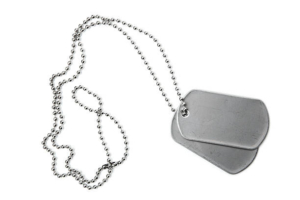
In 2011, local authorities notified U.S. officials of a location containing aircraft wreckage. Human remains and military identification tags bearing Moritz’s name, retrieved from the site, were handed over to a JPAC excavation team. A second excavation of the location recovered additional remains and material evidence including a bracelet with the inscription “Butch Mortiz” and a wallet that contained several cards bearing Moritz’s name.
In addition to the material evidence, scientists from JPAC used anthropological analysis in the identification of Moritz’s remains.
Of the 16 million Americans who served in World War II, more than 400,000 died. At the end of the war, the U.S. government was unable to recover and identify approximately 79,000 Americans. Today, more than 73,000 are unaccounted-for from the conflict.
For additional information on the Defense Department’s mission to account for missing Americans, visit the DPMO web site at http://www.dtic.mil/dpmo or call (703) 699-1420.
Pfc. Frank P. Jennings
Recently IdentifiedPress Release | April 11, 2012
Soldier Missing in Action From Korean War Identified (Jennings)
The Department of Defense POW/Missing Personnel Office announced today that the remains of a U.S. serviceman, missing in action from the Korean War, have been identified and will be returned to his family for burial with full military honors.
Army Pfc. Frank P. Jennings, 20, of Parsons, Tenn., will be buried April 13, in Holladay, Tenn. In late April 1951, Jennings and E Company, 2nd Battalion, 7th Infantry Regiment were battling Chinese Communist Forces near Jeon-Gog, South Korea. After three days of fighting, many Americans were killed, captured, or went missing. On April 25, Jennings was reported as missing in action, and his status was later changed to killed in action. His remains were not recovered in the years immediately following the end of the conflict, and there was no evidence that he had been taken to a prisoner of war camp.
In October 1986, members of the South Korean Army uncovered human remains while working near Jeon-Gog, which is north of current-day Camp Casey. The soldiers notified U.S. officials and on Oct. 23, 1986, personnel from the U.S. Army exhumed the remains. Additional material evidence, including a unit crest from the 7th Infantry Regiment, was also recovered from the site. The remains were not able to be identified at that time.
In 2002, due to advances in identification technology, the remains were submitted for DNA testing and dental comparisons. To identify Jennings’ remains, scientists from the Joint POW/MIA Accounting Command and the Armed Forces DNA Identification Laboratory used circumstantial evidence and forensic identification tools such as radiography, dental records and mitochondrial DNA – which matched Jennings’ sister.
Today, more than 7,900 Americans remain unaccounted-for from the Korean War. Identifications continue to be made from the remains that were returned to the United States, using forensic and DNA technology.
For additional information on the Defense Department’s mission to account for missing Americans, visit the DPMO web site at http://www.dtic.mil/dpmo or call (703) 699-1420.
Sgt. 1st Class Richard L. Harris
Recently IdentifiedPress Release | April 6, 2012
Soldier Missing in Action From Korean War Identified (Harris)
The Department of Defense POW/Missing Personnel Office announced today that the remains of a U.S. serviceman, missing in action from the Korean War, have been identified and will be returned to his family for burial with full military honors.
Army Sgt. 1st Class Richard L. Harris, 23, of Spokane, Wash., will be buried April 10, in Kent, Wash. In late Nov. 26, 1950, Harris, and elements of the 2nd Infantry Division were in a defensive line north of Kujang, North Korea, when they were attacked by Chinese forces, in what became known as the Battle of the Chongchon. Harris was reported missing in action on Nov. 30, 1950. In 1953, after Operation Big Switch, in which captured soldiers were returned, American soldiers reported that Harris had been captured and died on Jan. 22, 1951, from malnutrition while in a prisoner of war camp in North Korea. His remains were not among those returned by Communist forces after the war.
In 2005, a joint U.S./D.P.R.K. recovery team excavated a burial site in Unsan County, North Korea. The site correlated with the position of the 2nd Infantry Division in late November, 1950. The team recovered human remains, and submitted a total of 69 samples to the Joint POW/MIA Accounting Command (JPAC) and the Armed Forces DNA Identification Laboratory (AFDIL) for analysis.
Among forensic identification tools and circumstantial evidence, scientists from the JPAC and AFDIL used dental records and mitochondrial DNA – which matched that of Harris’s cousins – in the identification of his remains.
Today, more than 7,900 Americans remain unaccounted-for from the Korean War. Identifications continue to be made from the remains that were returned to the United States, using forensic and DNA technology.
For additional information on the Defense Department’s mission to account for missing Americans, visit the DPMO web site at http://www.dtic.mil/dpmo or call (703) 699-1169.
Cpl. Patrick R. Glennon
Recently IdentifiedPress Release | April 6, 2012
Soldier Missing in Action From Korean War Identified (Glennon)
The Department of Defense POW/Missing Personnel Office announced today that the remains of a U.S. serviceman, missing in action from the Korean War, have been identified and will be returned to his family for burial with full military honors.
Army Cpl. Patrick R. Glennon, 18, of Rochester, N.Y., will be buried April 11, at Arlington National Cemetery near Washington D.C. On Nov. 1, 1950, Glennon, and the G Company, 8th Cavalry Regiment, 1st Cavalry Division, were holding a defensive position along the Nammyon River near Unsan, North Korea, when they were attacked by Chinese forces. Glennon was listed as missing in action following the heavy fighting.
In April 2007, the Democratic People’s Republic of Korea (DPRK) handed over six boxes of remains of American service members to New Mexico Governor Bill Richardson and former U.S. Secretary of Veterans Affairs Anthony Principi, who were visiting North Korea. The remains had been recovered from areas near Unsan, where Glennon had been lost.
Metal identification tags bearing Glennon’s name, and other material evidence were included with the remains. To identify the remains, scientists from the Joint POW/MIA Accounting Command and the Armed Forces DNA Identification Laboratory used circumstantial evidence and forensic identification tools such as dental records and mitochondrial DNA – which matched Glennon’s cousins.
Today, more than 7,900 Americans remain unaccounted-for from the Korean War. Identifications continue to be made from the remains that were returned to the United States, using forensic and DNA technology.
For additional information on the Defense Department’s mission to account for missing Americans, visit the DPMO web site at http://www.dtic.mil/dpmo or call (703) 699-1169.
Cpl. Henry F. Johnson
Recently IdentifiedPress Release | April 3, 2012
U.S. Soldier Missing From Korean War Identified (Johnson)
The Department of Defense POW/Missing Personnel Office (DPMO) announced today that the remains of a U.S. serviceman, missing in action from the Korean War, have been identified and will be returned to his family for burial with full military honors.
Army Cpl. Henry F. Johnson, 20, of Conway, Ark., will be buried April 7, in Wichita, Kan. In November 1950, Johnson, of L Company, 3rd Battalion, 9th Infantry Regiment, was deployed in a defensive line that ran east-west across the center of North Korea. On Nov. 25, after Chinese forces had attacked, Johnson was listed as missing in action. In 1953, returning Americans who had been held as prisoners of war reported that Johnson had been captured by the Chinese and died in the spring of 1951 as a result of malnutrition while in a prisoner of war camp known as “Camp 5” in North Phyongan Province, North Korea.
Between 1991 and 1994, North Korea gave the United States 208 boxes of remains believed to contain the remains of 200-400 U.S. servicemen. North Korean documents, turned over with some of the boxes, indicated that some of the human remains were recovered from North Phyongan Province, where Johnson was reported to have been held. Beginning in the mid- 1990s and continuing through the present, hundreds of samples from these remains have been submitted to the Armed Forces DNA Identification Laboratory (AFDIL) for DNA testing to be identified.
To identify Johnson’s remains, scientists from the Joint POW/MIA Accounting Command and the AFDIL used circumstantial evidence, forensic identification tools such as dental records and mitochondrial DNA – which matched Johnson’s cousins.
Today, more than 7,900 Americans remain unaccounted-for from the Korean War. Identifications continue to be made from the remains that were returned to the United States, using forensic and DNA technology.
For additional information on the Defense Department’s mission to account for missing Americans, visit the DPMO web site at http://www.dtic.mil/dpmo or call (703) 699-1169.
Tech. Sgt. Allen J. Avery
Recently IdentifiedPress Release | April 3, 2012
Airman Missing From Vietnam War Identified (Avery)
The Department of Defense POW/Missing Personnel Office (DPMO) announced today that the remains of a U.S. serviceman, missing in action from the Vietnam War, have been identified and returned his family for burial with full military honors.
Air Force Tech. Sgt. Allen J. Avery, 29, of Arlington, Mass.; will be buried April 6 at Arlington National Cemetery near Washington, D.C. Exactly 40 years prior, on April 6, 1972, six airmen were flying a combat search and rescue mission in their HH-53C Super Jolly Green Giant helicopter over Quang Tri Province in South Vietnam, when they were hit by enemy ground fire and crashed.
In 1988, the Socialist Republic of Vietnam (S.R.V) turned over remains they attributed to an American serviceman, however, the name provided did not match anyone lost or missing from the Vietnam War. The remains were held by JPAC pending improved technology which might have facilitated a later identification.
From 1989 to 1992, Joint U.S./S.R.V field investigations, led by the Joint POW/MIA Accounting Command (JPAC), found evidence leading to an aircraft crash site as well as two reported burial sites. Team members recovered human remains and personal effects as well as aircraft debris. As a result, the crew was accounted-for in 1997 and buried as a group at Arlington National Cemetery near Washington, D.C. Three of them were also individually identified at that time.
In the mid-2000s, JPAC’s laboratory gained increased scientific capability to associate the 1988 remains to the correct loss. The Armed Forces DNA Identification Laboratory (AFDIL) tested these remains against all servicemen who were MIA from the Vietnam War with negative results. Later AFDIL expanded its search to make comparisons with previously-identified individuals. In 2010, as a result of mitochondrial DNA testing, the remains were associated with four of the six airmen from the 1972 crash, including Avery.
For additional information on the Defense Department’s mission to account for missing Americans, visit the DPMO web site at http://www.dtic.mil/dpmo or call (703) 699-1169.
Sgt. William E. Brashear
Recently IdentifiedPress Release | March 27, 2012
U.S. Soldier Missing From Korean War Identified (Brashear)
The Department of Defense POW/Missing Personnel Office (DPMO) announced today that the remains of a U.S. serviceman, missing in action from the Korean War, have been identified and will be returned to his family for burial with full military honors.
Army Sgt. William E. Brashear, 24, of Owensboro, Ky., will be buried March 31, in his hometown. In November 1950, Brashear of Company B, 70th Tank Battalion, along with almost 600 other 8th Cavalry Regiment soldiers, was killed during a battle south of Unsan, North Korea. Their bodies were not able to be recovered at the time and were likely buried on the battlefield by Chinese or North Korean forces.
In 2000, a joint U.S./Democratic People’s Republic of Korea (DPRK) team led by the Joint POW/MIA Accounting Command (JPAC), excavated a mass grave that had been discovered in Unsan. Human remains, of at least five individuals, and U.S. military uniforms were recovered but they were unable to be identified given the technology of the time. In 2007, because of advances in DNA technology, scientists from the Armed Forces DNA Identification Laboratory (AFDIL) reanalyzed the remains.
Among forensic identification tools and circumstantial evidence, scientists from the JPAC and AFDIL used dental records and mitochondrial DNA – which matched that of Brashear’s sister and cousin – in the identification of his remains.
Today, more than 7,900 Americans remain unaccounted-for from the Korean War. Identifications continue to be made from the remains that were returned to the United States, using forensic and DNA technology.
For additional information on the Defense Department’s mission to account for missing Americans, visit the DPMO web site at www.dtic.mil/dpmo or call (703) 699-1169.
Cpl. Chester J. Roper
Recently IdentifiedPress Release | March 19, 2012
Soldier Missing In Action From Korean War Identified (Roper)
The Department of Defense POW/Missing Personnel Office announced today that the remains of a U.S. serviceman, missing in action from the Korean War, have been identified and will be returned to his family for burial with full military honors.
Army Cpl. Chester J. Roper, 20, of Pittsburgh, will be buried March 23, in Evergreen Park, Ill. In late November 1950, Roper, and elements of the 2nd Infantry Division were attacked by Chinese forces near Kunu-ri, North Korea. Roper was reported missing in action on Dec. 1, 1950, near Somindong, North Korea. In December 1951, the Chinese supplied information that Roper had been captured and died of pneumonia in early 1951 while in a prisoner of war camp known as “Camp 5” at Pyoktong, North Korea.
In 1954, United Nations and Communist Forces exchanged the remains of war dead in what came to be called “Operation Glory.” Among the remains that were turned over at that time were remains of servicemen who had died in Camp 5. All of the remains recovered in Operation Glory were turned over to the Army Central Identification Unit for analysis. Those which were unable to be identified with the technology at that time were interred as unknowns at the National Memorial Cemetery of the Pacific in Hawaii.
In 2011, analysts from the Joint POW/MIA Accounting Command (JPAC) re-examined the records associated with Roper, and the unknown remains were exhumed. JPAC used circumstantial evidence and forensic identification tools such as dental records and radiographs to identify them as Roper’s remains.
Today, more than 7,900 Americans remain unaccounted-for from the Korean War. Identifications continue to be made from the remains that were returned to the United States, using forensic and DNA technology.
For additional information on the Defense Department’s mission to account for missing Americans, visit the DPMO web site at http://www.dtic.mil/dpmo or call (703) 699-1169.
Staff Sgt. Ahmed K. Altaie
Recently IdentifiedPress Release | Feb. 27, 2012
DOD Identifies Army Casualty (Altaie)
The Department of Defense announced today the death of a soldier who was supporting Operation Iraqi Freedom.
On Feb. 25, the armed forces medical examiner at the Dover Port Mortuary in Dover, Del., positively identified the remains of Staff Sgt. Ahmed K. Altaie, of Ann Arbor, Mich. He was assigned to the Provincial Reconstruction Team, Divisional Training Center, Special Troops Battalion, 4th Infantry Division, Fort Hood, Texas.
On Dec. 11, 2006, a casualty review board declared Altaie “missing – captured” after his disappearance in Baghdad, Iraq on Oct. 23, 2006. Altaie was the final missing soldier and casualty to be recovered from the Operation Iraqi Freedom/Operation New Dawn mission.
For more information the media may contact the U.S. Army public affairs office at 703-697-5662, 703-693-5084 or 703-697-2163.