Soldier Missing In Action From WWII Identified (Kenner)
The Department of Defense POW/Missing Personnel Office (DPMO) announced today that the remains of a U.S. serviceman, missing in action from World War II, have been identified and are being returned to his family for burial with full military honors.
Army Pfc. Harold D. Kenner, 20, of Scranton, Penn., will be buried on July 29 in Arlington National Cemetery near Washington, D.C. In late September 1944, Kenner’s unit, the 401st Glider Infantry Regiment, landed in Nijmegen, Netherlands, as part of the Allied Operation Market Garden. The men were soon engaged against enemy forces near Kiekberg Woods—approximately 7 miles southeast of Nijmegen. On Sept. 30, 1944, Kenner was listed as missing in action from the battle.
Following World War II, the Army Graves Registration Service (AGRS) conducted investigations and searches for the remains of U.S. servicemen—including Kenner—lost throughout Europe. After extensive searches of the area, the AGRS concluded his remains were unrecoverable.
In late 1987, an anonymous source contacted the Netherlands National Territorial Command regarding human remains found in the Kiekberg Woods. A preliminary assessment conducted by a Dutch museum indicated the remains could be associated with 1st Lt. Joseph F. Myers, 401st Glider Regiment, one of up to 62 men lost during the same battle as Kenner. In 1992, the remains were transferred to U.S. authorities. In 1998, based on laboratory analysis and DNA testing, the remains could not be associated with Myers and were returned to the Dutch in 2001. In 2006, U.S. authorities requested the remains be returned for further examination and comparison with other soldiers missing from the Kiekberg Woods battle.
Among other forensic identification tools and circumstantial evidence, scientists from the Armed Forces DNA Identification Laboratory also used mitochondrial DNA– which matched that of Kenner’s cousins— in the identification of his remains.
Of the 16 million Americans who served in World War II, more than 400,000 died. At the end of the war, the U.S. government was unable to recover and identify approximately 79,000 Americans. Today, more than 73,000 are unaccounted-for from the conflict.
For additional information on the Defense Department’s mission to account for missing Americans, visit the DPMO web site at http://www.dtic.mil/dpmo or call (703) 699-1169.
https://pow-mia-kia.org/wp-content/uploads/2025/04/logo-300x200.jpg00adminhttps://pow-mia-kia.org/wp-content/uploads/2025/04/logo-300x200.jpgadmin2025-03-30 20:52:502025-03-30 20:52:51Pfc. Harold D. Kenner
Soldier Missing From Korean War Identified (Lavelle)
The Department of Defense POW/Missing Personnel Office announced today that the remains of a U.S. serviceman, missing in action from the Korean War, have been identified and will be returned to his family for burial with full military honors.
Army Pfc. John G. Lavelle, 24, of Brooklyn, N.Y., will be buried Aug 1 in Calverton, N.Y. On Dec. 1, 1950, he was assigned to the 2nd Engineer Combat Battalion, 2nd Infantry Division when his unit was overrun by enemy forces near Kunu-ri, North Korea. Lavelle was reported missing in action. Surviving POWs said he had been captured by enemy forces and died of malnutrition in captivity in the spring of 1951.
During Operation Glory in the fall of 1954, China turned over remains they claimed to be those of U.S. servicemen who died in the Korean War. Records returned with the remains indicated one of the servicemen died in Prisoner of War Camp 5 at Pyoktong, on the China-North Korea border. At the time the Army was unable to identify Lavelle and the remains were buried as “unknown” the National Memorial Cemetery of the Pacific in Honolulu.
In 2010, scientists at Joint POW/MIA Accounting Command (JPAC) concluded they had evidence that supported identification of the Unknown Soldier who died in Camp 5. The remains were exhumed in March 2011 and scientists from the JPAC identified Lavelle’s remains through dental comparisons and circumstantial evidence related to the 1954 turnovers.
For additional information on the Defense Department’s mission to account for missing Americans, visit the DPMO web site at http://www.dtic.mil/dpmo or call (703) 699-1169.
https://pow-mia-kia.org/wp-content/uploads/2025/04/logo-300x200.jpg00adminhttps://pow-mia-kia.org/wp-content/uploads/2025/04/logo-300x200.jpgadmin2025-03-30 20:52:142025-03-30 20:52:16Pfc. John G. Lavelle
Soldier Missing In Action From WWII Identified (Corsini)
The Department of Defense POW/Missing Personnel Office (DPMO) announced today that the remains of a U.S. serviceman, missing in action from World War II, have been identified and are being returned to his family for burial with full military honors.
Army Pfc. Victor P. Corsini, 23, of Girard, Kan., will be buried on July 28 in Las Vegas. On Dec. 10, 1944, Corsini’s unit, the 414th Infantry Regiment, was driving east along the Roer River when an intense battle erupted near the town of Pier, Germany. Corsini was killed the next day when an enemy artillery shell burst in the treetops above him. The ongoing German counterattack prevented his remains from being recovered.
Following World War II, the Army Graves Registration Service conducted investigations and searches for the remains of U.S. servicemen lost throughout Europe. In 1951, after several extensive searches of the area, concluded his remains were unrecoverable.
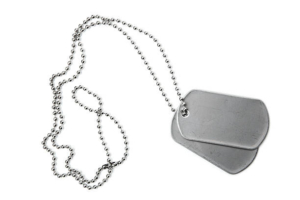
In May 2010, a German power company excavating near Pier, Germany, uncovered human remains and U.S. military equipment including a military identification tag bearing Corsini’s name. The German War Graves Commission facilitated the transfer of the remains to the Joint POW/MIA Accounting Command.
Among other forensic identification tools and circumstantial evidence, scientists from JPAC used dental comparisons in the identification of Corsini’s remains.
Of the 16 million Americans who served in World War II, more than 400,000 died. At the end of the war, the U.S. government was unable to recover and identify approximately 79,000 Americans. Today, more than 73,000 are unaccounted-for from the conflict.
For additional information on the Defense Department’s mission to account for missing Americans, visit the DPMO web site at http://www.dtic.mil/dpmo or call (703) 699-1169.
https://pow-mia-kia.org/wp-content/uploads/2025/04/logo-300x200.jpg00adminhttps://pow-mia-kia.org/wp-content/uploads/2025/04/logo-300x200.jpgadmin2025-03-30 20:51:322025-03-30 20:51:33Pfc. Victor P. Corsini
Airmen Missing In Action From WWII Identified (Volz, Dietz, Lake, Murray, Shryock, Wren, Smith, Chastain, Green, Harris, Ray, Tyler)
The Department of Defense POW/Missing Personnel Office (DPMO) announced today that the remains 12 U.S. servicemen, missing in action from World War II, have been identified and are being returned to their families for burial with full military honors.
Army Air Forces 1st Lt. Jack E. Volz, 21, of Indianapolis; 2nd Lt. Regis E. Dietz, 28, of Pittsburgh; 2nd Lt. Edward J. Lake, 25, of Brooklyn, N.Y.; 2nd Lt. Martin P. Murray, 21, of Lowell, Mass.; 2nd Lt. William J. Shryock, 23, of Gary, Ind.; Tech. Sgt. Robert S. Wren, 25, of Seattle; Tech. Sgt. Hollis R. Smith, 22, of Cove, Ark.; Staff Sgt. Berthold A. Chastain, 27, Dalton, Ga.; Staff Sgt. Clyde L. Green, 24, Erie, Penn.; Staff Sgt. Frederick E. Harris, 23, Medford, Mass.; Staff Sgt. Claude A. Ray, 24, Coffeyville, Kan.; and Staff Sgt. Claude G. Tyler, 24, Landover, Md. The remains representing the entire crew will be buried as a group, in a single casket, August 4 in Arlington National Cemetery near Washington, D.C. Eight of the airmen were identified and buried as individuals during previous ceremonies. Shryock, Green and Harris were also individually identified and will be interred individually at Arlington on the same day as the group interment.
These 12 airmen were ordered to carry out a reconnaissance mission in their B-24D Liberator, taking off from an airfield near Port Moresby, New Guinea, on Oct. 27, 1943. Allied plans were being formulated to mount an attack on the Japanese redoubt at Rabaul, New Britain. American strategists considered it critical to take Rabaul in order to support the eventual invasion of the Philippines. The crew’s assigned area of reconnaissance was the nearby shipping lanes in the Bismarck Sea. But during their mission, they were radioed to land at a friendly air strip nearby due to poor weather conditions. The last radio transmission from the crew did not indicate their location, and in the following weeks, multiple searches over land and sea areas did not locate the aircraft.
Following World War II, the Army Graves Registration Service conducted investigations and searches for 43 missing airmen, including these airmen, in the area but concluded in June 1949 that they were unrecoverable.
In August 2003 a team from the Joint POW/MIA Accounting Command (JPAC) received information on a crash site from a citizen in Papua New Guinea while they were investigating another case. He also turned over an identification card from one of the crew members and reported that there were possible human remains at the site of the crash. Twice in 2004 other JPAC teams attempted to visit the site but were unable to do so due to poor weather and hazardous conditions at the helicopter landing site. Another team was able to successfully excavate the site from January to March 2007 where they found several identification tags from the B-24D crew as well as human remains.
Among other forensic identification tools and circumstantial evidence, scientists from JPAC and the Armed Forces DNA Identification Laboratory used mitochondrial DNA—which matched that of some of the crewmembers’ families—in the identification of their remains
Of the 16 million Americans who served in World War II, more than 400,000 died. At the end of the war, the U.S. government was unable to recover and identify approximately 79,000 Americans. Today, more than 73,000 are unaccounted-for from the conflict.
For additional information on the Defense Department’s mission to account for missing Americans, visit the DPMO web site at http://www.dtic.mil/dpmo or call (703) 699-1169.
The Department of Defense POW/Missing Personnel Office (DPMO) announced today that the remains of a U.S. serviceman, missing in action from the Korean War, have been identified and returned to his family for burial with full military honors.
Army Cpl. James N. Sund, 28, of Oklee, Minn., will be buried on July 26 in Highlanding, Minn. After the 1953 armistice, it was learned from surviving POWs that he had been captured in January 1951, marched north to a POW camp in Suan County, North Korea, and died while in captivity when allies attacked the camp in April 1951.
Between 1991-94, North Korea gave the United States 208 boxes of remains believed to contain the remains of 200-400 U.S. servicemen. North Korean documents turned over with one of the boxes indicated that the remains, contained in the box, were exhumed near Suan County. This location correlates with Sund’s last known location.
Analysts from DPMO and the Joint POW/MIA Accounting Command (JPAC) developed case leads with information spanning more than 58 years. Through interviews with surviving POW eyewitnesses, experts validated circumstances surrounding the soldier’s captivity and death, confirming wartime documentation of his loss.
Among other forensic identification tools and circumstantial evidence, scientists from the Armed Forces DNA Identification Laboratory also used mitochondrial DNA – which matched that of his sisters – to identify Sund’s remains.
For additional information on the Defense Department’s mission to account for missing Americans, visit the DPMO web site at http://www.dtic.mil/dpmo or call (703) 699-1169.
https://pow-mia-kia.org/wp-content/uploads/2025/04/logo-300x200.jpg00adminhttps://pow-mia-kia.org/wp-content/uploads/2025/04/logo-300x200.jpgadmin2025-03-30 20:50:122025-03-30 20:50:13Cpl. James N. Sund
Soldier Missing From Vietnam War Identified (Dalton)
The Department of Defense POW/Missing Personnel Office announced today that the remains of a U.S. serviceman, missing in action from the Vietnam War, have been identified and will be returned to his family for burial with full military honors.
Army Specialist Four Randall D. Dalton, 20, of Collinsville, Ill., will be buried July 24 in Glen Carbon, Ill. On July 24, 1971, he was the door gunner of an OH-6A Cayuse helicopter, with two other soldiers on board, when the aircraft was struck by enemy ground fire and crashed in Kracheh Province, Cambodia. A search and rescue team arrived at the location shortly after the crash and found the pilot alive. Dalton and the third soldier did not survive. Enemy activity in the area forced the team to rapidly evacuate the pilot. The next day as second team returned to recover the remains of the other two men but they were missing.
In September 1989, the Socialist Republic of Vietnam gave the United States three boxes of remains believed to U.S. servicemen. Documents turned over with the boxes listed two servicemen by name and scientists confirmed their identities. The third box contained remains from two individuals—one was determined to be of Southeast Asian descent and returned to Vietnam, the other wasn’t able to be identified given the available forensic technology.
Between 1992 and 2007, joint U.S./Kingdom of Cambodia teams interviewed witnesses, conducted investigations and excavated the crash site. The team found helicopter wreckage but no evidence of human remains.
Among other forensic identification tools and circumstantial evidence, scientists from the Armed Forces DNA Identification Laboratory used mitochondrial DNA – which matched that of his sister – in the identification of Dalton’s remains.
For additional information on the Defense Department’s mission to account for missing Americans, call (703) 699-1169 or visit the DPMO Web site at www.dtic.mil/dpmo.
https://pow-mia-kia.org/wp-content/uploads/2025/04/logo-300x200.jpg00adminhttps://pow-mia-kia.org/wp-content/uploads/2025/04/logo-300x200.jpgadmin2025-03-30 20:49:412025-03-30 20:49:42Specialist Four Randall D. Dalton
U.S. Soldier MIA From Korean War Identified (Arce)
The Department of Defense POW/Missing Personnel Office announced today that the remains of a U.S. serviceman, missing in action from the Korean War, have been identified and are being returned to his family for burial with full military honors.
Army Cpl. Charles Arce, 19, of Brooklyn, N.Y., will be buried July 20 in Arlington National Cemetery near Washington, D.C. On Nov. 1, 1950, Arce was assigned to M Company, 3rd Battalion, 8th Cavalry Regiment, 1st Cavalry Division, occupying a defensive position in North Korea, along the Nammyon River, near a bend known as the “Camel’s Head.” Two enemy elements attacked the 1st Cavalry Division’s lines, collapsing their perimeter and forcing a withdrawal. Almost 400 men, including Arce, were reported missing or killed in action following the battle.
In 2007, North Korea gave the United States six boxes believed to contain the remains of U.S. servicemen. Information provided with the boxes indicated the remains were exhumed in November 2006 near Unsan County, North Pyongan Province. This location correlates with the location of the 3rd Battalion, 8th Cavalry Regiment on Nov. 2, 1950.
Among forensic identification tools and circumstantial evidence, scientists from the Armed Forces DNA Identification Laboratory used mitochondrial DNA – which matched that of Arce’s sister and brother—in the identification.
For additional information on the Defense Department’s mission to account for missing Americans, visit the DPMO web site at www.dtic.mil/dpmo or call (703) 699-1169.
https://pow-mia-kia.org/wp-content/uploads/2025/04/logo-300x200.jpg00adminhttps://pow-mia-kia.org/wp-content/uploads/2025/04/logo-300x200.jpgadmin2025-03-30 20:49:082025-03-30 20:49:09Cpl. Charles Arce
The Department of Defense POW/Missing Personnel Office announced today that the remains of a U.S. serviceman, missing in action from the Korean War, have been identified and are being returned to his family for burial with full military honors.
Army Pfc. Peter Kubic, 22, of Laflin, Pa., will be buried July 21 in Arlington National Cemetery near Washington, D.C. On Feb. 12, 1951, he was assigned to the 2nd Infantry Division in South Korea, when his division came under attack near Hoengsong. The unit was forced to withdraw to a more defensible position. Following the battle, Kubic was reported missing in action.
Information released in a Chinese propaganda broadcast in 1951 established that Kubic had been captured by enemy forces. A subsequent report indicated that he died while in captivity, although no date or cause of death was identified.
Between 1991 and 1994, North Korea gave the United States 208 boxes of remains believed to contain the remains of 200-400 U.S. servicemen. North Korean documents, turned over with some of the boxes, indicated that human remains were recovered from North Hwanghae Province. This area correlates to the approximate location of two major North Korean POW camps – Suan Bean Camp and Suan Mining Camp.
Among forensic identification tools and circumstantial evidence, scientists from the Armed Forces DNA Identification Laboratory used mitochondrial DNA – which matched that of Kubic’s sister—in the identification. In addition, Kubic’s military identification tags were included with the remains.
For additional information on the Defense Department’s mission to account for missing Americans, visit the DPMO web site at http://www.dtic.mil/dpmo or call (703) 699-1169.
https://pow-mia-kia.org/wp-content/uploads/2025/04/logo-300x200.jpg00adminhttps://pow-mia-kia.org/wp-content/uploads/2025/04/logo-300x200.jpgadmin2025-03-30 20:48:372025-03-30 20:48:39Pfc. Peter Kubic
The Department of Defense POW/Missing Personnel Office (DPMO) announced today that the remains of three servicemen, missing in action from World War II, have been identified and are being returned to their families for burial with full military honors.
Army Pfc. Lawrence N. Harris, of Elkins, W.V., Cpl. Judge C. Hellums, of Paris, Miss., and Pvt. Donald D. Owens, of Cleveland, will be buried as a group, in a single casket, on July 20 in Arlington National Cemetery near Washington, D.C. In late September 1944, their unit, the 773rd Tank Battalion, was fighting its way east to France’s eastern border, clearing German forces out of the Parroy Forest near Lunéville. For its combat service, the 773rd received the Presidential Unit Citation as the battalion had destroyed 125 enemy tanks by war’s end. On Oct. 9, 1944, in the final battle for control of the region, Hellums, Harris, Owens and two other soldiers were attacked by enemy fire in their M-10 Tank Destroyer. Two men survived with serious injuries but Harris, Hellums and Owens were reported to have been killed. Evidence at the time indicated the remains of the men had been destroyed in the attack and were neither recovered nor buried near the location.
In November 1946, a French soldier working in the Parroy Forest found debris associated with an M-10 vehicle and human remains, which were turned over to the American Graves Registration Command. The remains were buried as unknowns in what is now known as the Ardennes American Cemetery in Belgium. A year later the AGRC returned to the Parroy Forest to conduct interviews and search for additional remains. Investigators noted at that time that all remains of U.S. soldiers had reportedly been removed in the last two years and that the crew was likely buried elsewhere as unknowns.
In 2003, a French citizen exploring the Parroy Forest discovered human remains and an identification bracelet engraved with Hellums’ name, from a site he had probed occasionally since 1998. The information was eventually sent to the Joint POW/MIA Accounting Command (JPAC). In April 2006, the man turned over the items to a JPAC team working in Europe. A few months later a second JPAC team returned to the site and recovered more human remains, personal effects and an identification tag for Owens.
Historians at DPMO and JPAC continued their research on the burials at the Ardennes Cemetery, and drew a correlation to those unknowns removed from the 1944 battle site. In early 2008 JPAC disinterred these remains and began their forensic review.
Among other forensic identification tools and circumstantial evidence, scientists from JPAC used dental comparisons for the men and the Armed Forces DNA Identification Laboratory used mitochondrial DNA, which matched that of each soldier’s relatives in the identification of their remains.
More than 400,000 of the 16 million Americans who served in World War II died. At the end of the war, the U.S. government was unable to recover, identify and bury approximately 79,000 Americans. Today, more than 72,000 remain unaccounted-for from the conflict.
For additional information on the Defense Department’s mission to account for missing Americans, call 571-422-9059 or visit the DPMO Web site at www.dtic.mil/dpmo.
Navy Pilot Missing In Action From Vietnam War Identified (Egan)
The Department of Defense POW/Missing Personnel Office (DPMO) announced today that the remains of a U.S. serviceman, missing in action from the Vietnam War, have been identified and will be returned to his family for burial with full military honors.
Navy Lt. Cmdr. William P. Egan, 35, of Denton, Texas, will be buried on July 16 in Webster, Texas. On April 29, 1966, Egan was killed after his A-1H Skyraider crashed as a result of enemy ground fire during an attack on targets in Khammouan Province, Laos. His wingman observed the crash and immediately flew over the area but saw no sign of Egan.
Between 1994 and 1998, joint U.S.-Lao People’s Democratic Republic (L.P.D.R.) teams led by JPAC, analyzed leads, interviewed villagers, surveyed possible crash site locations and conducted excavations. During several joint field surveys, teams recovered crew-related equipment and aircraft wreckage—that directly correlated to Egan’s aircraft—but no human remains. In late 2009, a Laotian farmer turned over bone fragments recovered from his field, approximately 10 meters from a joint excavation site.
Among other forensic identification tools and circumstantial evidence, scientists from JPAC and the Armed Forces DNA Identification Laboratory used mitochondrial DNA—which matched that of Egan’s niece—in the identification of his remains.
For additional information on the Defense Department’s mission to account for missing Americans, visit the DPMO web site at www.dtic.mil/dpmo or call (703) 699-1169.
https://pow-mia-kia.org/wp-content/uploads/2025/04/logo-300x200.jpg00adminhttps://pow-mia-kia.org/wp-content/uploads/2025/04/logo-300x200.jpgadmin2025-03-30 20:47:162025-03-30 20:47:17Lt. Cmdr. William P. Egan
Pfc. Harold D. Kenner
Recently IdentifiedPress Release | July 27, 2011
Soldier Missing In Action From WWII Identified (Kenner)
The Department of Defense POW/Missing Personnel Office (DPMO) announced today that the remains of a U.S. serviceman, missing in action from World War II, have been identified and are being returned to his family for burial with full military honors.
Army Pfc. Harold D. Kenner, 20, of Scranton, Penn., will be buried on July 29 in Arlington National Cemetery near Washington, D.C. In late September 1944, Kenner’s unit, the 401st Glider Infantry Regiment, landed in Nijmegen, Netherlands, as part of the Allied Operation Market Garden. The men were soon engaged against enemy forces near Kiekberg Woods—approximately 7 miles southeast of Nijmegen. On Sept. 30, 1944, Kenner was listed as missing in action from the battle.
Following World War II, the Army Graves Registration Service (AGRS) conducted investigations and searches for the remains of U.S. servicemen—including Kenner—lost throughout Europe. After extensive searches of the area, the AGRS concluded his remains were unrecoverable.
In late 1987, an anonymous source contacted the Netherlands National Territorial Command regarding human remains found in the Kiekberg Woods. A preliminary assessment conducted by a Dutch museum indicated the remains could be associated with 1st Lt. Joseph F. Myers, 401st Glider Regiment, one of up to 62 men lost during the same battle as Kenner. In 1992, the remains were transferred to U.S. authorities. In 1998, based on laboratory analysis and DNA testing, the remains could not be associated with Myers and were returned to the Dutch in 2001. In 2006, U.S. authorities requested the remains be returned for further examination and comparison with other soldiers missing from the Kiekberg Woods battle.
Among other forensic identification tools and circumstantial evidence, scientists from the Armed Forces DNA Identification Laboratory also used mitochondrial DNA– which matched that of Kenner’s cousins— in the identification of his remains.
Of the 16 million Americans who served in World War II, more than 400,000 died. At the end of the war, the U.S. government was unable to recover and identify approximately 79,000 Americans. Today, more than 73,000 are unaccounted-for from the conflict.
For additional information on the Defense Department’s mission to account for missing Americans, visit the DPMO web site at http://www.dtic.mil/dpmo or call (703) 699-1169.
Pfc. John G. Lavelle
Recently IdentifiedPress Release | July 27, 2011
Soldier Missing From Korean War Identified (Lavelle)
The Department of Defense POW/Missing Personnel Office announced today that the remains of a U.S. serviceman, missing in action from the Korean War, have been identified and will be returned to his family for burial with full military honors.
Army Pfc. John G. Lavelle, 24, of Brooklyn, N.Y., will be buried Aug 1 in Calverton, N.Y. On Dec. 1, 1950, he was assigned to the 2nd Engineer Combat Battalion, 2nd Infantry Division when his unit was overrun by enemy forces near Kunu-ri, North Korea. Lavelle was reported missing in action. Surviving POWs said he had been captured by enemy forces and died of malnutrition in captivity in the spring of 1951.
During Operation Glory in the fall of 1954, China turned over remains they claimed to be those of U.S. servicemen who died in the Korean War. Records returned with the remains indicated one of the servicemen died in Prisoner of War Camp 5 at Pyoktong, on the China-North Korea border. At the time the Army was unable to identify Lavelle and the remains were buried as “unknown” the National Memorial Cemetery of the Pacific in Honolulu.
In 2010, scientists at Joint POW/MIA Accounting Command (JPAC) concluded they had evidence that supported identification of the Unknown Soldier who died in Camp 5. The remains were exhumed in March 2011 and scientists from the JPAC identified Lavelle’s remains through dental comparisons and circumstantial evidence related to the 1954 turnovers.
For additional information on the Defense Department’s mission to account for missing Americans, visit the DPMO web site at http://www.dtic.mil/dpmo or call (703) 699-1169.
Pfc. Victor P. Corsini
Recently IdentifiedPress Release | July 25, 2011
Soldier Missing In Action From WWII Identified (Corsini)
The Department of Defense POW/Missing Personnel Office (DPMO) announced today that the remains of a U.S. serviceman, missing in action from World War II, have been identified and are being returned to his family for burial with full military honors.
Army Pfc. Victor P. Corsini, 23, of Girard, Kan., will be buried on July 28 in Las Vegas. On Dec. 10, 1944, Corsini’s unit, the 414th Infantry Regiment, was driving east along the Roer River when an intense battle erupted near the town of Pier, Germany. Corsini was killed the next day when an enemy artillery shell burst in the treetops above him. The ongoing German counterattack prevented his remains from being recovered.
Following World War II, the Army Graves Registration Service conducted investigations and searches for the remains of U.S. servicemen lost throughout Europe. In 1951, after several extensive searches of the area, concluded his remains were unrecoverable.
In May 2010, a German power company excavating near Pier, Germany, uncovered human remains and U.S. military equipment including a military identification tag bearing Corsini’s name. The German War Graves Commission facilitated the transfer of the remains to the Joint POW/MIA Accounting Command.
Among other forensic identification tools and circumstantial evidence, scientists from JPAC used dental comparisons in the identification of Corsini’s remains.
Of the 16 million Americans who served in World War II, more than 400,000 died. At the end of the war, the U.S. government was unable to recover and identify approximately 79,000 Americans. Today, more than 73,000 are unaccounted-for from the conflict.
For additional information on the Defense Department’s mission to account for missing Americans, visit the DPMO web site at http://www.dtic.mil/dpmo or call (703) 699-1169.
Volz, Dietz, Lake, Murray, Shryock, Wren, Smith, Chastain, Green, Harris, Ray, Tyler
Recently IdentifiedPress Release | July 25, 2011
Airmen Missing In Action From WWII Identified (Volz, Dietz, Lake, Murray, Shryock, Wren, Smith, Chastain, Green, Harris, Ray, Tyler)
The Department of Defense POW/Missing Personnel Office (DPMO) announced today that the remains 12 U.S. servicemen, missing in action from World War II, have been identified and are being returned to their families for burial with full military honors.
Army Air Forces 1st Lt. Jack E. Volz, 21, of Indianapolis; 2nd Lt. Regis E. Dietz, 28, of Pittsburgh; 2nd Lt. Edward J. Lake, 25, of Brooklyn, N.Y.; 2nd Lt. Martin P. Murray, 21, of Lowell, Mass.; 2nd Lt. William J. Shryock, 23, of Gary, Ind.; Tech. Sgt. Robert S. Wren, 25, of Seattle; Tech. Sgt. Hollis R. Smith, 22, of Cove, Ark.; Staff Sgt. Berthold A. Chastain, 27, Dalton, Ga.; Staff Sgt. Clyde L. Green, 24, Erie, Penn.; Staff Sgt. Frederick E. Harris, 23, Medford, Mass.; Staff Sgt. Claude A. Ray, 24, Coffeyville, Kan.; and Staff Sgt. Claude G. Tyler, 24, Landover, Md. The remains representing the entire crew will be buried as a group, in a single casket, August 4 in Arlington National Cemetery near Washington, D.C. Eight of the airmen were identified and buried as individuals during previous ceremonies. Shryock, Green and Harris were also individually identified and will be interred individually at Arlington on the same day as the group interment.
These 12 airmen were ordered to carry out a reconnaissance mission in their B-24D Liberator, taking off from an airfield near Port Moresby, New Guinea, on Oct. 27, 1943. Allied plans were being formulated to mount an attack on the Japanese redoubt at Rabaul, New Britain. American strategists considered it critical to take Rabaul in order to support the eventual invasion of the Philippines. The crew’s assigned area of reconnaissance was the nearby shipping lanes in the Bismarck Sea. But during their mission, they were radioed to land at a friendly air strip nearby due to poor weather conditions. The last radio transmission from the crew did not indicate their location, and in the following weeks, multiple searches over land and sea areas did not locate the aircraft.
Following World War II, the Army Graves Registration Service conducted investigations and searches for 43 missing airmen, including these airmen, in the area but concluded in June 1949 that they were unrecoverable.
In August 2003 a team from the Joint POW/MIA Accounting Command (JPAC) received information on a crash site from a citizen in Papua New Guinea while they were investigating another case. He also turned over an identification card from one of the crew members and reported that there were possible human remains at the site of the crash. Twice in 2004 other JPAC teams attempted to visit the site but were unable to do so due to poor weather and hazardous conditions at the helicopter landing site. Another team was able to successfully excavate the site from January to March 2007 where they found several identification tags from the B-24D crew as well as human remains.
Among other forensic identification tools and circumstantial evidence, scientists from JPAC and the Armed Forces DNA Identification Laboratory used mitochondrial DNA—which matched that of some of the crewmembers’ families—in the identification of their remains
Of the 16 million Americans who served in World War II, more than 400,000 died. At the end of the war, the U.S. government was unable to recover and identify approximately 79,000 Americans. Today, more than 73,000 are unaccounted-for from the conflict.
For additional information on the Defense Department’s mission to account for missing Americans, visit the DPMO web site at http://www.dtic.mil/dpmo or call (703) 699-1169.
Cpl. James N. Sund
Recently IdentifiedPress Release | July 22, 2011
Soldier Missing From Korean War Identified (Sund)
The Department of Defense POW/Missing Personnel Office (DPMO) announced today that the remains of a U.S. serviceman, missing in action from the Korean War, have been identified and returned to his family for burial with full military honors.
Army Cpl. James N. Sund, 28, of Oklee, Minn., will be buried on July 26 in Highlanding, Minn. After the 1953 armistice, it was learned from surviving POWs that he had been captured in January 1951, marched north to a POW camp in Suan County, North Korea, and died while in captivity when allies attacked the camp in April 1951.
Between 1991-94, North Korea gave the United States 208 boxes of remains believed to contain the remains of 200-400 U.S. servicemen. North Korean documents turned over with one of the boxes indicated that the remains, contained in the box, were exhumed near Suan County. This location correlates with Sund’s last known location.
Analysts from DPMO and the Joint POW/MIA Accounting Command (JPAC) developed case leads with information spanning more than 58 years. Through interviews with surviving POW eyewitnesses, experts validated circumstances surrounding the soldier’s captivity and death, confirming wartime documentation of his loss.
Among other forensic identification tools and circumstantial evidence, scientists from the Armed Forces DNA Identification Laboratory also used mitochondrial DNA – which matched that of his sisters – to identify Sund’s remains.
For additional information on the Defense Department’s mission to account for missing Americans, visit the DPMO web site at http://www.dtic.mil/dpmo or call (703) 699-1169.
Specialist Four Randall D. Dalton
Recently IdentifiedPress Release | July 21, 2011
Soldier Missing From Vietnam War Identified (Dalton)
The Department of Defense POW/Missing Personnel Office announced today that the remains of a U.S. serviceman, missing in action from the Vietnam War, have been identified and will be returned to his family for burial with full military honors.
Army Specialist Four Randall D. Dalton, 20, of Collinsville, Ill., will be buried July 24 in Glen Carbon, Ill. On July 24, 1971, he was the door gunner of an OH-6A Cayuse helicopter, with two other soldiers on board, when the aircraft was struck by enemy ground fire and crashed in Kracheh Province, Cambodia. A search and rescue team arrived at the location shortly after the crash and found the pilot alive. Dalton and the third soldier did not survive. Enemy activity in the area forced the team to rapidly evacuate the pilot. The next day as second team returned to recover the remains of the other two men but they were missing.
In September 1989, the Socialist Republic of Vietnam gave the United States three boxes of remains believed to U.S. servicemen. Documents turned over with the boxes listed two servicemen by name and scientists confirmed their identities. The third box contained remains from two individuals—one was determined to be of Southeast Asian descent and returned to Vietnam, the other wasn’t able to be identified given the available forensic technology.
Between 1992 and 2007, joint U.S./Kingdom of Cambodia teams interviewed witnesses, conducted investigations and excavated the crash site. The team found helicopter wreckage but no evidence of human remains.
Among other forensic identification tools and circumstantial evidence, scientists from the Armed Forces DNA Identification Laboratory used mitochondrial DNA – which matched that of his sister – in the identification of Dalton’s remains.
For additional information on the Defense Department’s mission to account for missing Americans, call (703) 699-1169 or visit the DPMO Web site at www.dtic.mil/dpmo.
Cpl. Charles Arce
Recently IdentifiedPress Release | July 20, 2011
U.S. Soldier MIA From Korean War Identified (Arce)
The Department of Defense POW/Missing Personnel Office announced today that the remains of a U.S. serviceman, missing in action from the Korean War, have been identified and are being returned to his family for burial with full military honors.
Army Cpl. Charles Arce, 19, of Brooklyn, N.Y., will be buried July 20 in Arlington National Cemetery near Washington, D.C. On Nov. 1, 1950, Arce was assigned to M Company, 3rd Battalion, 8th Cavalry Regiment, 1st Cavalry Division, occupying a defensive position in North Korea, along the Nammyon River, near a bend known as the “Camel’s Head.” Two enemy elements attacked the 1st Cavalry Division’s lines, collapsing their perimeter and forcing a withdrawal. Almost 400 men, including Arce, were reported missing or killed in action following the battle.
In 2007, North Korea gave the United States six boxes believed to contain the remains of U.S. servicemen. Information provided with the boxes indicated the remains were exhumed in November 2006 near Unsan County, North Pyongan Province. This location correlates with the location of the 3rd Battalion, 8th Cavalry Regiment on Nov. 2, 1950.
Among forensic identification tools and circumstantial evidence, scientists from the Armed Forces DNA Identification Laboratory used mitochondrial DNA – which matched that of Arce’s sister and brother—in the identification.
For additional information on the Defense Department’s mission to account for missing Americans, visit the DPMO web site at www.dtic.mil/dpmo or call (703) 699-1169.
Pfc. Peter Kubic
Recently IdentifiedPress Release | July 20, 2011
Soldier MIA From Korean War Identified (Kubic)
The Department of Defense POW/Missing Personnel Office announced today that the remains of a U.S. serviceman, missing in action from the Korean War, have been identified and are being returned to his family for burial with full military honors.
Army Pfc. Peter Kubic, 22, of Laflin, Pa., will be buried July 21 in Arlington National Cemetery near Washington, D.C. On Feb. 12, 1951, he was assigned to the 2nd Infantry Division in South Korea, when his division came under attack near Hoengsong. The unit was forced to withdraw to a more defensible position. Following the battle, Kubic was reported missing in action.
Information released in a Chinese propaganda broadcast in 1951 established that Kubic had been captured by enemy forces. A subsequent report indicated that he died while in captivity, although no date or cause of death was identified.
Between 1991 and 1994, North Korea gave the United States 208 boxes of remains believed to contain the remains of 200-400 U.S. servicemen. North Korean documents, turned over with some of the boxes, indicated that human remains were recovered from North Hwanghae Province. This area correlates to the approximate location of two major North Korean POW camps – Suan Bean Camp and Suan Mining Camp.
Among forensic identification tools and circumstantial evidence, scientists from the Armed Forces DNA Identification Laboratory used mitochondrial DNA – which matched that of Kubic’s sister—in the identification. In addition, Kubic’s military identification tags were included with the remains.
For additional information on the Defense Department’s mission to account for missing Americans, visit the DPMO web site at http://www.dtic.mil/dpmo or call (703) 699-1169.
Harris, Hellums, Owens
Recently IdentifiedPress Release | July 18, 2011
Missing WWII Soldiers Identified (Harris, Hellums, Owens)
The Department of Defense POW/Missing Personnel Office (DPMO) announced today that the remains of three servicemen, missing in action from World War II, have been identified and are being returned to their families for burial with full military honors.
Army Pfc. Lawrence N. Harris, of Elkins, W.V., Cpl. Judge C. Hellums, of Paris, Miss., and Pvt. Donald D. Owens, of Cleveland, will be buried as a group, in a single casket, on July 20 in Arlington National Cemetery near Washington, D.C. In late September 1944, their unit, the 773rd Tank Battalion, was fighting its way east to France’s eastern border, clearing German forces out of the Parroy Forest near Lunéville. For its combat service, the 773rd received the Presidential Unit Citation as the battalion had destroyed 125 enemy tanks by war’s end. On Oct. 9, 1944, in the final battle for control of the region, Hellums, Harris, Owens and two other soldiers were attacked by enemy fire in their M-10 Tank Destroyer. Two men survived with serious injuries but Harris, Hellums and Owens were reported to have been killed. Evidence at the time indicated the remains of the men had been destroyed in the attack and were neither recovered nor buried near the location.
In November 1946, a French soldier working in the Parroy Forest found debris associated with an M-10 vehicle and human remains, which were turned over to the American Graves Registration Command. The remains were buried as unknowns in what is now known as the Ardennes American Cemetery in Belgium. A year later the AGRC returned to the Parroy Forest to conduct interviews and search for additional remains. Investigators noted at that time that all remains of U.S. soldiers had reportedly been removed in the last two years and that the crew was likely buried elsewhere as unknowns.
In 2003, a French citizen exploring the Parroy Forest discovered human remains and an identification bracelet engraved with Hellums’ name, from a site he had probed occasionally since 1998. The information was eventually sent to the Joint POW/MIA Accounting Command (JPAC). In April 2006, the man turned over the items to a JPAC team working in Europe. A few months later a second JPAC team returned to the site and recovered more human remains, personal effects and an identification tag for Owens.
Historians at DPMO and JPAC continued their research on the burials at the Ardennes Cemetery, and drew a correlation to those unknowns removed from the 1944 battle site. In early 2008 JPAC disinterred these remains and began their forensic review.
Among other forensic identification tools and circumstantial evidence, scientists from JPAC used dental comparisons for the men and the Armed Forces DNA Identification Laboratory used mitochondrial DNA, which matched that of each soldier’s relatives in the identification of their remains.
More than 400,000 of the 16 million Americans who served in World War II died. At the end of the war, the U.S. government was unable to recover, identify and bury approximately 79,000 Americans. Today, more than 72,000 remain unaccounted-for from the conflict.
For additional information on the Defense Department’s mission to account for missing Americans, call 571-422-9059 or visit the DPMO Web site at www.dtic.mil/dpmo.
Lt. Cmdr. William P. Egan
Recently IdentifiedPress Release | July 13, 2011
Navy Pilot Missing In Action From Vietnam War Identified (Egan)
The Department of Defense POW/Missing Personnel Office (DPMO) announced today that the remains of a U.S. serviceman, missing in action from the Vietnam War, have been identified and will be returned to his family for burial with full military honors.
Navy Lt. Cmdr. William P. Egan, 35, of Denton, Texas, will be buried on July 16 in Webster, Texas. On April 29, 1966, Egan was killed after his A-1H Skyraider crashed as a result of enemy ground fire during an attack on targets in Khammouan Province, Laos. His wingman observed the crash and immediately flew over the area but saw no sign of Egan.
Between 1994 and 1998, joint U.S.-Lao People’s Democratic Republic (L.P.D.R.) teams led by JPAC, analyzed leads, interviewed villagers, surveyed possible crash site locations and conducted excavations. During several joint field surveys, teams recovered crew-related equipment and aircraft wreckage—that directly correlated to Egan’s aircraft—but no human remains. In late 2009, a Laotian farmer turned over bone fragments recovered from his field, approximately 10 meters from a joint excavation site.
Among other forensic identification tools and circumstantial evidence, scientists from JPAC and the Armed Forces DNA Identification Laboratory used mitochondrial DNA—which matched that of Egan’s niece—in the identification of his remains.
For additional information on the Defense Department’s mission to account for missing Americans, visit the DPMO web site at www.dtic.mil/dpmo or call (703) 699-1169.