Soldier Accounted For From World War II (Jacks, W.)
WASHINGTON – The Defense POW/MIA Accounting Agency (DPAA) announced today that Army Pfc. Worley D. Jacks, 21, of Rutland, Ohio, killed during World War II, was accounted for June 21, 2022.
In March 1945, Jacks was assigned to Company L, 232nd Infantry Regiment, 42nd Infantry Division. His unit was engaged in battle with German forces near Lichtenberg, France, when he was wounded and reported missing in action on March 7. His body unable to be recovered, and the Germans never reported him as a prisoner of war. On Oct. 4, 1945, the War Department declared Jacks killed in action.
Following the end of the war, the American Graves Registration Command (AGRC) was tasked with investigating and recovering missing American personnel in Europe. Unable to find any remains, they declared Jacks non-recoverable. However, in January 1951, a German War Graves Commission found a set of remains wearing Jacks’ ID tags while they were disinterring German soldiers from a military cemetery near Ludwigswinkel, Germany, 14 miles to the northeast of Lichtenberg. AGRC recovered the remains, designated X-8515 Neuville, but found discrepancies between the remains and Jacks’ records and couldn’t understand how it would have been possible for Jacks’ remains to end up 14 miles away from where he went missing. Jacks was declared non-recoverable in October 1951 and X-8515 was buried at what is today Brittany American Cemetery, an American Battle Monuments Commission site in St. James, Normandy, France.
While studying unresolved American losses in the Lichtenberg area, a DPAA historian reviewed the X-8515 case and determined German medics had recovered Jacks near Lichtenberg and moved him to the nearest German field hospital, which was in Ludwigswinkel, where he died. This information, along with a scientific re-evaluation of X-8515’s height, weight, and age estimates, made Jacks the only historical candidate for association with X-8515. X-8515 was disinterred in August 2021 and sent to the DPAA laboratory at Offutt Air Force Base, Nebraska, for identification.
To identify Jacks’ remains, scientists from DPAA used dental and anthropological analysis, as well as circumstantial evidence. Additionally, scientists from the Armed Forces Medical Examiner System used mitochondrial DNA (mtDNA), Y chromosome DNA (Y-STR), and autosomal DNA (auSTR) analysis.
Jacks’ name is recorded on the Walls of the Missing at Epinal American Cemetery, an American Battle Monuments Commission site in Dinozé, France, along with the others still missing from World War II. A rosette will be placed next to his name to indicate he has been accounted for.
Jacks will be buried in Marion, Ohio, on a date yet to be determined.
For family and funeral information, contact the Army Casualty Office at (800) 892-2490.
https://pow-mia-kia.org/wp-content/uploads/2025/04/logo-300x200.jpg00adminhttps://pow-mia-kia.org/wp-content/uploads/2025/04/logo-300x200.jpgadmin2025-04-04 00:44:552025-04-04 00:44:56Pfc. Worley D. Jacks
WASHINGTON – The Defense POW/MIA Accounting Agency (DPAA) announced today that U.S. Army Air Forces 2nd Lt. David M. Lewis, 20, of Dallas, killed during World War II, was accounted for May 11, 2022.
In the summer of 1943, Lewis was assigned to the 345th Bombardment Squadron (Heavy), 98th Bombardment Group (Heavy), 9th Air Force. On Aug. 1, 1943, the B-24 Liberator aircraft on which Lewis was serving as a pilot crashed as a result of enemy anti-aircraft fire during Operation TIDAL WAVE, the largest bombing mission against the oil fields and refineries at Ploiesti, north of Bucharest, Romania. His remains were not identified following the war. The remains that could not be identified were buried as Unknowns in the Hero Section of the Civilian and Military Cemetery of Bolovan, Ploiesti, Prahova, Romania.
Following the war, the American Graves Registration Command (AGRC), the organization that searched for and recovered fallen American personnel, disinterred all American remains from the Bolovan Cemetery for identification. The AGRC was unable to identify more than 80 unknowns from Bolovan Cemetery, and those remains were permanently interred at Ardennes American Cemetery and Henri-Chapelle American Cemetery, both in Belgium.
In 2017, DPAA began exhuming unknowns believed to be associated with unaccounted-for airmen from Operation TIDAL WAVE losses. These remains were sent to the DPAA Laboratory at Offutt Air Force Base, Nebraska, for examination and identification.
To identify Lewis’s remains, scientists from DPAA used anthropological analysis, as well as circumstantial evidence. Additionally, scientists from the Armed Forces Medical Examiner System used mitochondrial DNA (mtDNA). Y chromosome DNA (Y-STR) and autosomal DNA (auSTR) analysis.
Lewis’s name is recorded on the Tablets of the Missing at the Florence American Cemetery, an American Battle Monuments Commission site in Impruneta, Italy, along with others still missing from WWII. A rosette will be placed next to his name to indicate he has been accounted for.
Lewis will be buried in Saltillo, Texas, on a date yet to be determined.
For family and funeral information, contact the Army Casualty Office at (800) 892-2490.
https://pow-mia-kia.org/wp-content/uploads/2025/04/logo-300x200.jpg00adminhttps://pow-mia-kia.org/wp-content/uploads/2025/04/logo-300x200.jpgadmin2025-04-04 00:44:162025-04-04 00:44:182nd Lt. David M. Lewis
Soldier Accounted For From World War II (Froemke, D.)
WASHINGTON – The Defense POW/MIA Accounting Agency (DPAA) announced today that U.S. Army Capt. Donald H. Froemke, 33, killed during World War II, was accounted for Aug. 24, 2022.
In the fall of 1944, Froemke was assigned to Company B, 326th Airborne Engineer Battalion, 101st Airborne Division. He was reported killed in action on Oct. 5 during Operation MARKET GARDEN when his unit was attacked by German forces near Opheusden, The Netherlands. Due to the fighting, his body was unable to be recovered.
Following the war, the American Graves Registration Command (AGRC), the organization that searched for and recovered fallen American personnel, conducted several searches of the area. In March 1946, the visited a Dutch civilian cemetery to recover several sets of American remains buried there. A cross with Froemke’s name marked one of the graves. Within the grave was a set of remains wearing U.S. Army uniform and equipment. However, there was no other personal effects or ID tags. The remains were designated Unknown X-3325 Neuville, but were later declared to be Froemke based on four pieces of circumstantial evidence. These remains were sent to Yakima, Washington, to be buried per Froemke’s family’s wishes.
https://pow-mia-kia.org/wp-content/uploads/2025/04/logo-300x200.jpg00adminhttps://pow-mia-kia.org/wp-content/uploads/2025/04/logo-300x200.jpgadmin2025-04-04 00:43:382025-04-04 00:43:40Capt. Donald H. Froemke
Marine Accounted For From World War II (Garrison, L.)
WASHINGTON – The Defense POW/MIA Accounting Agency (DPAA) announced today that U.S. Marine Corps Pfc. Lawrence E. Garrison, 23, killed during World War II, was accounted for on Aug. 23, 2022.
In November 1943, Garrison was a member of Company H, 2nd Battalion, 8th Marine Regiment, 2nd Marine Division, Fleet Marine Force, which landed against stiff Japanese resistance on the small island of Betio in the Tarawa Atoll of the Gilbert Islands, in an attempt to secure the island. Over several days of intense fighting at Tarawa, approximately 1,000 Marines and Sailors were killed and more than 2,000 were wounded, while the Japanese were virtually annihilated. Garrison was killed on the first day of the battle, Nov. 20, 1943. His remains were reportedly buried in a “Division Cemetery,” but records are not clear as to which one.
https://pow-mia-kia.org/wp-content/uploads/2025/04/logo-300x200.jpg00adminhttps://pow-mia-kia.org/wp-content/uploads/2025/04/logo-300x200.jpgadmin2025-04-04 00:42:372025-04-04 00:42:39Pfc. Lawrence E. Garrison
Soldier Accounted For From Korean War (Reiter, E.)
WASHINGTON – The Defense POW/MIA Accounting Agency (DPAA) announced today that U.S. Army Pfc. Edward J. Reiter, 17, of Northampton, Pennsylvania, killed during the Korean War, was accounted for June 21, 2022.
In July 1950, Reiter was a member of K Company, 3rd Battalion, 34th Infantry Regiment, 24th Infantry Division. He was reported missing in action on July 7 after his unit sustained heavy casualties while defending against the North Korean army’s advance near Ch’onan, South Korea. His body was not recovered because his unit was forced to retreat, nor were any remains found that could be identified as Reiter. The Army declared him non-recoverable in January 1956 and issued a presumptive finding of death after the end of the war.
In May 1951, two sets of remains were recovered approximately one mile north of Ch’onan. Eventual examination determined one set to be of Asian ancestry and the other, designated X-1091 Tanggok, to be of European ancestry. X-1091 was unable to be further identified by American Graves Registration Service and was determined unidentifiable in August 1954. The remains were later transported with all of the unidentified Korean War remains and buried as Unknowns at the National Memorial Cemetery of the Pacific, also known as the Punchbowl, in Honolulu, Hawaii.
In November 2019, during Phase 2 of DPAA’s Korean War Disinterment Project, X-1091 was disinterred from the Punchbowl as part of the planned exhumation of all 53 burials originating from the United Nations Military Cemetery Taejon and the Taejon area, and transferred to the DPAA Laboratory at Joint Base Pearl Harbor-Hickam, Hawaii for analysis.
To identify Reiter’s remains, scientists from DPAA used dental and anthropological analysis, as well as chest radiograph comparison and circumstantial evidence. Additionally, scientists from the Armed Forces Medical Examiner System used mitochondrial DNA (mtDNA) analysis.
Reiter’s name is recorded on the Courts of the Missing at the Punchbowl, along with the others who are still missing from the Korean War. A rosette will be placed next to his name to indicate he has been accounted for.
Reiter will be buried in his hometown in the fall of 2022.
For family and funeral information, contact the Army Casualty Office at (800) 892-2490.
https://pow-mia-kia.org/wp-content/uploads/2025/04/logo-300x200.jpg00adminhttps://pow-mia-kia.org/wp-content/uploads/2025/04/logo-300x200.jpgadmin2025-04-04 00:42:102025-04-04 00:42:11Pfc. Edward J. Reiter
Tanker Accounted For From World War II (Cooper, J.)
WASHINGTON – The Defense POW/MIA Accounting Agency (DPAA) announced today that U.S. Army Pvt. John P. Cooper, 37, of Athens, Texas, killed during World War II, was accounted for June 21, 2022.
In March 1945, Cooper was assigned to Company B, 778th Tank Battalion, as a crew member of an M4 Sherman tank. His unit was engaged in battle with German forces at Pellingen, near Lampaden, Germany, on March 7 when his tank was struck by an enemy shoulder-fired rocket. Witnesses saw Cooper escape the tank, but he was never seen or heard from again. He was declared missing in action, but the Germans never reported him as a prisoner of war. On March 8, 1946, with no evidence Cooper survived the fighting, the War Department issued a presumptive finding of death.
Following the end of the war, the American Graves Registration Command was tasked with investigating and recovering missing American personnel in Europe. They conducted several investigations in the Pellingen area between 1946 and 1950, but were unable to recover or identify Cooper’s remains. He was declared non-recoverable in October 1951.
While studying unresolved American losses in the Lampaden area, a DPAA historian determined that one set of unidentified remains, designated X-562 Hamm, recovered near Steinbach, Germany, in 1945 possibly belonged to Cooper. The remains, which had been buried in Luxembourg American Cemetery, an American Battle Monuments Commission site in Hamm, Luxembourg, in 1950, were disinterred in July 2021 and sent to the DPAA laboratory at Offutt Air Force Base, Nebraska, for identification.
To identify Cooper’s remains, scientists from DPAA used dental and anthropological analysis, as well as circumstantial evidence. Additionally, scientists from the Armed Forces Medical Examiner System used mitochondrial DNA (mtDNA) and Y chromosome DNA (Y-STR) analysis.
Cooper’s name is recorded on the Walls of the Missing at Lorraine American Cemetery, an American Battle Monuments Commission site in St. Avold, France, along with the others still missing from World War II. A rosette will be placed next to his name to indicate he has been accounted for.
Cooper will be buried Oct. 22, 2022, in Fort Smith, Arkansas.
For family and funeral information, contact the Army Casualty Office at (800) 892-2490.
https://pow-mia-kia.org/wp-content/uploads/2025/04/logo-300x200.jpg00adminhttps://pow-mia-kia.org/wp-content/uploads/2025/04/logo-300x200.jpgadmin2025-04-04 00:41:412025-04-04 00:41:43Pvt. John P. Cooper
Soldier Accounted For From World War II (Alexander, R.)
WASHINGTON – The Defense POW/MIA Accounting Agency (DPAA) announced today that Army Pfc. Robert L. Alexander, 27, of Tolley, North Dakota, killed during World War II, was accounted for June 21, 2022.
In July 1944, Alexander was a member of the 105th Infantry Regiment, 27th Infantry Division, fighting the Japanese on Saipan in the Mariana Islands. Alexander was killed July 7 when the Japanese general on Saipan ordered his forces into a mass suicide, or “banzai,” attack against the 105th’s lines.
Following the end of the war, the American Graves Registration Service (AGRS) was tasked with investigating and recovering missing American personnel in the Pacific Theater. They searched for and disinterred remains on Saipan, but could not identify any as Alexander. He was declared non-recoverable in September 1949.
Remains, designated as Unknown X-27 27th Infantry Division Cemetery, were recovered from Saipan and interred in the Fort William McKinley Cemetery, now the Manila American Cemetery and Memorial, an American Battle Monuments Commission site in the Philippines.
After thorough historical research, it was determined that X-27 could likely be identified. On Jan. 22, 2019, Unknown X-27 was disinterred and sent to the DPAA Laboratory at Joint Base Pearl Harbor-Hickam, Hawaii, for analysis.
To identify Alexander’s remains, scientists from DPAA used dental and anthropological analysis, as well as circumstantial and material evidence. Additionally, scientists from the Armed Forces Medical Examiner System used mitochondrial DNA (mtDNA) analysis.
Alexander’s name is recorded in the Courts of the Missing at the National Memorial Cemetery of the Pacific in Honolulu, along with the others who are still missing from World War II. A rosette will be placed next to his name to indicate he has been accounted for.
Alexander will be buried at Arlington National Cemetery in Arlington, Virginia, at a date yet to be determined.
For family and funeral information, contact the Army Casualty office at (800) 892-2490.
https://pow-mia-kia.org/wp-content/uploads/2025/04/logo-300x200.jpg00adminhttps://pow-mia-kia.org/wp-content/uploads/2025/04/logo-300x200.jpgadmin2025-04-04 00:41:122025-04-04 00:41:14Pfc. Robert L. Alexander
WASHINGTON – The Defense POW/MIA Accounting Agency (DPAA) announced today that Army Air Forces Sgt. Herald R. Boyd, 25, of Granger, Texas, killed during World War II, was accounted for July 8, 2022.
In February 1945, Boyd was assigned to 350th Bombardment Squadron, 100th Bombardment Group (Heavy), 8th Air Force in the European Theater. On Feb. 3, the B-17G Flying Fortress bomber on which he was serving as a gunner was part of a large mission to bomb the Tempelhof marshalling yard in Berlin. Boyd’s bomber was one of 21 B-17s lost during the mission. Witnesses from other aircraft said the bomber had been struck by a ground rocket immediately after dropping its bombs. The pilot tried to save the plane, but he was unsuccessful, and it crashed in a residential area of Berlin. Seven of the nine crew members were killed. The other two were captured and became prisoners of war. German records do not list Boyd among bodies recovered from the wreckage. One of the surviving crew members confirmed Boyd had been killed in the crash, and the War Department issued a report of death on Jan. 12, 1946.
Following the end of the war, the American Graves Registration Command (AGRC) was tasked with investigating and recovering missing American personnel in Europe. They recovered 115 sets of remains from Döberitz cemetery in Berlin near the end of 1946. Between then and 1956, six of the seven missing crew members were identified. It was believed that Boyd was associated with a set of remains designated Unknown X-4804 Neuville, but this could not be conclusively proven, and X-4804 was buried at Ardennes American Cemetery, an American Battle Monuments Commission cemetery in Belgium, in 1957.
DPAA historians are conducting ongoing, comprehensive research focused on air losses over Germany. As a result, they determined X-4804 to be a strong candidate for association with Boyd. The remains were disinterred in June 2018 and sent to the DPAA laboratory at Offutt Air Force Base, Nebraska, for examination and identification.
To identify Boyd’s remains, scientists from DPAA used anthropological analysis, as well as circumstantial evidence. Additionally, scientists from the Armed Forces Medical Examiner System used mitochondrial DNA (mtDNA) and Y chromosome DNA (Y-STR) analysis.
Boyd’s name is recorded on the Walls of the Missing at Margraten American Cemetery, an American Battle Monuments Commission site in the Netherlands, along with the others still missing from World War II. A rosette will be placed next to his name to indicate he has been accounted for.
Boyd will be buried Sept. 12, 2022, in Corpus Christi, Texas.
For family and funeral information, contact the Army Casualty Office at (800) 892-2490.
https://pow-mia-kia.org/wp-content/uploads/2025/04/logo-300x200.jpg00adminhttps://pow-mia-kia.org/wp-content/uploads/2025/04/logo-300x200.jpgadmin2025-04-04 00:40:432025-04-04 00:40:45Sgt. Herald R. Boyd
Airman Accounted For From World War II (Phillips, E.)
WASHINGTON – The Defense POW/MIA Accounting Agency (DPAA) announced today that U.S. Army Air Forces Sgt. Elvin L. Phillips, 23, of Salt Lake City, Utah, killed during World War II, was accounted for March 23, 2022.
In the summer of 1943, Phillips was assigned to the 66th Bombardment Squadron (Heavy), 44th Bombardment Group (Heavy), 8th Air Force. On Aug. 1, 1943, the B-24 Liberator aircraft on which Phillips was serving as a gunner crashed as a result of enemy anti-aircraft fire during Operation TIDAL WAVE, the largest bombing mission against the oil fields and refineries at Ploiesti, north of Bucharest, Romania. His remains were not identified following the war. The remains that could not be identified were buried as Unknowns in the Hero Section of the Civilian and Military Cemetery of Bolovan, Ploiesti, Prahova, Romania.
Following the war, the American Graves Registration Command (AGRC), the organization that searched for and recovered fallen American personnel, disinterred all American remains from the Bolovan Cemetery for identification. The AGRC was unable to identify more than 80 unknowns from Bolovan Cemetery, and those remains were permanently interred at Ardennes American Cemetery and Henri-Chapelle American Cemetery, both in Belgium.
In 2017, DPAA began exhuming unknowns believed to be associated with unaccounted-for airmen from Operation TIDAL WAVE losses. These remains were sent to the DPAA Laboratory at Offutt Air Force Base, Nebraska, for examination and identification.
To identify Phillips’s remains, scientists from DPAA used anthropological analysis. Additionally, scientists from the Armed Forces Medical Examiner System used mitochondrial DNA (mtDNA), Y chromosome DNA (Y-STR), and autosomal DNA (auSTR) analysis.
Phillips’ name is recorded on the Tablets of the Missing at the Florence American Cemetery, an American Battle Monuments Commission site in Impruneta, Italy, along with others still missing from WWII. A rosette will be placed next to his name to indicate he has been accounted for.
Phillips will be buried in Bluffdale, Utah, at a date not yet determined.
For family and funeral information, contact the Army Casualty Office at (800) 892-2490.
https://pow-mia-kia.org/wp-content/uploads/2025/04/logo-300x200.jpg00adminhttps://pow-mia-kia.org/wp-content/uploads/2025/04/logo-300x200.jpgadmin2025-04-04 00:40:182025-04-04 00:40:19Sgt. Elvin L. Phillips
WASHINGTON – The Defense POW/MIA Accounting Agency (DPAA) announced today that U.S. Army Pvt. Felix M. Yanez, 19, of Douglas, Arizona, who was killed during the Korean War, was accounted for July 13, 2022.
In July 1950, Yanez was a member of Headquarters and Headquarters Company, 19th Infantry Regiment, 24th Infantry Division. He was killed in action fighting the North Korean People’s Army along the Kum River, north of Taejon, South Korea, on July 16, 1950. Due to the fighting, his body could not be recovered at that time.
A set of remains was recovered south of Tuman-ni, South Korea, in March 1951. They could not be identified, were designated X-789 Tanggok, and buried in the United Nations Cemetery Tanggok later that month. In August 1951, the Central Identification Unit Kokura in Japan began a reexamination of X-789. They made several attempts between then and August 1954 before ultimately declaring the remains unidentifiable. All 848 unidentified sets of Korean War remains at CIU-Kokura were sent to Hawaii in 1956 where they were buried at the National Memorial Cemetery of the Pacific, known as the Punchbowl, in Honolulu.
In July 2018, the DPAA proposed a plan to disinter 652 Korean War Unknowns from the Punchbowl. In August 2019, DPAA disinterred Unknown X-789 as part of Phase Two of the Korean War Disinterment Project and sent the remains to the DPAA laboratory at Joint Base Pearl Harbor-Hickam, Hawaii, for analysis.
To identify Yanez’s remains, scientists from DPAA used dental and anthropological analysis, as well as chest radiograph comparison and circumstantial evidence. Additionally, scientists from the Armed Forces Medical Examiner System used mitochondrial DNA (mtDNA) analysis.
Yanez’s name is recorded on the Courts of the Missing at the Punchbowl, along with the others who are still missing from the Korean War. A rosette will be placed next to his name to indicate he has been accounted for.
Yanez will be buried Sept. 3, 2022, in Tucson, Arizona.
For family and funeral information, contact the Army Casualty Office at (800) 892-2490.
https://pow-mia-kia.org/wp-content/uploads/2025/04/logo-300x200.jpg00adminhttps://pow-mia-kia.org/wp-content/uploads/2025/04/logo-300x200.jpgadmin2025-04-04 00:39:502025-04-04 00:39:51Pvt. Felix M. Yanez
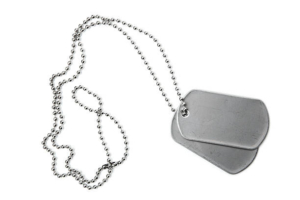
Pfc. Worley D. Jacks
Recently IdentifiedPress Release | Aug. 30, 2022
Soldier Accounted For From World War II (Jacks, W.)
WASHINGTON – The Defense POW/MIA Accounting Agency (DPAA) announced today that Army Pfc. Worley D. Jacks, 21, of Rutland, Ohio, killed during World War II, was accounted for June 21, 2022.
In March 1945, Jacks was assigned to Company L, 232nd Infantry Regiment, 42nd Infantry Division. His unit was engaged in battle with German forces near Lichtenberg, France, when he was wounded and reported missing in action on March 7. His body unable to be recovered, and the Germans never reported him as a prisoner of war. On Oct. 4, 1945, the War Department declared Jacks killed in action.
Following the end of the war, the American Graves Registration Command (AGRC) was tasked with investigating and recovering missing American personnel in Europe. Unable to find any remains, they declared Jacks non-recoverable. However, in January 1951, a German War Graves Commission found a set of remains wearing Jacks’ ID tags while they were disinterring German soldiers from a military cemetery near Ludwigswinkel, Germany, 14 miles to the northeast of Lichtenberg. AGRC recovered the remains, designated X-8515 Neuville, but found discrepancies between the remains and Jacks’ records and couldn’t understand how it would have been possible for Jacks’ remains to end up 14 miles away from where he went missing. Jacks was declared non-recoverable in October 1951 and X-8515 was buried at what is today Brittany American Cemetery, an American Battle Monuments Commission site in St. James, Normandy, France.
While studying unresolved American losses in the Lichtenberg area, a DPAA historian reviewed the X-8515 case and determined German medics had recovered Jacks near Lichtenberg and moved him to the nearest German field hospital, which was in Ludwigswinkel, where he died. This information, along with a scientific re-evaluation of X-8515’s height, weight, and age estimates, made Jacks the only historical candidate for association with X-8515. X-8515 was disinterred in August 2021 and sent to the DPAA laboratory at Offutt Air Force Base, Nebraska, for identification.
To identify Jacks’ remains, scientists from DPAA used dental and anthropological analysis, as well as circumstantial evidence. Additionally, scientists from the Armed Forces Medical Examiner System used mitochondrial DNA (mtDNA), Y chromosome DNA (Y-STR), and autosomal DNA (auSTR) analysis.
Jacks’ name is recorded on the Walls of the Missing at Epinal American Cemetery, an American Battle Monuments Commission site in Dinozé, France, along with the others still missing from World War II. A rosette will be placed next to his name to indicate he has been accounted for.
Jacks will be buried in Marion, Ohio, on a date yet to be determined.
For family and funeral information, contact the Army Casualty Office at (800) 892-2490.
2nd Lt. David M. Lewis
Recently IdentifiedPress Release | Aug. 29, 2022
Pilot Accounted For From World War II (Lewis, D.)
WASHINGTON – The Defense POW/MIA Accounting Agency (DPAA) announced today that U.S. Army Air Forces 2nd Lt. David M. Lewis, 20, of Dallas, killed during World War II, was accounted for May 11, 2022.
In the summer of 1943, Lewis was assigned to the 345th Bombardment Squadron (Heavy), 98th Bombardment Group (Heavy), 9th Air Force. On Aug. 1, 1943, the B-24 Liberator aircraft on which Lewis was serving as a pilot crashed as a result of enemy anti-aircraft fire during Operation TIDAL WAVE, the largest bombing mission against the oil fields and refineries at Ploiesti, north of Bucharest, Romania. His remains were not identified following the war. The remains that could not be identified were buried as Unknowns in the Hero Section of the Civilian and Military Cemetery of Bolovan, Ploiesti, Prahova, Romania.
Following the war, the American Graves Registration Command (AGRC), the organization that searched for and recovered fallen American personnel, disinterred all American remains from the Bolovan Cemetery for identification. The AGRC was unable to identify more than 80 unknowns from Bolovan Cemetery, and those remains were permanently interred at Ardennes American Cemetery and Henri-Chapelle American Cemetery, both in Belgium.
In 2017, DPAA began exhuming unknowns believed to be associated with unaccounted-for airmen from Operation TIDAL WAVE losses. These remains were sent to the DPAA Laboratory at Offutt Air Force Base, Nebraska, for examination and identification.
To identify Lewis’s remains, scientists from DPAA used anthropological analysis, as well as circumstantial evidence. Additionally, scientists from the Armed Forces Medical Examiner System used mitochondrial DNA (mtDNA). Y chromosome DNA (Y-STR) and autosomal DNA (auSTR) analysis.
Lewis’s name is recorded on the Tablets of the Missing at the Florence American Cemetery, an American Battle Monuments Commission site in Impruneta, Italy, along with others still missing from WWII. A rosette will be placed next to his name to indicate he has been accounted for.
Lewis will be buried in Saltillo, Texas, on a date yet to be determined.
For family and funeral information, contact the Army Casualty Office at (800) 892-2490.
Capt. Donald H. Froemke
Recently IdentifiedPress Release | Aug. 25, 2022
Soldier Accounted For From World War II (Froemke, D.)
WASHINGTON – The Defense POW/MIA Accounting Agency (DPAA) announced today that U.S. Army Capt. Donald H. Froemke, 33, killed during World War II, was accounted for Aug. 24, 2022.
In the fall of 1944, Froemke was assigned to Company B, 326th Airborne Engineer Battalion, 101st Airborne Division. He was reported killed in action on Oct. 5 during Operation MARKET GARDEN when his unit was attacked by German forces near Opheusden, The Netherlands. Due to the fighting, his body was unable to be recovered.
Following the war, the American Graves Registration Command (AGRC), the organization that searched for and recovered fallen American personnel, conducted several searches of the area. In March 1946, the visited a Dutch civilian cemetery to recover several sets of American remains buried there. A cross with Froemke’s name marked one of the graves. Within the grave was a set of remains wearing U.S. Army uniform and equipment. However, there was no other personal effects or ID tags. The remains were designated Unknown X-3325 Neuville, but were later declared to be Froemke based on four pieces of circumstantial evidence. These remains were sent to Yakima, Washington, to be buried per Froemke’s family’s wishes.
Pfc. Lawrence E. Garrison
Recently IdentifiedPress Release | Aug. 25, 2022
Marine Accounted For From World War II (Garrison, L.)
WASHINGTON – The Defense POW/MIA Accounting Agency (DPAA) announced today that U.S. Marine Corps Pfc. Lawrence E. Garrison, 23, killed during World War II, was accounted for on Aug. 23, 2022.
In November 1943, Garrison was a member of Company H, 2nd Battalion, 8th Marine Regiment, 2nd Marine Division, Fleet Marine Force, which landed against stiff Japanese resistance on the small island of Betio in the Tarawa Atoll of the Gilbert Islands, in an attempt to secure the island. Over several days of intense fighting at Tarawa, approximately 1,000 Marines and Sailors were killed and more than 2,000 were wounded, while the Japanese were virtually annihilated. Garrison was killed on the first day of the battle, Nov. 20, 1943. His remains were reportedly buried in a “Division Cemetery,” but records are not clear as to which one.
Pfc. Edward J. Reiter
Recently IdentifiedPress Release | Aug. 23, 2022
Soldier Accounted For From Korean War (Reiter, E.)
WASHINGTON – The Defense POW/MIA Accounting Agency (DPAA) announced today that U.S. Army Pfc. Edward J. Reiter, 17, of Northampton, Pennsylvania, killed during the Korean War, was accounted for June 21, 2022.
In July 1950, Reiter was a member of K Company, 3rd Battalion, 34th Infantry Regiment, 24th Infantry Division. He was reported missing in action on July 7 after his unit sustained heavy casualties while defending against the North Korean army’s advance near Ch’onan, South Korea. His body was not recovered because his unit was forced to retreat, nor were any remains found that could be identified as Reiter. The Army declared him non-recoverable in January 1956 and issued a presumptive finding of death after the end of the war.
In May 1951, two sets of remains were recovered approximately one mile north of Ch’onan. Eventual examination determined one set to be of Asian ancestry and the other, designated X-1091 Tanggok, to be of European ancestry. X-1091 was unable to be further identified by American Graves Registration Service and was determined unidentifiable in August 1954. The remains were later transported with all of the unidentified Korean War remains and buried as Unknowns at the National Memorial Cemetery of the Pacific, also known as the Punchbowl, in Honolulu, Hawaii.
In November 2019, during Phase 2 of DPAA’s Korean War Disinterment Project, X-1091 was disinterred from the Punchbowl as part of the planned exhumation of all 53 burials originating from the United Nations Military Cemetery Taejon and the Taejon area, and transferred to the DPAA Laboratory at Joint Base Pearl Harbor-Hickam, Hawaii for analysis.
To identify Reiter’s remains, scientists from DPAA used dental and anthropological analysis, as well as chest radiograph comparison and circumstantial evidence. Additionally, scientists from the Armed Forces Medical Examiner System used mitochondrial DNA (mtDNA) analysis.
Reiter’s name is recorded on the Courts of the Missing at the Punchbowl, along with the others who are still missing from the Korean War. A rosette will be placed next to his name to indicate he has been accounted for.
Reiter will be buried in his hometown in the fall of 2022.
For family and funeral information, contact the Army Casualty Office at (800) 892-2490.
Pvt. John P. Cooper
Recently IdentifiedPress Release | Aug. 22, 2022
Tanker Accounted For From World War II (Cooper, J.)
WASHINGTON – The Defense POW/MIA Accounting Agency (DPAA) announced today that U.S. Army Pvt. John P. Cooper, 37, of Athens, Texas, killed during World War II, was accounted for June 21, 2022.
In March 1945, Cooper was assigned to Company B, 778th Tank Battalion, as a crew member of an M4 Sherman tank. His unit was engaged in battle with German forces at Pellingen, near Lampaden, Germany, on March 7 when his tank was struck by an enemy shoulder-fired rocket. Witnesses saw Cooper escape the tank, but he was never seen or heard from again. He was declared missing in action, but the Germans never reported him as a prisoner of war. On March 8, 1946, with no evidence Cooper survived the fighting, the War Department issued a presumptive finding of death.
Following the end of the war, the American Graves Registration Command was tasked with investigating and recovering missing American personnel in Europe. They conducted several investigations in the Pellingen area between 1946 and 1950, but were unable to recover or identify Cooper’s remains. He was declared non-recoverable in October 1951.
While studying unresolved American losses in the Lampaden area, a DPAA historian determined that one set of unidentified remains, designated X-562 Hamm, recovered near Steinbach, Germany, in 1945 possibly belonged to Cooper. The remains, which had been buried in Luxembourg American Cemetery, an American Battle Monuments Commission site in Hamm, Luxembourg, in 1950, were disinterred in July 2021 and sent to the DPAA laboratory at Offutt Air Force Base, Nebraska, for identification.
To identify Cooper’s remains, scientists from DPAA used dental and anthropological analysis, as well as circumstantial evidence. Additionally, scientists from the Armed Forces Medical Examiner System used mitochondrial DNA (mtDNA) and Y chromosome DNA (Y-STR) analysis.
Cooper’s name is recorded on the Walls of the Missing at Lorraine American Cemetery, an American Battle Monuments Commission site in St. Avold, France, along with the others still missing from World War II. A rosette will be placed next to his name to indicate he has been accounted for.
Cooper will be buried Oct. 22, 2022, in Fort Smith, Arkansas.
For family and funeral information, contact the Army Casualty Office at (800) 892-2490.
Pfc. Robert L. Alexander
Recently IdentifiedPress Release | Aug. 19, 2022
Soldier Accounted For From World War II (Alexander, R.)
WASHINGTON – The Defense POW/MIA Accounting Agency (DPAA) announced today that Army Pfc. Robert L. Alexander, 27, of Tolley, North Dakota, killed during World War II, was accounted for June 21, 2022.
In July 1944, Alexander was a member of the 105th Infantry Regiment, 27th Infantry Division, fighting the Japanese on Saipan in the Mariana Islands. Alexander was killed July 7 when the Japanese general on Saipan ordered his forces into a mass suicide, or “banzai,” attack against the 105th’s lines.
Following the end of the war, the American Graves Registration Service (AGRS) was tasked with investigating and recovering missing American personnel in the Pacific Theater. They searched for and disinterred remains on Saipan, but could not identify any as Alexander. He was declared non-recoverable in September 1949.
Remains, designated as Unknown X-27 27th Infantry Division Cemetery, were recovered from Saipan and interred in the Fort William McKinley Cemetery, now the Manila American Cemetery and Memorial, an American Battle Monuments Commission site in the Philippines.
After thorough historical research, it was determined that X-27 could likely be identified. On Jan. 22, 2019, Unknown X-27 was disinterred and sent to the DPAA Laboratory at Joint Base Pearl Harbor-Hickam, Hawaii, for analysis.
To identify Alexander’s remains, scientists from DPAA used dental and anthropological analysis, as well as circumstantial and material evidence. Additionally, scientists from the Armed Forces Medical Examiner System used mitochondrial DNA (mtDNA) analysis.
Alexander’s name is recorded in the Courts of the Missing at the National Memorial Cemetery of the Pacific in Honolulu, along with the others who are still missing from World War II. A rosette will be placed next to his name to indicate he has been accounted for.
Alexander will be buried at Arlington National Cemetery in Arlington, Virginia, at a date yet to be determined.
For family and funeral information, contact the Army Casualty office at (800) 892-2490.
Sgt. Herald R. Boyd
Recently IdentifiedPress Release | Aug. 18, 2022
Airman Accounted For From World War II (Boyd, H.)
WASHINGTON – The Defense POW/MIA Accounting Agency (DPAA) announced today that Army Air Forces Sgt. Herald R. Boyd, 25, of Granger, Texas, killed during World War II, was accounted for July 8, 2022.
In February 1945, Boyd was assigned to 350th Bombardment Squadron, 100th Bombardment Group (Heavy), 8th Air Force in the European Theater. On Feb. 3, the B-17G Flying Fortress bomber on which he was serving as a gunner was part of a large mission to bomb the Tempelhof marshalling yard in Berlin. Boyd’s bomber was one of 21 B-17s lost during the mission. Witnesses from other aircraft said the bomber had been struck by a ground rocket immediately after dropping its bombs. The pilot tried to save the plane, but he was unsuccessful, and it crashed in a residential area of Berlin. Seven of the nine crew members were killed. The other two were captured and became prisoners of war. German records do not list Boyd among bodies recovered from the wreckage. One of the surviving crew members confirmed Boyd had been killed in the crash, and the War Department issued a report of death on Jan. 12, 1946.
Following the end of the war, the American Graves Registration Command (AGRC) was tasked with investigating and recovering missing American personnel in Europe. They recovered 115 sets of remains from Döberitz cemetery in Berlin near the end of 1946. Between then and 1956, six of the seven missing crew members were identified. It was believed that Boyd was associated with a set of remains designated Unknown X-4804 Neuville, but this could not be conclusively proven, and X-4804 was buried at Ardennes American Cemetery, an American Battle Monuments Commission cemetery in Belgium, in 1957.
DPAA historians are conducting ongoing, comprehensive research focused on air losses over Germany. As a result, they determined X-4804 to be a strong candidate for association with Boyd. The remains were disinterred in June 2018 and sent to the DPAA laboratory at Offutt Air Force Base, Nebraska, for examination and identification.
To identify Boyd’s remains, scientists from DPAA used anthropological analysis, as well as circumstantial evidence. Additionally, scientists from the Armed Forces Medical Examiner System used mitochondrial DNA (mtDNA) and Y chromosome DNA (Y-STR) analysis.
Boyd’s name is recorded on the Walls of the Missing at Margraten American Cemetery, an American Battle Monuments Commission site in the Netherlands, along with the others still missing from World War II. A rosette will be placed next to his name to indicate he has been accounted for.
Boyd will be buried Sept. 12, 2022, in Corpus Christi, Texas.
For family and funeral information, contact the Army Casualty Office at (800) 892-2490.
Sgt. Elvin L. Phillips
Recently IdentifiedPress Release | Aug. 18, 2022
Airman Accounted For From World War II (Phillips, E.)
WASHINGTON – The Defense POW/MIA Accounting Agency (DPAA) announced today that U.S. Army Air Forces Sgt. Elvin L. Phillips, 23, of Salt Lake City, Utah, killed during World War II, was accounted for March 23, 2022.
In the summer of 1943, Phillips was assigned to the 66th Bombardment Squadron (Heavy), 44th Bombardment Group (Heavy), 8th Air Force. On Aug. 1, 1943, the B-24 Liberator aircraft on which Phillips was serving as a gunner crashed as a result of enemy anti-aircraft fire during Operation TIDAL WAVE, the largest bombing mission against the oil fields and refineries at Ploiesti, north of Bucharest, Romania. His remains were not identified following the war. The remains that could not be identified were buried as Unknowns in the Hero Section of the Civilian and Military Cemetery of Bolovan, Ploiesti, Prahova, Romania.
Following the war, the American Graves Registration Command (AGRC), the organization that searched for and recovered fallen American personnel, disinterred all American remains from the Bolovan Cemetery for identification. The AGRC was unable to identify more than 80 unknowns from Bolovan Cemetery, and those remains were permanently interred at Ardennes American Cemetery and Henri-Chapelle American Cemetery, both in Belgium.
In 2017, DPAA began exhuming unknowns believed to be associated with unaccounted-for airmen from Operation TIDAL WAVE losses. These remains were sent to the DPAA Laboratory at Offutt Air Force Base, Nebraska, for examination and identification.
To identify Phillips’s remains, scientists from DPAA used anthropological analysis. Additionally, scientists from the Armed Forces Medical Examiner System used mitochondrial DNA (mtDNA), Y chromosome DNA (Y-STR), and autosomal DNA (auSTR) analysis.
Phillips’ name is recorded on the Tablets of the Missing at the Florence American Cemetery, an American Battle Monuments Commission site in Impruneta, Italy, along with others still missing from WWII. A rosette will be placed next to his name to indicate he has been accounted for.
Phillips will be buried in Bluffdale, Utah, at a date not yet determined.
For family and funeral information, contact the Army Casualty Office at (800) 892-2490.
Pvt. Felix M. Yanez
Recently IdentifiedPress Release | Aug. 17, 2022
Soldier Accounted For From Korean War (Yanez, F.)
WASHINGTON – The Defense POW/MIA Accounting Agency (DPAA) announced today that U.S. Army Pvt. Felix M. Yanez, 19, of Douglas, Arizona, who was killed during the Korean War, was accounted for July 13, 2022.
In July 1950, Yanez was a member of Headquarters and Headquarters Company, 19th Infantry Regiment, 24th Infantry Division. He was killed in action fighting the North Korean People’s Army along the Kum River, north of Taejon, South Korea, on July 16, 1950. Due to the fighting, his body could not be recovered at that time.
A set of remains was recovered south of Tuman-ni, South Korea, in March 1951. They could not be identified, were designated X-789 Tanggok, and buried in the United Nations Cemetery Tanggok later that month. In August 1951, the Central Identification Unit Kokura in Japan began a reexamination of X-789. They made several attempts between then and August 1954 before ultimately declaring the remains unidentifiable. All 848 unidentified sets of Korean War remains at CIU-Kokura were sent to Hawaii in 1956 where they were buried at the National Memorial Cemetery of the Pacific, known as the Punchbowl, in Honolulu.
In July 2018, the DPAA proposed a plan to disinter 652 Korean War Unknowns from the Punchbowl. In August 2019, DPAA disinterred Unknown X-789 as part of Phase Two of the Korean War Disinterment Project and sent the remains to the DPAA laboratory at Joint Base Pearl Harbor-Hickam, Hawaii, for analysis.
To identify Yanez’s remains, scientists from DPAA used dental and anthropological analysis, as well as chest radiograph comparison and circumstantial evidence. Additionally, scientists from the Armed Forces Medical Examiner System used mitochondrial DNA (mtDNA) analysis.
Yanez’s name is recorded on the Courts of the Missing at the Punchbowl, along with the others who are still missing from the Korean War. A rosette will be placed next to his name to indicate he has been accounted for.
Yanez will be buried Sept. 3, 2022, in Tucson, Arizona.
For family and funeral information, contact the Army Casualty Office at (800) 892-2490.