Soldier Accounted For From World War II (Helms, G.)
WASHINGTON – The Defense POW/MIA Accounting Agency (DPAA) announced today that U.S. Army Staff Sgt. Gerald R. Helms, 29, of Chicago, killed during World War II, was accounted for July 26, 2021.
In the fall of 1944, Helms was assigned to Company E, 325th Glider Infantry Regiment, 82nd Airborne Division. He was reported missing in action near Katerbosch, Netherlands, during Operation MARKET GARDEN after he failed to return from a lone scouting mission Oct. 2. His body was never found by his unit, and there was no evidence he had ever been captured. A presumptive finding of death was issued Oct. 3, 1945.
Following the war, the American Graves Registration Command (AGRC), the organization that searched for and recovered fallen American personnel, conducted several searches of the area, but by 1950, none of the remains found around Katerbosch could be identified as Helms. He was declared non-recoverable in October 1950.
In 2015, DPAA historians began working on a comprehensive research and recovery project focused on those missing from Operation MARKET GARDEN, but none of the disinterred remains could be identified as Helms. However, in October 2019, a Dutch citizen digging a trench in the front yard of a home in Katerbosch came upon human remains and military artifacts. The Royal Netherlands Army’s Recovery and Identification Unit (RIU) excavated the site on Oct. 30. They conducted a full anthropological analysis of the remains and historical analysis of the material items, including Helms’ identification tags, and recovery location. The RIU concluded the remains belonged to Helms. These remains and evidence were then transferred to the DPAA Laboratory at Offutt Air Force Base, Nebraska, for further examination and identification.
To identify Helms’ remains, scientists from DPAA used dental and anthropological analysis as well as circumstantial and material evidence. Additionally, scientists from the Armed Forces Medical Examiner System used mitochondrial DNA (mtDNA) analysis.
Helms’ name is recorded on the Walls of the Missing at the Netherlands American Cemetery, an American Battle Monuments Commission site in Margarten, Netherlands, along with others still missing from WWII. A rosette will be placed next to his name to indicate he has been accounted for.
Helms will be buried in Elwood, Illinois. The date has yet to be determined.
For family and funeral information, contact the Army Casualty Office at (800) 892-2490.
https://pow-mia-kia.org/wp-content/uploads/2025/04/logo-300x200.jpg00adminhttps://pow-mia-kia.org/wp-content/uploads/2025/04/logo-300x200.jpgadmin2025-04-04 00:06:212025-04-04 00:06:22Staff Sgt. Gerald R. Helms
USS Oklahoma Sailor Accounted For From World War II (Gilbert, G.)
WASHINGTON – The Defense POW/MIA Accounting Agency (DPAA) announced today that Navy Fire Controlman 2nd Class George Gilbert, 20, of Indianapolis, killed during World War II, was accounted for on Aug. 24, 2020.
On Dec. 7, 1941, Gilbert was assigned to the battleship USS Oklahoma, which was moored at Ford Island, Pearl Harbor, when the ship was attacked by Japanese aircraft. The USS Oklahoma sustained multiple torpedo hits, which caused it to quickly capsize. The attack on the ship resulted in the deaths of 429 crewmen, including Gilbert.
From December 1941 to June 1944, Navy personnel recovered the remains of the deceased crew, which were subsequently interred in the Halawa and Nu’uanu Cemeteries.
In September 1947, tasked with recovering and identifying fallen U.S. personnel in the Pacific Theater, members of the American Graves Registration Service (AGRS) disinterred the remains of U.S. casualties from the two cemeteries and transferred them to the Central Identification Laboratory at Schofield Barracks. The laboratory staff was only able to confirm the identifications of 35 men from the USS Oklahoma at that time. The AGRS subsequently buried the unidentified remains in 46 plots at the National Memorial Cemetery of the Pacific, known as the Punchbowl, in Honolulu. In October 1949, a military board classified those who could not be identified as non-recoverable, including Gilbert.
Between June and November 2015, DPAA personnel exhumed the USS Oklahoma Unknowns from the Punchbowl for analysis.
To identify Gilbert’s remains, scientists from DPAA used dental and anthropological analysis. Additionally, scientists from the Armed Forces Medical Examiner System used mitochondrial DNA (mtDNA) analysis.
Gilbert’s name is recorded on the Walls of the Missing at the Punchbowl, along with the others who are missing from WWII. A rosette will be placed next to his name to indicate he has been accounted for.
Gilbert will be buried June 6, 2022, at the Punchbowl.
For family and funeral information, contact the Navy Service Casualty office at (800) 443-9298.
https://pow-mia-kia.org/wp-content/uploads/2025/04/logo-300x200.jpg00adminhttps://pow-mia-kia.org/wp-content/uploads/2025/04/logo-300x200.jpgadmin2025-04-04 00:05:152025-04-04 00:05:16Fire Controlman 2nd Class George Gilbert
Soldier Accounted For From Korean War (Menken, D.)
WASHINGTON – The Defense POW/MIA Accounting Agency (DPAA) announced today that Army Cpl. Donald L. Menken, 21, of Whitesburg, Kentucky, killed during the Korean War, was accounted for Feb. 2, 2022.
In June 1953, Menken was a member of Company K, 3rd Battalion, 15th Infantry Regiment, 3rd Infantry Division. He was reported missing in action after being wounded by artillery shell fragments on June 10 while his unit was guarding Outpost Harry, a position on the main road to Seoul in what is now the Demilitarized Zone. He was never found, nor were any remains recovered that could be identified as Menken. He was declared killed in action on June 11, 1954, and non-recoverable in January 1956.
The American Graves Registration Service Group (AGRSG) was tasked with recovering and identifying remains from the Korean War. The AGRSG went to Outpost Harry to supervise evacuation of the dead. During this time, they did not find any remains that could be identified as Menken. He was also not among the POWs returned during Operation BIG SWITCH in the late summer of 1953 nor among the remains identified from those returned during Operation GLORY in the fall of 1954. However, the AGRSG did find a set of remains that were designated as Unknown X-6039 after they could not be identified. X-6039 was later transported with all unidentified Korean War remains and buried as Unknown at the National Memorial Cemetery of the Pacific, also known as the Punchbowl, in Honolulu.
In July 2018, DPAA historians and anthropologists proposed a plan to disinter and identify the 652 Korean War unknown burials from the Punchbowl. X-6039 was disinterred Jan. 28, 2019, as part of Phase 1 of the Korean War Identification Project and transferred to the DPAA Laboratory at Joint Base Pearl Harbor-Hickam, Hawaii.
To identify Menken’s remains, scientists from DPAA used dental and anthropological analysis, as well as circumstantial evidence. Additionally, scientists from the Armed Forces Medical Examiner System used mitochondrial DNA (mtDNA) analysis.
Menken’s name is recorded on the American Battle Monument Commission’s Courts of the Missing at the Punchbowl, along with the others who are still missing from the Korean War. A rosette will be placed next to his name to indicate he has been accounted for.
Menken will be buried May 14, 2022, in Ermine, Kentucky.
For family and funeral information, contact the Army Casualty Office at (800) 892-2490.
https://pow-mia-kia.org/wp-content/uploads/2025/04/logo-300x200.jpg00adminhttps://pow-mia-kia.org/wp-content/uploads/2025/04/logo-300x200.jpgadmin2025-04-04 00:04:392025-04-04 00:04:41Cpl. Donald L. Menken
Soldier Accounted For From World War II (Barrow, P.)
WASHINGTON – The Defense POW/MIA Accounting Agency (DPAA) announced today that U.S. Army Pvt. Pearl F. Barrow, 36, of Wichita, Kansas, killed during World War II, was accounted for Jan. 9, 2020.
In November 1944, Barrow was assigned to Company F, 12th Infantry Regiment, 4th Infantry Division. His unit was engaged in battle with German forces near Hürtgen, Germany, when he was reported as killed in action on Nov. 20. Because of the fighting, his body was unable to be recovered.
Following the end of the war, the American Graves Registration Command (AGRC) was tasked with investigating and recovering missing American personnel in Europe. They conducted several investigations in the Hürtgen area between 1946 and 1950, but were unable to recover or identify Barrow’s remains. He was declared non-recoverable in December 1951.
In 2017, while studying unresolved American losses in the Hürtgen area, a DPAA historian determined that one set of unidentified remains found in 1948 possibly belonged to Barrow. A business card with “Guaranteed Roofing Co., 832 Indiana” had been found with the remains. While Barrow was not from Indiana, the address listed for his wife in his Report of Death was 832 Indiana, Wichita, Kansas. The remains, which had been buried in Ardennes American Cemetery in 1950, were disinterred in August 2018 and sent to the DPAA laboratory at Offutt Air Force Base, Nebraska, for identification.
To identify Barrow’s remains, scientists from DPAA used dental and anthropological analysis, as well as material and circumstantial evidence. Additionally, scientists from the Armed Forces Medical Examiner System used mitochondrial DNA (mtDNA) analysis.
Barrow’s name is recorded on the Walls of the Missing at Netherlands American Cemetery, an American Battle Monuments Commission site in Margraten, Netherlands, along with the others still missing from World War II. A rosette will be placed next to his name to indicate he has been accounted for.
Barrow will be buried in his hometown. The date has yet to be determined.
For family and funeral information, contact the Army Casualty Office at (800) 892-2490.
https://pow-mia-kia.org/wp-content/uploads/2025/04/logo-300x200.jpg00adminhttps://pow-mia-kia.org/wp-content/uploads/2025/04/logo-300x200.jpgadmin2025-04-04 00:03:462025-04-04 00:03:48Pvt. Pearl F. Barrow
Pilot Accounted For From World War II (Shauvin, E.)
WASHINGTON – The Defense POW/MIA Accounting Agency (DPAA) announced today that U.S. Army Air Forces 2nd Lt. Eugene P. Shauvin, 25, of Spokane, Washington, killed during World War II, was accounted for March 2, 2022.
In the early fall of 1944, Shauvin was assigned to the 95th Troop Carrier Squadron, 440th Troop Carrier Group. On Sept. 17, Shauvin was piloting a C-47 Skytrain aircraft that was shot down over Belgium, en route to the Netherlands to drop 11 Pathfinder paratroopers ahead of Operation Market Garden. Several Belgian witnesses saw the plane crash near the villages of Retie and Kortijnen. Only six paratroopers successfully bailed out. The four-person crew, including Shauvin, and the other five paratroopers died in the crash.
A few days after the crash, several area residents recovered eight bodies from the crash site and buried them in a nearby common grave. German forces left the area on Sept. 23, and on Sept. 25, the Belgian Red Cross exhumed the remains from the common grave and reinterred them in the Retie village cemetery. In June 1945, the Army’s 3049th Quartermaster Graves Registration Company disinterred 22 sets of American remains associated with numerous air losses from the Retie cemetery and transported them to the U.S. Military Cemetery at Neuville-en-Condroz, Belgium, for processing. By October 1951, everyone from Shauvin’s aircraft had been identified and accounted for except for Shauvin. He was declared non-recoverable on Oct. 29.
In 1999, Shauvin’s daughter, Linda, contacted the U.S. Army Central Identification Laboratory, Hawaii (CILHI), a DPAA predecessor, with evidence that her father’s remains might still be found at the crash site. CILHI sent an investigation team in 2002, and the next year, the newly formed Joint POW/MIA Accounting Command (JPAC), also a DPAA predecessor, sent a recovery team. The team located the cockpit, but didn’t find Shauvin, and so recommended no further excavation.
In 2016, Linda Chauvin requested DPAA reconsider the decision not to excavate further. After assessing the 2003 reports, it was determined there was sufficient evidence to support additional excavation work at the site. It took until 2019 to complete a complex series of negotiations with host-nation authorities, to gain access, permits, and mitigate environmental challenges at the site, before COVID-19 delayed the excavation further. Bolstered by unwavering support from Shauvin’s family, Belgian authorities, and the landowners and local community at Retie, a DPAA recovery team fully excavated the site in April and May 2021, and found human remains and possible life support equipment.
To identify Shauvin’s remains, scientists from DPAA used anthropological analysis. Additionally, scientists from the Armed Forces Medical Examiner System used mitochondrial DNA (mtDNA), Y chromosome DNA (Y-STR), and autosomal DNA (auSTR) analysis.
Shauvin’s name is recorded on the Walls of the Missing at the Netherlands American Cemetery, an American Battle Monuments Commission site in Margraten, Netherlands, along with others still missing from WWII. A rosette will be placed next to his name to indicate he has been accounted for.
Shauvin will be buried July 2022 in his hometown.
For family and funeral information, contact the Army Casualty Office at (800) 892-2490.
https://pow-mia-kia.org/wp-content/uploads/2025/04/logo-300x200.jpg00adminhttps://pow-mia-kia.org/wp-content/uploads/2025/04/logo-300x200.jpgadmin2025-04-04 00:03:172025-04-04 00:03:182nd Lt. Eugene P. Shauvin
USS Oklahoma Sailor Accounted For From World War II (Allison, H.)
WASHINGTON – The Defense POW/MIA Accounting Agency (DPAA) announced today that Navy Fireman 2nd Class Hal J. Allison, 21, of Paducah, Kentucky, killed during World War II, was accounted for on Oct. 14, 2021.
On Dec. 7, 1941, Allison was assigned to the battleship USS Oklahoma, which was moored at Ford Island, Pearl Harbor, when the ship was attacked by Japanese aircraft. The USS Oklahoma sustained multiple torpedo hits, which caused it to quickly capsize. The attack on the ship resulted in the deaths of 429 crewmen, including Allison.
From December 1941 to June 1944, Navy personnel recovered the remains of the deceased crew, which were subsequently interred in the Halawa and Nu’uanu Cemeteries.
In September 1947, tasked with recovering and identifying fallen U.S. personnel in the Pacific Theater, members of the American Graves Registration Service (AGRS) disinterred the remains of U.S. casualties from the two cemeteries and transferred them to the Central Identification Laboratory at Schofield Barracks. The laboratory staff was only able to confirm the identifications of 35 men from the USS Oklahoma at that time. The AGRS subsequently buried the unidentified remains in 46 plots at the National Memorial Cemetery of the Pacific (NMCP), known as the Punchbowl, in Honolulu. In October 1949, a military board classified those who could not be identified as non-recoverable, including Allison.
Between June and November 2015, DPAA personnel exhumed the USS Oklahoma Unknowns from the Punchbowl for analysis.
To identify Allison’s remains, scientists from DPAA used dental and anthropological analysis. Additionally, scientists from the Armed Forces Medical Examiner System used mitochondrial DNA (mtDNA) and Y chromosome DNA (Y-STR) analysis.
Allison’s name is recorded on the Courts of the Missing at the Punchbowl, along with the others who are missing from WWII. A rosette will be placed next to his name to indicate he has been accounted for.
Allison will be buried April 8, 2022, in his hometown.
For family and funeral information, contact the Navy Service Casualty office at (800) 443-9298.
https://pow-mia-kia.org/wp-content/uploads/2025/04/logo-300x200.jpg00adminhttps://pow-mia-kia.org/wp-content/uploads/2025/04/logo-300x200.jpgadmin2025-04-04 00:02:342025-04-04 00:02:36Fireman 2nd Class Hal J. Allison
USS Oklahoma Sailor Accounted For From World War II (Phillips, M.)
WASHINGTON – The Defense POW/MIA Accounting Agency (DPAA) announced today that Navy Water Tender 1st Class Milo E. Phillips, 26, of Pierce, Colorado, killed during World War II, was accounted for on March 1, 2021.
On Dec. 7, 1941, Phillips was assigned to the battleship USS Oklahoma, which was moored at Ford Island, Pearl Harbor, when the ship was attacked by Japanese aircraft. The USS Oklahoma sustained multiple torpedo hits, which caused it to quickly capsize. The attack on the ship resulted in the deaths of 429 crewmen, including Phillips.
From December 1941 to June 1944, Navy personnel recovered the remains of the deceased crew, which were subsequently interred in the Halawa and Nu’uanu Cemeteries.
In September 1947, tasked with recovering and identifying fallen U.S. personnel in the Pacific Theater, members of the American Graves Registration Service (AGRS) disinterred the remains of U.S. casualties from the two cemeteries and transferred them to the Central Identification Laboratory at Schofield Barracks. The laboratory staff was only able to confirm the identifications of 35 men from the USS Oklahoma at that time. The AGRS subsequently buried the unidentified remains in 46 plots at the National Memorial Cemetery of the Pacific (NMCP), known as the Punchbowl, in Honolulu. In October 1949, a military board classified those who could not be identified as non-recoverable, including Phillips.
Between June and November 2015, DPAA personnel exhumed the USS Oklahoma Unknowns from the Punchbowl for analysis.
To identify Phillips’ remains, scientists from DPAA used anthropological analysis. Additionally, scientists from the Armed Forces Medical Examiner System used mitochondrial DNA (mtDNA) and Y chromosome DNA (Y-STR) analysis.
Phillips’ name is recorded on the Walls of the Missing at the Punchbowl, along with the others who are missing from WWII. A rosette will be placed next to his name to indicate he has been accounted for.
Phillips will be buried on Aug. 4, 2022, at the Punchbowl.
For family and funeral information, contact the Navy Service Casualty office at (800) 443-9298.
https://pow-mia-kia.org/wp-content/uploads/2025/04/logo-300x200.jpg00adminhttps://pow-mia-kia.org/wp-content/uploads/2025/04/logo-300x200.jpgadmin2025-04-04 00:02:052025-04-04 00:02:07Water Tender 1st Class Milo E. Phillips
USS Oklahoma Sailor Accounted For From World War II (Boemer, P.)
WASHINGTON – The Defense POW/MIA Accounting Agency (DPAA) announced today that Navy Coxswain Paul L. Boemer, 21, of St. Louis, killed during World War II, was accounted for on Sept. 29, 2020.
On Dec. 7, 1941, Boemer was assigned to the battleship USS Oklahoma, which was moored at Ford Island, Pearl Harbor, when the ship was attacked by Japanese aircraft. The USS Oklahoma sustained multiple torpedo hits, which caused it to quickly capsize. The attack on the ship resulted in the deaths of 429 crewmen, including Boemer.
From December 1941 to June 1944, Navy personnel recovered the remains of the deceased crew, which were subsequently interred in the Halawa and Nu’uanu Cemeteries.
In September 1947, tasked with recovering and identifying fallen U.S. personnel in the Pacific Theater, members of the American Graves Registration Service (AGRS) disinterred the remains of U.S. casualties from the two cemeteries and transferred them to the Central Identification Laboratory at Schofield Barracks. The laboratory staff was only able to confirm the identifications of 35 men from the USS Oklahoma at that time. The AGRS subsequently buried the unidentified remains in 46 plots at the National Memorial Cemetery of the Pacific (NMCP), known as the Punchbowl, in Honolulu. In October 1949, a military board classified those who could not be identified as non-recoverable, including Boemer.
Between June and November 2015, DPAA personnel exhumed the USS Oklahoma Unknowns from the Punchbowl for analysis.
To identify Boemer’s remains, scientists from DPAA dental and anthropological analysis. Additionally, scientists from the Armed Forces Medical Examiner System used mitochondrial DNA (mtDNA), Y chromosome DNA (Y-STR), and autosomal DNA (auSTR) analysis.
Boemer’s name is recorded on the Walls of the Missing at the Punchbowl, along with the others who are missing from WWII. A rosette will be placed next to his name to indicate he has been accounted for.
Boemer will be buried May 3, 2022, in his hometown.
For family and funeral information, contact the Navy Service Casualty office at (800) 443-9298.
https://pow-mia-kia.org/wp-content/uploads/2025/04/logo-300x200.jpg00adminhttps://pow-mia-kia.org/wp-content/uploads/2025/04/logo-300x200.jpgadmin2025-04-04 00:01:352025-04-04 00:01:37Coxswain Paul L. Boemer
Airman Accounted For From World War II (Salsbury, R.)
WASHINGTON – The Defense POW/MIA Accounting Agency (DPAA) announced today that U.S. Army Air Forces Staff Sgt. Richard G. Salsbury, 19, of Canaan, Maine, killed during World War II, was accounted for Sept. 23, 2021.
In the summer of 1943, Salsbury was assigned to the 345th Bombardment Squadron (Heavy), 98th Bombardment Group (Heavy), 9th Air Force. On Aug. 1, 1943, the B-24 Liberator aircraft on which Salsbury was serving as a gunner crashed as a result of enemy anti-aircraft fire during Operation TIDAL WAVE, the largest bombing mission against the oil fields and refineries at Ploiesti, north of Bucharest, Romania. His remains were not identified following the war. The remains that could not be identified were buried as Unknowns in the Hero Section of the Civilian and Military Cemetery of Bolovan, Ploiesti, Prahova, Romania.
Following the war, the American Graves Registration Command (AGRC), the organization that searched for and recovered fallen American personnel, disinterred all American remains from the Bolovan Cemetery for identification. The AGRC was unable to identify more than 80 unknowns from Bolovan Cemetery, and those remains were permanently interred at Ardennes American Cemetery and Henri-Chapelle American Cemetery, both in Belgium.
In 2017, DPAA began exhuming unknowns believed to be associated with unaccounted for airmen from Operation TIDAL WAVE losses. These remains were sent to the DPAA Laboratory at Offutt Air Force Base, Nebraska, for examination and identification.
To identify Salsbury’s remains, scientists from DPAA used dental and anthropological analysis. Additionally, scientists from the Armed Forces Medical Examiner System used mitochondrial DNA (mtDNA), Y chromosome DNA (Y-STR), and autosomal DNA (auSTR) analysis.
Salsbury’s name is recorded on the Tablets of the Missing at the Florence American Cemetery, an American Battle Monuments Commission site in Impruneta, Italy, along with others still missing from WWII. A rosette will be placed next to his name to indicate he has been accounted for.
Salsbury will be buried in his hometown. The date has yet to be determined.
For family and funeral information, contact the Army Casualty Office at (800) 892-2490.
DPAA is grateful to the American Battle Monuments Commission and to the U.S. Army
https://pow-mia-kia.org/wp-content/uploads/2025/04/logo-300x200.jpg00adminhttps://pow-mia-kia.org/wp-content/uploads/2025/04/logo-300x200.jpgadmin2025-04-04 00:00:462025-04-04 00:00:47Staff Sgt. Richard G. Salsbury
Soldier Accounted For From World War II (Canup, G.)
WASHINGTON – The Defense POW/MIA Accounting Agency (DPAA) announced today that Army Staff Sgt. Grady H. Canup, 30, of Greenwood, South Carolina, killed during World War II, was accounted for Jan. 26, 2022.
In November 1944, Canup was assigned to Company C, 12th Infantry Regiment, 4th Infantry Division. His unit was part of the Hürtgen Forest offensive when he was reported killed in action on Nov. 14 when enemy artillery fire hit near his foxhole. Because of the fighting, his body was unable to be recovered.
Following the end of the war, the American Graves Registration Command (AGRC) was tasked with investigating and recovering missing American personnel in Europe. They conducted several investigations in the Hürtgen area between 1946 and 1950, but were unable to recover or identify Canup’s remains. He was declared non-recoverable in December 1951.
While studying unresolved American losses in the Hürtgen area, a DPAA historian determined that one set of unidentified remains, designated X-5450 Neuville, originally discovered by a German forester and recovered by the AGRC in 1947, possibly belonged to Canup. The remains, which had been buried in Ardennes American Cemetery, were disinterred in April 2019 and sent to the DPAA laboratory at Offutt Air Force Base, Nebraska, for examination and identification.
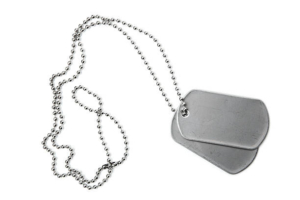
Meanwhile, in 2019, Canup’s identification tag was found in the Hürtgen Forest in the general location of where DPAA historians believed he was lost and near where X-5450 was recovered.
To identify Canup’s remains, scientists from DPAA used dental and anthropological analysis, as well as circumstantial and material evidence. Additionally, scientists from the Armed Forces Medical Examiner System used mitochondrial DNA (mtDNA), Y chromosome DNA (Y-STR), and autosomal DNA (auSTR) analysis.
Canup’s name is recorded on the Walls of the Missing at Netherlands American Cemetery, an American Battle Monuments Commission site in Margraten, Netherlands, along with the others still missing from World War II. A rosette will be placed next to his name to indicate he has been accounted for.
Canup will be buried April 10, 2022, in Anderson, South Carolina.
For family and funeral information, contact the Army Casualty Office at (800) 892-2490.
https://pow-mia-kia.org/wp-content/uploads/2025/04/logo-300x200.jpg00adminhttps://pow-mia-kia.org/wp-content/uploads/2025/04/logo-300x200.jpgadmin2025-04-04 00:00:092025-04-04 00:00:10Staff Sgt. Grady H. Canup
Staff Sgt. Gerald R. Helms
Recently IdentifiedPress Release | March 29, 2022
Soldier Accounted For From World War II (Helms, G.)
WASHINGTON – The Defense POW/MIA Accounting Agency (DPAA) announced today that U.S. Army Staff Sgt. Gerald R. Helms, 29, of Chicago, killed during World War II, was accounted for July 26, 2021.
In the fall of 1944, Helms was assigned to Company E, 325th Glider Infantry Regiment, 82nd Airborne Division. He was reported missing in action near Katerbosch, Netherlands, during Operation MARKET GARDEN after he failed to return from a lone scouting mission Oct. 2. His body was never found by his unit, and there was no evidence he had ever been captured. A presumptive finding of death was issued Oct. 3, 1945.
Following the war, the American Graves Registration Command (AGRC), the organization that searched for and recovered fallen American personnel, conducted several searches of the area, but by 1950, none of the remains found around Katerbosch could be identified as Helms. He was declared non-recoverable in October 1950.
In 2015, DPAA historians began working on a comprehensive research and recovery project focused on those missing from Operation MARKET GARDEN, but none of the disinterred remains could be identified as Helms. However, in October 2019, a Dutch citizen digging a trench in the front yard of a home in Katerbosch came upon human remains and military artifacts. The Royal Netherlands Army’s Recovery and Identification Unit (RIU) excavated the site on Oct. 30. They conducted a full anthropological analysis of the remains and historical analysis of the material items, including Helms’ identification tags, and recovery location. The RIU concluded the remains belonged to Helms. These remains and evidence were then transferred to the DPAA Laboratory at Offutt Air Force Base, Nebraska, for further examination and identification.
To identify Helms’ remains, scientists from DPAA used dental and anthropological analysis as well as circumstantial and material evidence. Additionally, scientists from the Armed Forces Medical Examiner System used mitochondrial DNA (mtDNA) analysis.
Helms’ name is recorded on the Walls of the Missing at the Netherlands American Cemetery, an American Battle Monuments Commission site in Margarten, Netherlands, along with others still missing from WWII. A rosette will be placed next to his name to indicate he has been accounted for.
Helms will be buried in Elwood, Illinois. The date has yet to be determined.
For family and funeral information, contact the Army Casualty Office at (800) 892-2490.
Fire Controlman 2nd Class George Gilbert
Recently IdentifiedPress Release | March 29, 2022
USS Oklahoma Sailor Accounted For From World War II (Gilbert, G.)
WASHINGTON – The Defense POW/MIA Accounting Agency (DPAA) announced today that Navy Fire Controlman 2nd Class George Gilbert, 20, of Indianapolis, killed during World War II, was accounted for on Aug. 24, 2020.
On Dec. 7, 1941, Gilbert was assigned to the battleship USS Oklahoma, which was moored at Ford Island, Pearl Harbor, when the ship was attacked by Japanese aircraft. The USS Oklahoma sustained multiple torpedo hits, which caused it to quickly capsize. The attack on the ship resulted in the deaths of 429 crewmen, including Gilbert.
From December 1941 to June 1944, Navy personnel recovered the remains of the deceased crew, which were subsequently interred in the Halawa and Nu’uanu Cemeteries.
In September 1947, tasked with recovering and identifying fallen U.S. personnel in the Pacific Theater, members of the American Graves Registration Service (AGRS) disinterred the remains of U.S. casualties from the two cemeteries and transferred them to the Central Identification Laboratory at Schofield Barracks. The laboratory staff was only able to confirm the identifications of 35 men from the USS Oklahoma at that time. The AGRS subsequently buried the unidentified remains in 46 plots at the National Memorial Cemetery of the Pacific, known as the Punchbowl, in Honolulu. In October 1949, a military board classified those who could not be identified as non-recoverable, including Gilbert.
Between June and November 2015, DPAA personnel exhumed the USS Oklahoma Unknowns from the Punchbowl for analysis.
To identify Gilbert’s remains, scientists from DPAA used dental and anthropological analysis. Additionally, scientists from the Armed Forces Medical Examiner System used mitochondrial DNA (mtDNA) analysis.
Gilbert’s name is recorded on the Walls of the Missing at the Punchbowl, along with the others who are missing from WWII. A rosette will be placed next to his name to indicate he has been accounted for.
Gilbert will be buried June 6, 2022, at the Punchbowl.
For family and funeral information, contact the Navy Service Casualty office at (800) 443-9298.
Cpl. Donald L. Menken
Recently IdentifiedPress Release | March 24, 2022
Soldier Accounted For From Korean War (Menken, D.)
WASHINGTON – The Defense POW/MIA Accounting Agency (DPAA) announced today that Army Cpl. Donald L. Menken, 21, of Whitesburg, Kentucky, killed during the Korean War, was accounted for Feb. 2, 2022.
In June 1953, Menken was a member of Company K, 3rd Battalion, 15th Infantry Regiment, 3rd Infantry Division. He was reported missing in action after being wounded by artillery shell fragments on June 10 while his unit was guarding Outpost Harry, a position on the main road to Seoul in what is now the Demilitarized Zone. He was never found, nor were any remains recovered that could be identified as Menken. He was declared killed in action on June 11, 1954, and non-recoverable in January 1956.
The American Graves Registration Service Group (AGRSG) was tasked with recovering and identifying remains from the Korean War. The AGRSG went to Outpost Harry to supervise evacuation of the dead. During this time, they did not find any remains that could be identified as Menken. He was also not among the POWs returned during Operation BIG SWITCH in the late summer of 1953 nor among the remains identified from those returned during Operation GLORY in the fall of 1954. However, the AGRSG did find a set of remains that were designated as Unknown X-6039 after they could not be identified. X-6039 was later transported with all unidentified Korean War remains and buried as Unknown at the National Memorial Cemetery of the Pacific, also known as the Punchbowl, in Honolulu.
In July 2018, DPAA historians and anthropologists proposed a plan to disinter and identify the 652 Korean War unknown burials from the Punchbowl. X-6039 was disinterred Jan. 28, 2019, as part of Phase 1 of the Korean War Identification Project and transferred to the DPAA Laboratory at Joint Base Pearl Harbor-Hickam, Hawaii.
To identify Menken’s remains, scientists from DPAA used dental and anthropological analysis, as well as circumstantial evidence. Additionally, scientists from the Armed Forces Medical Examiner System used mitochondrial DNA (mtDNA) analysis.
Menken’s name is recorded on the American Battle Monument Commission’s Courts of the Missing at the Punchbowl, along with the others who are still missing from the Korean War. A rosette will be placed next to his name to indicate he has been accounted for.
Menken will be buried May 14, 2022, in Ermine, Kentucky.
For family and funeral information, contact the Army Casualty Office at (800) 892-2490.
Pvt. Pearl F. Barrow
Recently IdentifiedPress Release | March 24, 2022
Soldier Accounted For From World War II (Barrow, P.)
WASHINGTON – The Defense POW/MIA Accounting Agency (DPAA) announced today that U.S. Army Pvt. Pearl F. Barrow, 36, of Wichita, Kansas, killed during World War II, was accounted for Jan. 9, 2020.
In November 1944, Barrow was assigned to Company F, 12th Infantry Regiment, 4th Infantry Division. His unit was engaged in battle with German forces near Hürtgen, Germany, when he was reported as killed in action on Nov. 20. Because of the fighting, his body was unable to be recovered.
Following the end of the war, the American Graves Registration Command (AGRC) was tasked with investigating and recovering missing American personnel in Europe. They conducted several investigations in the Hürtgen area between 1946 and 1950, but were unable to recover or identify Barrow’s remains. He was declared non-recoverable in December 1951.
In 2017, while studying unresolved American losses in the Hürtgen area, a DPAA historian determined that one set of unidentified remains found in 1948 possibly belonged to Barrow. A business card with “Guaranteed Roofing Co., 832 Indiana” had been found with the remains. While Barrow was not from Indiana, the address listed for his wife in his Report of Death was 832 Indiana, Wichita, Kansas. The remains, which had been buried in Ardennes American Cemetery in 1950, were disinterred in August 2018 and sent to the DPAA laboratory at Offutt Air Force Base, Nebraska, for identification.
To identify Barrow’s remains, scientists from DPAA used dental and anthropological analysis, as well as material and circumstantial evidence. Additionally, scientists from the Armed Forces Medical Examiner System used mitochondrial DNA (mtDNA) analysis.
Barrow’s name is recorded on the Walls of the Missing at Netherlands American Cemetery, an American Battle Monuments Commission site in Margraten, Netherlands, along with the others still missing from World War II. A rosette will be placed next to his name to indicate he has been accounted for.
Barrow will be buried in his hometown. The date has yet to be determined.
For family and funeral information, contact the Army Casualty Office at (800) 892-2490.
2nd Lt. Eugene P. Shauvin
Recently IdentifiedPress Release | March 22, 2022
Pilot Accounted For From World War II (Shauvin, E.)
WASHINGTON – The Defense POW/MIA Accounting Agency (DPAA) announced today that U.S. Army Air Forces 2nd Lt. Eugene P. Shauvin, 25, of Spokane, Washington, killed during World War II, was accounted for March 2, 2022.
In the early fall of 1944, Shauvin was assigned to the 95th Troop Carrier Squadron, 440th Troop Carrier Group. On Sept. 17, Shauvin was piloting a C-47 Skytrain aircraft that was shot down over Belgium, en route to the Netherlands to drop 11 Pathfinder paratroopers ahead of Operation Market Garden. Several Belgian witnesses saw the plane crash near the villages of Retie and Kortijnen. Only six paratroopers successfully bailed out. The four-person crew, including Shauvin, and the other five paratroopers died in the crash.
A few days after the crash, several area residents recovered eight bodies from the crash site and buried them in a nearby common grave. German forces left the area on Sept. 23, and on Sept. 25, the Belgian Red Cross exhumed the remains from the common grave and reinterred them in the Retie village cemetery. In June 1945, the Army’s 3049th Quartermaster Graves Registration Company disinterred 22 sets of American remains associated with numerous air losses from the Retie cemetery and transported them to the U.S. Military Cemetery at Neuville-en-Condroz, Belgium, for processing. By October 1951, everyone from Shauvin’s aircraft had been identified and accounted for except for Shauvin. He was declared non-recoverable on Oct. 29.
In 1999, Shauvin’s daughter, Linda, contacted the U.S. Army Central Identification Laboratory, Hawaii (CILHI), a DPAA predecessor, with evidence that her father’s remains might still be found at the crash site. CILHI sent an investigation team in 2002, and the next year, the newly formed Joint POW/MIA Accounting Command (JPAC), also a DPAA predecessor, sent a recovery team. The team located the cockpit, but didn’t find Shauvin, and so recommended no further excavation.
In 2016, Linda Chauvin requested DPAA reconsider the decision not to excavate further. After assessing the 2003 reports, it was determined there was sufficient evidence to support additional excavation work at the site. It took until 2019 to complete a complex series of negotiations with host-nation authorities, to gain access, permits, and mitigate environmental challenges at the site, before COVID-19 delayed the excavation further. Bolstered by unwavering support from Shauvin’s family, Belgian authorities, and the landowners and local community at Retie, a DPAA recovery team fully excavated the site in April and May 2021, and found human remains and possible life support equipment.
To identify Shauvin’s remains, scientists from DPAA used anthropological analysis. Additionally, scientists from the Armed Forces Medical Examiner System used mitochondrial DNA (mtDNA), Y chromosome DNA (Y-STR), and autosomal DNA (auSTR) analysis.
Shauvin’s name is recorded on the Walls of the Missing at the Netherlands American Cemetery, an American Battle Monuments Commission site in Margraten, Netherlands, along with others still missing from WWII. A rosette will be placed next to his name to indicate he has been accounted for.
Shauvin will be buried July 2022 in his hometown.
For family and funeral information, contact the Army Casualty Office at (800) 892-2490.
Fireman 2nd Class Hal J. Allison
Recently IdentifiedPress Release | March 22, 2022
USS Oklahoma Sailor Accounted For From World War II (Allison, H.)
WASHINGTON – The Defense POW/MIA Accounting Agency (DPAA) announced today that Navy Fireman 2nd Class Hal J. Allison, 21, of Paducah, Kentucky, killed during World War II, was accounted for on Oct. 14, 2021.
On Dec. 7, 1941, Allison was assigned to the battleship USS Oklahoma, which was moored at Ford Island, Pearl Harbor, when the ship was attacked by Japanese aircraft. The USS Oklahoma sustained multiple torpedo hits, which caused it to quickly capsize. The attack on the ship resulted in the deaths of 429 crewmen, including Allison.
From December 1941 to June 1944, Navy personnel recovered the remains of the deceased crew, which were subsequently interred in the Halawa and Nu’uanu Cemeteries.
In September 1947, tasked with recovering and identifying fallen U.S. personnel in the Pacific Theater, members of the American Graves Registration Service (AGRS) disinterred the remains of U.S. casualties from the two cemeteries and transferred them to the Central Identification Laboratory at Schofield Barracks. The laboratory staff was only able to confirm the identifications of 35 men from the USS Oklahoma at that time. The AGRS subsequently buried the unidentified remains in 46 plots at the National Memorial Cemetery of the Pacific (NMCP), known as the Punchbowl, in Honolulu. In October 1949, a military board classified those who could not be identified as non-recoverable, including Allison.
Between June and November 2015, DPAA personnel exhumed the USS Oklahoma Unknowns from the Punchbowl for analysis.
To identify Allison’s remains, scientists from DPAA used dental and anthropological analysis. Additionally, scientists from the Armed Forces Medical Examiner System used mitochondrial DNA (mtDNA) and Y chromosome DNA (Y-STR) analysis.
Allison’s name is recorded on the Courts of the Missing at the Punchbowl, along with the others who are missing from WWII. A rosette will be placed next to his name to indicate he has been accounted for.
Allison will be buried April 8, 2022, in his hometown.
For family and funeral information, contact the Navy Service Casualty office at (800) 443-9298.
Water Tender 1st Class Milo E. Phillips
Recently IdentifiedPress Release | March 21, 2022
USS Oklahoma Sailor Accounted For From World War II (Phillips, M.)
WASHINGTON – The Defense POW/MIA Accounting Agency (DPAA) announced today that Navy Water Tender 1st Class Milo E. Phillips, 26, of Pierce, Colorado, killed during World War II, was accounted for on March 1, 2021.
On Dec. 7, 1941, Phillips was assigned to the battleship USS Oklahoma, which was moored at Ford Island, Pearl Harbor, when the ship was attacked by Japanese aircraft. The USS Oklahoma sustained multiple torpedo hits, which caused it to quickly capsize. The attack on the ship resulted in the deaths of 429 crewmen, including Phillips.
From December 1941 to June 1944, Navy personnel recovered the remains of the deceased crew, which were subsequently interred in the Halawa and Nu’uanu Cemeteries.
In September 1947, tasked with recovering and identifying fallen U.S. personnel in the Pacific Theater, members of the American Graves Registration Service (AGRS) disinterred the remains of U.S. casualties from the two cemeteries and transferred them to the Central Identification Laboratory at Schofield Barracks. The laboratory staff was only able to confirm the identifications of 35 men from the USS Oklahoma at that time. The AGRS subsequently buried the unidentified remains in 46 plots at the National Memorial Cemetery of the Pacific (NMCP), known as the Punchbowl, in Honolulu. In October 1949, a military board classified those who could not be identified as non-recoverable, including Phillips.
Between June and November 2015, DPAA personnel exhumed the USS Oklahoma Unknowns from the Punchbowl for analysis.
To identify Phillips’ remains, scientists from DPAA used anthropological analysis. Additionally, scientists from the Armed Forces Medical Examiner System used mitochondrial DNA (mtDNA) and Y chromosome DNA (Y-STR) analysis.
Phillips’ name is recorded on the Walls of the Missing at the Punchbowl, along with the others who are missing from WWII. A rosette will be placed next to his name to indicate he has been accounted for.
Phillips will be buried on Aug. 4, 2022, at the Punchbowl.
For family and funeral information, contact the Navy Service Casualty office at (800) 443-9298.
Coxswain Paul L. Boemer
Recently IdentifiedPress Release | March 21, 2022
USS Oklahoma Sailor Accounted For From World War II (Boemer, P.)
WASHINGTON – The Defense POW/MIA Accounting Agency (DPAA) announced today that Navy Coxswain Paul L. Boemer, 21, of St. Louis, killed during World War II, was accounted for on Sept. 29, 2020.
On Dec. 7, 1941, Boemer was assigned to the battleship USS Oklahoma, which was moored at Ford Island, Pearl Harbor, when the ship was attacked by Japanese aircraft. The USS Oklahoma sustained multiple torpedo hits, which caused it to quickly capsize. The attack on the ship resulted in the deaths of 429 crewmen, including Boemer.
From December 1941 to June 1944, Navy personnel recovered the remains of the deceased crew, which were subsequently interred in the Halawa and Nu’uanu Cemeteries.
In September 1947, tasked with recovering and identifying fallen U.S. personnel in the Pacific Theater, members of the American Graves Registration Service (AGRS) disinterred the remains of U.S. casualties from the two cemeteries and transferred them to the Central Identification Laboratory at Schofield Barracks. The laboratory staff was only able to confirm the identifications of 35 men from the USS Oklahoma at that time. The AGRS subsequently buried the unidentified remains in 46 plots at the National Memorial Cemetery of the Pacific (NMCP), known as the Punchbowl, in Honolulu. In October 1949, a military board classified those who could not be identified as non-recoverable, including Boemer.
Between June and November 2015, DPAA personnel exhumed the USS Oklahoma Unknowns from the Punchbowl for analysis.
To identify Boemer’s remains, scientists from DPAA dental and anthropological analysis. Additionally, scientists from the Armed Forces Medical Examiner System used mitochondrial DNA (mtDNA), Y chromosome DNA (Y-STR), and autosomal DNA (auSTR) analysis.
Boemer’s name is recorded on the Walls of the Missing at the Punchbowl, along with the others who are missing from WWII. A rosette will be placed next to his name to indicate he has been accounted for.
Boemer will be buried May 3, 2022, in his hometown.
For family and funeral information, contact the Navy Service Casualty office at (800) 443-9298.
Staff Sgt. Richard G. Salsbury
Recently IdentifiedPress Release | March 11, 2022
Airman Accounted For From World War II (Salsbury, R.)
WASHINGTON – The Defense POW/MIA Accounting Agency (DPAA) announced today that U.S. Army Air Forces Staff Sgt. Richard G. Salsbury, 19, of Canaan, Maine, killed during World War II, was accounted for Sept. 23, 2021.
In the summer of 1943, Salsbury was assigned to the 345th Bombardment Squadron (Heavy), 98th Bombardment Group (Heavy), 9th Air Force. On Aug. 1, 1943, the B-24 Liberator aircraft on which Salsbury was serving as a gunner crashed as a result of enemy anti-aircraft fire during Operation TIDAL WAVE, the largest bombing mission against the oil fields and refineries at Ploiesti, north of Bucharest, Romania. His remains were not identified following the war. The remains that could not be identified were buried as Unknowns in the Hero Section of the Civilian and Military Cemetery of Bolovan, Ploiesti, Prahova, Romania.
Following the war, the American Graves Registration Command (AGRC), the organization that searched for and recovered fallen American personnel, disinterred all American remains from the Bolovan Cemetery for identification. The AGRC was unable to identify more than 80 unknowns from Bolovan Cemetery, and those remains were permanently interred at Ardennes American Cemetery and Henri-Chapelle American Cemetery, both in Belgium.
In 2017, DPAA began exhuming unknowns believed to be associated with unaccounted for airmen from Operation TIDAL WAVE losses. These remains were sent to the DPAA Laboratory at Offutt Air Force Base, Nebraska, for examination and identification.
To identify Salsbury’s remains, scientists from DPAA used dental and anthropological analysis. Additionally, scientists from the Armed Forces Medical Examiner System used mitochondrial DNA (mtDNA), Y chromosome DNA (Y-STR), and autosomal DNA (auSTR) analysis.
Salsbury’s name is recorded on the Tablets of the Missing at the Florence American Cemetery, an American Battle Monuments Commission site in Impruneta, Italy, along with others still missing from WWII. A rosette will be placed next to his name to indicate he has been accounted for.
Salsbury will be buried in his hometown. The date has yet to be determined.
For family and funeral information, contact the Army Casualty Office at (800) 892-2490.
DPAA is grateful to the American Battle Monuments Commission and to the U.S. Army
Staff Sgt. Grady H. Canup
Recently IdentifiedPress Release | March 11, 2022
Soldier Accounted For From World War II (Canup, G.)
WASHINGTON – The Defense POW/MIA Accounting Agency (DPAA) announced today that Army Staff Sgt. Grady H. Canup, 30, of Greenwood, South Carolina, killed during World War II, was accounted for Jan. 26, 2022.
In November 1944, Canup was assigned to Company C, 12th Infantry Regiment, 4th Infantry Division. His unit was part of the Hürtgen Forest offensive when he was reported killed in action on Nov. 14 when enemy artillery fire hit near his foxhole. Because of the fighting, his body was unable to be recovered.
Following the end of the war, the American Graves Registration Command (AGRC) was tasked with investigating and recovering missing American personnel in Europe. They conducted several investigations in the Hürtgen area between 1946 and 1950, but were unable to recover or identify Canup’s remains. He was declared non-recoverable in December 1951.
While studying unresolved American losses in the Hürtgen area, a DPAA historian determined that one set of unidentified remains, designated X-5450 Neuville, originally discovered by a German forester and recovered by the AGRC in 1947, possibly belonged to Canup. The remains, which had been buried in Ardennes American Cemetery, were disinterred in April 2019 and sent to the DPAA laboratory at Offutt Air Force Base, Nebraska, for examination and identification.
Meanwhile, in 2019, Canup’s identification tag was found in the Hürtgen Forest in the general location of where DPAA historians believed he was lost and near where X-5450 was recovered.
To identify Canup’s remains, scientists from DPAA used dental and anthropological analysis, as well as circumstantial and material evidence. Additionally, scientists from the Armed Forces Medical Examiner System used mitochondrial DNA (mtDNA), Y chromosome DNA (Y-STR), and autosomal DNA (auSTR) analysis.
Canup’s name is recorded on the Walls of the Missing at Netherlands American Cemetery, an American Battle Monuments Commission site in Margraten, Netherlands, along with the others still missing from World War II. A rosette will be placed next to his name to indicate he has been accounted for.
Canup will be buried April 10, 2022, in Anderson, South Carolina.
For family and funeral information, contact the Army Casualty Office at (800) 892-2490.